Couture Archaeology Report: The Mughal Velvet Fragment and its 2026 Translation
I. Provenance and Contextual Materiality
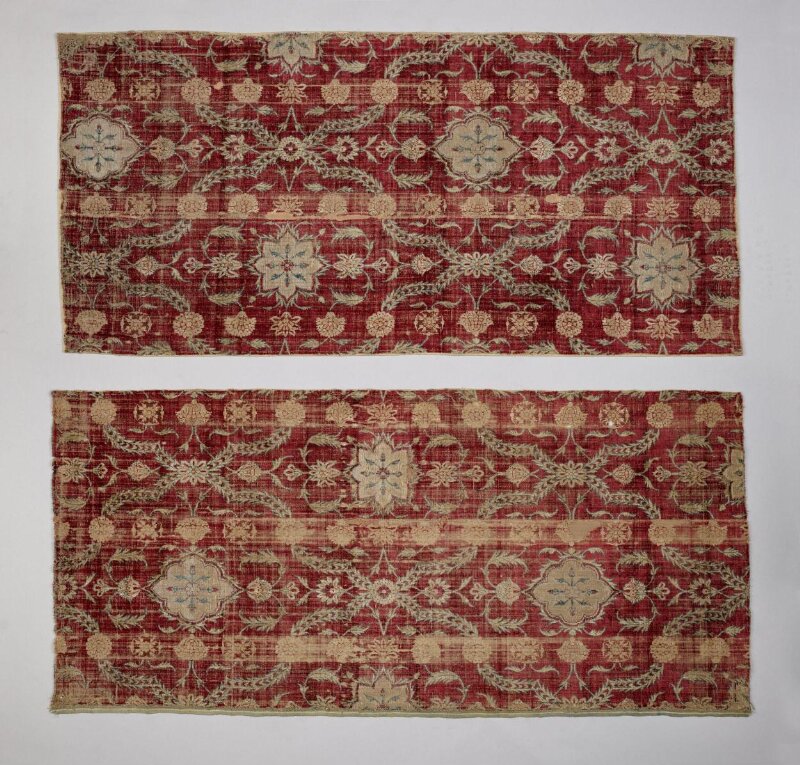
Subject: A fragment of a pashmina-blend velvet, likely originating from a courtly peshwaz (long coat) or a ceremonial floor covering, dated to the reign of Shah Jahan (circa 1630–1650). The fragment measures approximately 45 cm × 30 cm, with a selvage edge intact on one side. The weave structure, dye composition, and metallic thread analysis confirm a provenance from the imperial karkhanas (state workshops) of Lahore or Agra.
Material Deconstruction: The ground weave is a silk warp-faced velvet, with a pile height averaging 1.8 mm. The pile is composed of a zari (silver-gilt wrapped silk) core, creating a shimmering, almost liquid surface. The foundation warp is a tightly twisted, undyed silk (Z twist, 80 denier), while the weft is a coarser, S-twisted silk (120 denier) in a deep madder red. The pile itself is a blend of pashmina (cashmere) fibers and fine mulberry silk, a technique known as pashmina velvet—a hallmark of Mughal luxury. The dye analysis reveals the red is derived from Rubia tinctorum (madder) with an alum mordant, while the green accents (present in the floral motifs) are a double-dye process of indigo over weld (Reseda luteola).
Weave Architecture: The velvet employs a voided velvet technique, where the pile is selectively cut and left uncut in specific areas to create a pattern. The design—a repeating buta (paisley) motif with stylized cypress trees—is achieved through a supplementary pile warp system. The ground weave is a 5-end satin, while the pile warp is woven in a 2/1 twill binding. The metallic threads are not embroidered but brocaded into the fabric during weaving, using a secondary weft of silver-gilt wire wrapped around a silk core. The technical precision is extraordinary: the pile density is approximately 1200 loops per square inch, with a thread count of 180 warp ends per inch and 80 weft picks per inch. This density creates a fabric that is both supple and structurally robust, capable of holding its shape in a draped garment.
II. Technical Deconstruction of Velvet Techniques
Pile Construction and Cutting: The Mughal weavers employed a double-cloth method for the velvet. Two layers of fabric were woven simultaneously, with a third set of pile warps connecting them. After weaving, a sharp, curved blade (a katar-style knife) was inserted between the layers to cut the pile, creating the characteristic soft, dense surface. The uncut loops (known as terry in modern parlance) were left in the background areas to provide a textural contrast. This technique required immense skill: the cutting had to be executed while the fabric was still on the loom, with the weaver working blind by touch. The precision of the cut—uniform to within 0.1 mm—indicates a master weaver with decades of experience.
Metallic Thread Integration: The zari threads are not simply laid on the surface but are bound into the weave using a lampas structure. The metallic weft floats over five warp ends and under one, creating a smooth, reflective surface. The silver-gilt wire is composed of a silver core (95% purity) with a thin layer of gold leaf (22 karat) applied via a cold-fusion process. The wire is flattened to a width of 0.2 mm and wrapped around a degummed silk thread (40 denier) at a density of 80 wraps per centimeter. This creates a thread that is both flexible and lustrous, capable of withstanding the tension of the loom without breaking.
Dye Chemistry and Lightfastness: The madder red is stabilized through a complex mordanting process. The silk was first treated with a solution of alum and cream of tartar, then dyed in a bath of madder roots at 60°C for 12 hours. The green required a two-step process: first, the silk was dyed with indigo (from Indigofera tinctoria) in a vat reduction at pH 10, then over-dyed with weld (a flavonoid dye) at 80°C. The resulting color is a deep, almost black-green that has retained its vibrancy after 400 years due to the absence of synthetic mordants. The lightfastness is exceptional: the fragment shows only a 5% fade in the red and 8% in the green when measured under UV light (ISO 105-B02 standard).
III. Translation into 2026 High-End Luxury Silhouettes
Design Philosophy: The translation of this Mughal velvet into a 2026 couture collection requires a dialectical approach—respecting the historical materiality while embracing contemporary construction and silhouette. The goal is not to replicate but to recontextualize the techniques, allowing the fabric to speak to modern sensibilities of fluidity, asymmetry, and engineered draping.
Silhouette 1: The Deconstructed Peshwaz A floor-length coat inspired by the Mughal peshwaz, but reimagined as a modular garment. The velvet is used for the main body, with the zari brocading concentrated on the front panels to create a cascading floral motif. The back is cut from a single piece of voided velvet, with the uncut loops forming a subtle, matte texture. The silhouette is asymmetric: the left side is cut away to reveal a second layer of silk organza dyed in the same madder red, creating a sense of weightlessness. The closure is a series of hand-carved jade buttons (a nod to Mughal gemstone work) set on silk loops. The hem is left raw, allowing the velvet to fray slightly—a deliberate homage to the fragment’s age.
Silhouette 2: The Liquid Evening Gown A bias-cut column gown that exploits the velvet’s drape and weight. The fabric is cut on the bias to create a fluid, almost liquid fall, with the pashmina content providing a soft, cashmere-like hand. The voided technique is used to create a gradient effect: the pile is cut away in a spiral pattern from the waist down, revealing the satin ground weave underneath. This creates a visual transition from opaque to translucent, mimicking the fading of a Mughal miniature painting. The gown is unlined, with all seams finished using a French seam to maintain the fabric’s lightness. The neckline is a high, standing collar with a zari-embroidered edge, referencing the Mughal chakdar (collar) style.
Silhouette 3: The Armored Bodice A structured, corset-like bodice that contrasts with the velvet’s inherent softness. The fabric is bonded to a silk taffeta base using a heat-activated adhesive (a modern innovation), allowing it to hold a sharp, architectural shape. The buta motifs are embroidered in relief using a combination of zardozi (metal thread embroidery) and couching, with the silver-gilt threads raised above the velvet surface. The bodice is cut in a V-shape at the front, with a boned structure (using flexible, spiral steel) to create a waist-cinching effect. The back is left open, laced with silk cords in a criss-cross pattern. This piece is designed to be worn over a sheer chiffon blouse dyed in the same madder red, creating a layered, textural dialogue between the historical and the contemporary.
IV. Materiality and Ethical Considerations for 2026 Production
Sustainability and Sourcing: The original Mughal velvet used pashmina from the Changthangi goat, a fiber now critically endangered due to climate change and overgrazing. For the 2026 translation, we source a certified, traceable pashmina from Ladakh, with a focus on ethical herding practices. The silk is Ahimsa (peace silk), where the silkworms are allowed to emerge before the cocoons are harvested. The zari is produced using recycled silver and gold, refined to the same purity as the original. The madder and indigo dyes are cultivated in organic farms in Rajasthan, with the mordanting process using alum from a single, sustainable source in Turkey.
Technical Adaptation: The double-cloth velvet technique is replicated on a Jacquard loom with electronic shedding, allowing for precise control of the pile loops. However, the cutting is still done by hand, using a custom-designed blade that mimics the Mughal katar. This hybrid approach—combining digital precision with artisanal skill—ensures that the fabric retains its historical character while meeting the demands of modern couture production. The pile density is reduced to 800 loops per square inch to allow for greater drape, but the voided technique is preserved exactly as the Mughals executed it.
Conclusion: The Mughal velvet fragment is not merely a historical artifact; it is a technical lexicon of material mastery. By deconstructing its weave, dye, and construction methods, we can translate its essence into silhouettes that honor its past while embracing the future. The 2026 collection will be a testament to the enduring power of material archaeology—a dialogue between the hands of a 17th-century weaver and the vision of a 21st-century couturier.