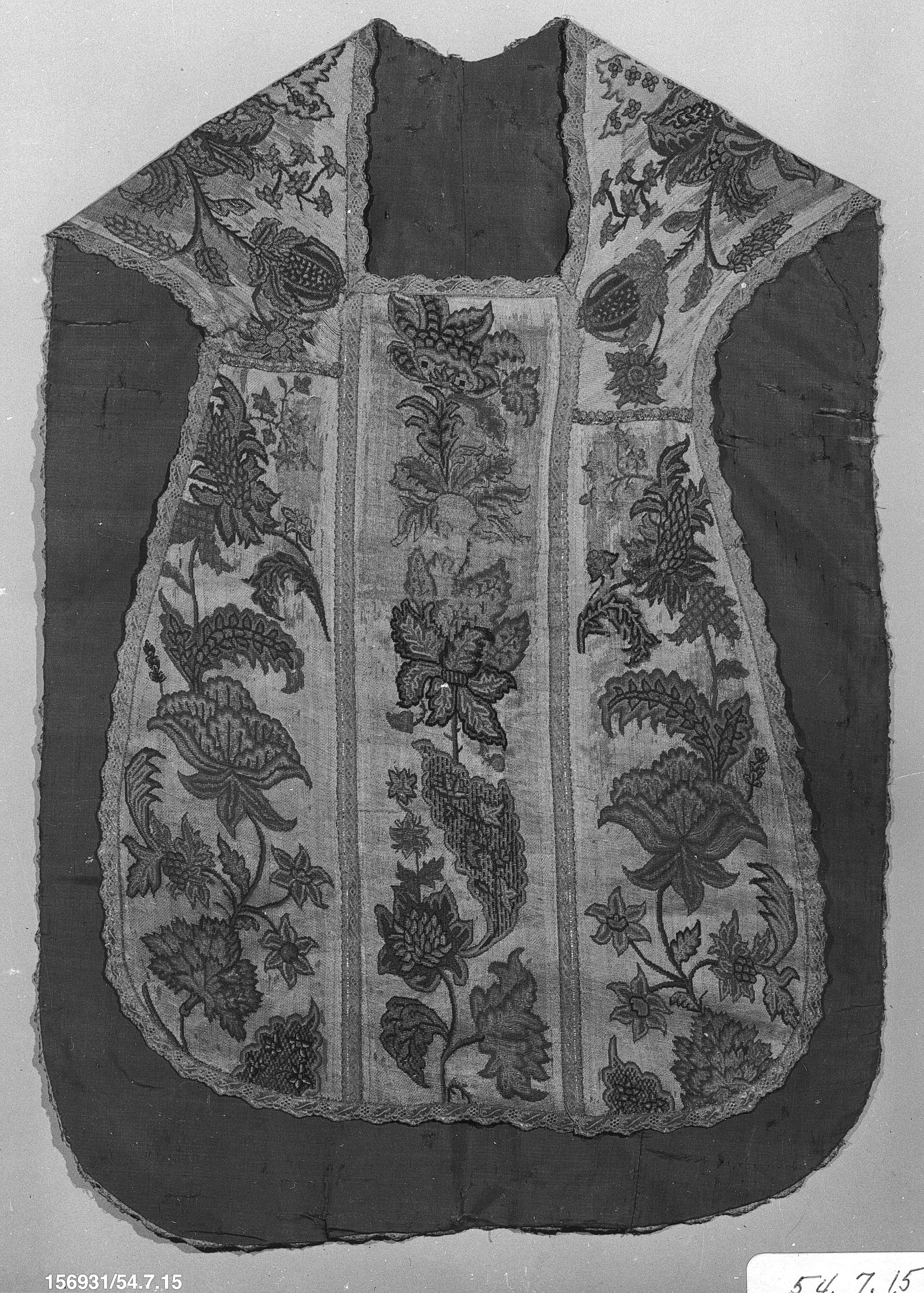
Archaeology of the Unseen: The Chasuble as a Silhouette Laboratory
Within the isolated context of aesthetic archaeology, the chasuble presents not merely as a liturgical garment but as a profound treatise on volume, structure, and symbolic materiality. Devoid of its primary religious context for our analytical purposes, it exists as a pure, sculptural form. Its classical elegance is not born of fitted precision, but of a majestic negation of the corporeal—a tent-like canopy that creates a moving architectural space around the wearer. This foundational principle of constructed environment, rather than tailored conformity, is the first critical inheritance for 2026. The 2026 luxury silhouette will engage in a dialogue between sanctuary and self, utilizing the chasuble’s ethos of enveloping volume to create modern havens of personal space and declarative presence. The canvas-backed silk, rigid yet fluid, provides the technical blueprint for achieving this: a structured yet soft architecture.
Deconstruction of a Canon: Volume, Aperture, and the Sacred Axis
The chasuble’s elegance is technically deconstructed into three core principles: the uncompromised volume of its main body, the strategic aperture of the neckline, and the vertical sacred axis created by its central orphrey. The volume is a deliberate liberation from the body’s topography. This informs 2026’s move beyond the body-con silhouette towards what we term "Architectural Cocooning". Imagine evening coats and gowns where the shoulder line is extended not with padding, but with a self-supporting curvature of canvas-backed silk, creating a parabolic form that floats from the clavicle. The silhouette is defined by the garment’s own internal architecture, not by the body beneath it.
The neckline—often a simple, centered ovoid—functions as the sole focal point, framing the face as a jewel. This translates to 2026’s "Framed Portraiture" necklines. We will see exaggerated, sculpted collars that rise to encircle the jawline, or deep, precisely engineered slashes that serve as the singular, dramatic opening in an otherwise monolithic form. This focus elevates the wearer’s countenance to iconic status. The central vertical band, the orphrey, is the spine of the garment. In 2026, this evolves into the "Luminous Spine"—a vertical zone of technical manipulation, whether through intricate metal-thread embroidery, laser-cut tracery, or a seam of intelligent lighting, creating a dynamic line of focus that guides the eye and bisects the volume with intentional grandeur.
Material Intelligence: The Canvas Doctrine and Metallic Narratives
The specified materiality—silk and metal thread on canvas—is not a decorative note but a structural manifesto. The canvas provides a memory, a hidden armature that gives intentional shape to the fluid silk. This "Canvas Doctrine" directly informs 2026’s approach to hybrid materiality. Luxury will embrace subcutaneous structures: fine mesh panels, thermo-formed organic textiles, or biodegradable polymer grids laminated between layers of cashmere or silk gazar. These hidden infrastructures allow for volumes that are simultaneously monumental and lightweight, achieving the chasuble’s dignified drape with contemporary technical grace.
The metal thread is the narrative element. Historically, it depicted iconography; in 2026, it becomes "Conductive Ornamentation." Metal threads will be functional, woven with micro-electronics for subtle thermal regulation or dynamic, light-responsive surfaces. Embroidery becomes interactive. Furthermore, the juxtaposition of the matte, absorptive silk with the reflective, light-capturing metal thread informs a new texture philosophy: Dichotomous Surface Tension. We will see fabrics engineered with starkly varied reflective indices within a single weave—zones of deep shadow adjacent to brilliant highlights—creating a living, moving topography of light across the architectural silhouette.
Silhouette Projections for 2026: The Four Manifestations
From this deconstruction, four key silhouette families emerge for the 2026 haute couture and high-end ready-to-wear collections at Natalie Fashion Atelier.
The Parabolic Envelope: A direct evolution of the chasuble’s front-and-back panel construction. It features a rounded, dome-like shoulder achieved through concealed canvas corselettes, flowing into a wide, circular hem. The "Luminous Spine" runs vertically, perhaps as a seam of hand-knotted passementerie or a gradient of metallic leaf application. Worn over minimalist sheaths, it creates a powerful dichotomy of public monument and private form.
The Asymmetric Alb: Inspired by the chasuble’s evolution from earlier, more voluminous forms. This silhouette uses a single, dramatic sweep of fabric originating from one shoulder, wrapping the body in a spiraling volume that terminates in a tapered line. The canvas backing allows this single piece to hold its sculptural twist. The metal thread narrative concentrates at the anchor shoulder and along the leading edge of the spiral.
The Tactile Triptych: A deconstructed interpretation where the chasuble is split into three wearable components: a structured canvas-backed collar-piece, a central embroidered panel worn as a breastplate or back-piece, and a voluminous silk skirt or cape. This allows for modular dressing, where the client engages with the heritage through adaptable, modern pieces.
The Liquid Orphrey Gown: Here, the principle of the central vertical axis is paramount. A columnar gown in matte silk is bisected by a vertical band of extraordinary technical embroidery—a cascading narrative of metal, crystal, and perhaps integrated fiber optics—that tells a unique story. The surrounding fabric remains pure and unadorned, making the orphrey a literal and figurative spine of light and narrative.
Conclusion: Heritage as a Technical Blueprint
Through the isolated lens of aesthetic archaeology, the chasuble ceases to be an artifact and becomes a generative blueprint. Its classical elegance is redefined as a set of technical principles: structured volume, focal apertures, a sacred axis, and intelligent material juxtaposition. For 2026, these principles inform a shift towards dignified, architectural silhouettes that prioritize emotive presence over physical contour. The silhouette becomes a curated space, the materials become intelligent collaborators, and the craftsmanship tells a luminous, often interactive, story. In this way, Natalie Fashion Atelier does not reproduce history; it reverse-engineers its genius to build the serene, powerful, and technically sublime luxury of tomorrow. The sanctuary, once external, is now woven into the very fabric of the self.