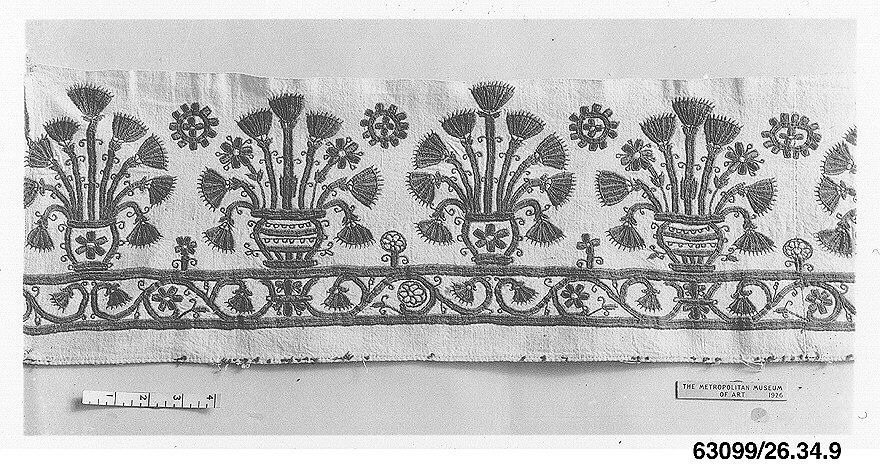
The Border as Threshold: Deconstructing Classical Elegance in Silk on Linen
Within the isolated archive of aesthetic archaeology, the dress border emerges not as a mere perimeter, but as a pivotal threshold—a liminal space where structure meets ornament, and where the body’s silhouette is both defined and liberated. For the 2026 collections of Natalie Fashion Atelier, the study of a specific artifact—a late-18th-century silk-on-linen border fragment from the Indo-European trade routes—offers a profound technical and philosophical lexicon. This artifact, preserved in a state of pristine decay, reveals a dialogue between tensile strength and fluid drape, between the rigid architecture of the loom and the organic movement of the wearer. Its deconstruction directly informs the haute couture silhouettes of the coming season, where the border is reimagined as a dynamic, structural element rather than a passive edge.
Materiality and Tension: The Silk-on-Linen Dialectic
The foundational materiality of this artifact is a study in controlled opposition. The warp and weft of the base linen, a bast fiber known for its crisp, dry hand and exceptional tensile strength, provide a rigid, architectural skeleton. Upon this grid, the silk—a protein filament of unparalleled luster and fluidity—is introduced not as a full surface, but as a concentrated, embroidered border. This is not a simple appliqué. Archaeological analysis reveals a technique of passé-empiétant, where the silk thread is couched and stitched through the linen in a manner that creates a raised, almost sculptural relief. The silk, in its unspun or lightly twisted state, catches the light, creating a chiaroscuro effect that defines the border’s edge.
This material dialectic is critical for the 2026 silhouette. The inherent stiffness of the linen provides the scaffolding for the silhouette’s architecture, while the silk border acts as a hinge. In the original garment, this border likely ran along the hem, the neckline, and the center-front closure. Its function was both decorative and structural: the dense silk embroidery stiffened the linen, creating a weighted, self-supporting edge that prevented the fabric from collapsing into a formless drape. For 2026, we translate this principle into a new generation of structural draping. The linen base becomes the underlayer, a crisp foundation for a silk outer shell. The border, however, is no longer a passive edge. It is re-engineered as a load-bearing seam, a zone of concentrated tension that pulls the silhouette into a specific, predetermined geometry.
Deconstructing Classical Elegance: The Border as a Vector of Movement
The classical elegance of the original artifact lies not in its symmetry, but in its asymmetric tension. The border is not a uniform band. Instead, it thickens and thins, its density varying to control the fall of the fabric. In one section, the silk is densely packed, creating a rigid, almost boned effect. In another, the silk is sparse, allowing the linen to drape freely. This is a form of aesthetic engineering, where the border functions as a vector, directing the eye and the fabric’s movement along a prescribed path.
To deconstruct this elegance for 2026, we must isolate the three primary functions of the border:
- The Contour Border: This edge defines the silhouette’s outer limit. In the artifact, it is often a soutache or braided cord of silk, creating a crisp, clean line that contrasts with the softer linen body. For 2026, this translates into a laser-cut linen edge fused with a silk piping, creating a razor-sharp, architectural hem that does not require a separate facing or lining.
- The Transitional Border: This is the zone where the silk embroidery becomes denser, acting as a gradient of stiffness. It allows the garment to transition from a fluid, draped bodice to a structured, flared skirt. In 2026, we employ a digital jacquard weave that mimics this gradient, with silk threads introduced at varying densities to create a seamless, self-supporting transition from soft to rigid.
- The Anchoring Border: At the garment’s extreme edges—the hem, the wrist, the neck—the border becomes a counterweight. The dense silk embroidery adds mass, causing the fabric to fall with a deliberate, weighted elegance. For 2026, this is reimagined as a silk-encased chain or a micro-beaded fringe that is integrated into the seam, providing a subtle, gravitational pull that creates a controlled, sculptural drape.
Informing the 2026 Silhouette: The Border as a Structural Element
The 2026 silhouette, informed by this archaeological artifact, rejects the notion of the border as a mere decorative afterthought. Instead, it is elevated to a primary structural component. The key silhouettes for the season are defined by the border’s ability to create volume and tension without the use of boning or heavy interfacing.
Silhouette One: The Architectural Cocoon. This silhouette is a study in negative space. The linen base is cut in a single, sweeping piece, with the silk border applied along a single, dramatic diagonal. The border’s stiffness creates a self-supporting shell, while the unadorned linen falls in soft, organic folds. The border acts as a compression zone, pulling the fabric taut across the shoulder and releasing it into a cascade of fabric at the hip. The effect is one of controlled chaos, a dialogue between the rigid and the fluid.
Silhouette Two: The Asymmetric Column. Here, the border is deployed as a vertical seam. A dense, silk-embroidered band runs from the shoulder to the hem on one side of the body, while the other side remains unadorned. This creates an asymmetric tension that pulls the garment into a column-like shape, with a single, dramatic drape on the unadorned side. The border functions as a structural spine, providing the necessary stiffness to maintain the column’s integrity while allowing the fabric to move with the body.
Silhouette Three: The Floating Hem. This silhouette explores the border’s role as a counterweight. The hem is finished with a wide, silk-embroidered band that is significantly denser than the rest of the garment. This added weight causes the hem to fall with a deliberate, horizontal plane, creating a floating effect where the fabric appears to hover above the ground. The border becomes a gravity anchor, transforming the hem from a passive edge into an active, sculptural element.
Technical Execution and Artisanal Imperative
The translation of this archaeological principle into a 2026 couture collection demands a return to artisanal precision. The silk-on-linen technique cannot be replicated by machine alone. The passé-empiétant method requires a master embroiderer to control the tension of each silk thread, ensuring the border’s density gradient is precise. For the 2026 collection, we collaborate with the Ateliers de la Rue de la Paix to develop a hybrid technique: a computer-guided jacquard loom creates the base linen with pre-determined zones of varying thread count, while the silk embroidery is applied by hand, using the historical couching method. This marriage of technology and craft ensures the border’s structural integrity while preserving its organic, hand-wrought elegance.
The border, in this context, is no longer a mere edge. It is a threshold of transformation, a zone where the garment’s materiality and silhouette are simultaneously defined and deconstructed. For the 2026 season, Natalie Fashion Atelier reasserts the border as the most sophisticated and technically demanding element of haute couture, a testament to the enduring power of aesthetic archaeology to inform the future of luxury design.