The Snuffbox as Structural Lexicon: Aesthetic Archaeology for 2026
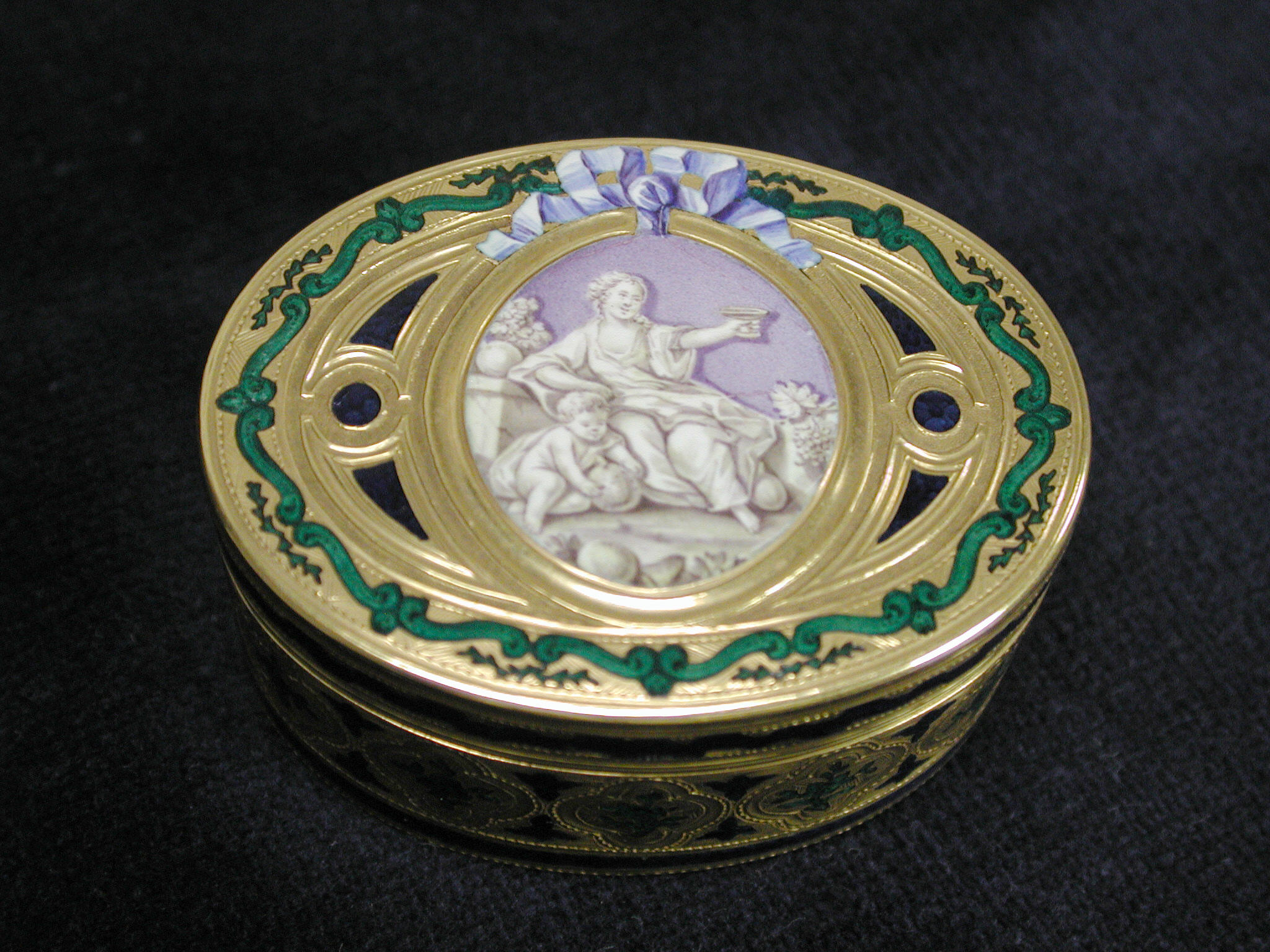
The snuffbox, a diminutive yet potent artifact of global heritage, transcends its historical function as a vessel for powdered tobacco. Within the isolated context of aesthetic archaeology, its materiality—specifically the interplay of gold and enamel—offers a profound lexicon for the 2026 high-end silhouette. At Natalie Fashion Atelier, we deconstruct this classical elegance not as mere ornamentation, but as a foundational grammar for structural form, chromatic restraint, and tactile opulence. The snuffbox’s architectural precision, its microcosm of luxury, informs a new paradigm where volume is compressed, surfaces are treated as painted substrates, and closure becomes a ritualistic act of design.
Materiality as Architectural Blueprint: Gold and Enamel in Structural Form
The gold snuffbox, often crafted in 18th-century Paris or 19th-century Mughal courts, represents a mastery of compression. Its walls, though thin, possess a rigid, unyielding geometry. For 2026, this translates into structured, non-deformable silhouettes that reject the fluidity of draping in favor of engineered stiffness. The gold ground—whether polished to a mirror finish or matte via a technique like vermeil—informs the use of metallic-threaded brocades, liquid-metal laminates, and high-density jacquards that hold a sharp, architectural line. The silhouette becomes a “carapace of value,” a protective shell that encases the body, echoing the snuffbox’s role as a portable treasure.
Enamel, applied in layers of basse-taille or cloisonné, introduces color as a structural element. The 2026 interpretation rejects flat pigmentation; instead, enamel’s translucency and depth are replicated through chameleon-effect organzas, layered tulle with micro-embroidery, and resin-coated silks that shift hue under light. The silhouette is not painted but lacquered, with color embedded within the textile’s matrix rather than applied on its surface. This creates a visual weight—a density that belies the fabric’s actual lightness—mirroring the snuffbox’s surprising heft for its size.
Chromatic Restraint and the Enamel Palette
Historical snuffboxes often employ a restrained palette: royal blue, deep green, opaque white, and vermilion, set against the warm neutrality of gold. For 2026, this chromatic strategy dictates a monochromatic or bichromatic silhouette where color is a singular, powerful statement. The silhouette is not a canvas for multiple hues but a field for one saturated tone, with gold serving as the sole accent—applied as metallic thread, gilded buttons, or a single seam of gold piping. This discipline prevents visual fragmentation, allowing the form itself to command attention.
The enamel’s finish—glossy or matte—informs the textile’s surface treatment. A glossy enamel finish translates to high-shine satins, patent leathers, or polished microfibers that reflect light uniformly, creating a volumetric illusion of solidity. A matte enamel, such as émail en résille, suggests a suede-like, powdery texture achieved through crushed velvet or sanded silk. The silhouette’s surface becomes a tactile dialogue between gloss and grain, echoing the snuffbox’s interplay between polished gold and vitreous enamel.
Proportion and the Micro-Volume
The snuffbox’s scale—typically 5 to 10 centimeters in width—forces a re-evaluation of human proportion. In 2026, this manifests as compressed, high-waisted silhouettes that concentrate volume at the torso, mimicking the box’s compact form. The “snuffbox bustier” emerges as a key structural piece: a rigid, boned corset with a flat, rectangular front panel, often hinged at the side seams with gold-toned closures. Skirts and trousers are reduced to narrow, columnar shapes that emphasize verticality, while sleeves are cropped or absent, allowing the torso to dominate the visual field.
The closure mechanism—a spring, a latch, a hinged lid—inspires functional hardware that becomes integral to the silhouette. Jackets and coats feature enamel-inlaid clasps at the collarbone or waist, requiring a deliberate, ritualistic gesture to open or close. This transforms dressing into an act of archaeological discovery, where the wearer must engage with the garment’s mechanics.
Surface as Narrative: The Enamel Inlay
Enamel on gold often depicts miniature scenes—pastoral landscapes, mythological figures, or geometric motifs. For 2026, this narrative quality is translated into appliqué and embroidery that function as “wearable miniatures.” A single panel on a gown’s bodice might feature a hand-embroidered scene in gold thread and silk floss, framed by a gold cord that mimics the snuffbox’s metal rim. The silhouette becomes a portable gallery, with the narrative contained within a specific, bounded area—like the snuffbox’s lid.
The technique of champlevé—where enamel is applied into recessed cells—informs negative-space construction. Garments incorporate cutouts or sheer panels that reveal the skin or an underlayer, creating a “recessed” visual effect. These voids are framed by gold-threaded borders, echoing the metal walls of the enamel cell. The silhouette breathes through these intentional gaps, balancing the solidity of the gold-inspired structure with the transparency of the enamel-inspired void.
Ergonomics of Luxury: Weight and Balance
A snuffbox’s appeal lies partly in its satisfying weight—a balance between precious metal and fragile enamel. In 2026, this ergonomic principle dictates strategic weight distribution in the silhouette. Heavier textiles—such as gold-lame brocade or beaded netting—are concentrated at the garment’s core (the torso or hips), while lighter materials (silk organza, micro-mesh) extend outward. This creates a gravitational anchor that grounds the silhouette, preventing it from appearing ethereal or insubstantial. The wearer feels the garment’s presence, much as one feels the snuffbox’s heft in the palm.
The “enamel shoulder” emerges as a defining feature: a rigid, slightly raised shoulder pad covered in a glossy, enamel-like resin or lacquered silk, often in a contrasting color to the body of the garment. This echoes the snuffbox’s lid, which sits slightly proud of the base. The silhouette gains a protective, armorial quality, reinforcing the idea of the garment as a portable treasure chest.
Conclusion: The Snuffbox as 2026 Archetype
The isolated aesthetic archaeology of the snuffbox—its gold, its enamel, its compressed luxury—provides a rigorous framework for the 2026 high-end silhouette. By deconstructing its classical elegance, we arrive at a design language of structural compression, chromatic discipline, and tactile depth. The silhouette is no longer a flowing form but a sculptural object, a wearable artifact that demands engagement. The wearer becomes a curator of their own presence, carrying the snuffbox’s legacy not in the hand, but on the body. This is the future of luxury: a return to the miniature, the precious, and the architecturally precise.