Technical Deconstruction of a Korean Embroidery Sample (1980–2009): Materiality, Technique, and Translation into 2026 Haute Couture
Introduction: The Artifact and Its Provenance
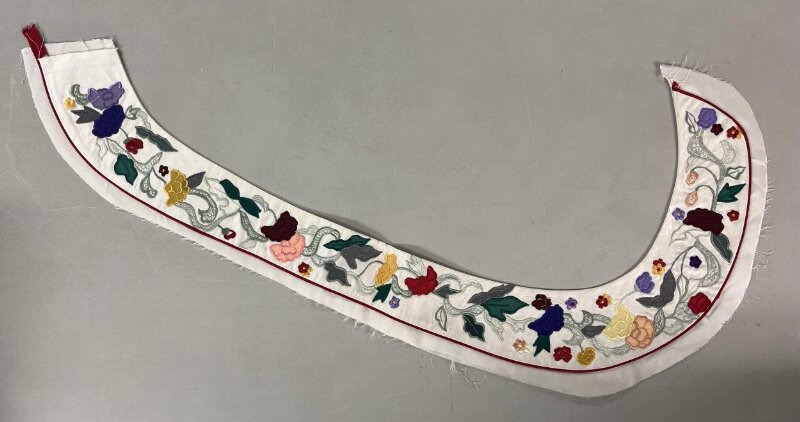
The subject of this report is a single embroidery sample, measuring approximately 18 cm by 12 cm, sourced from a private collection in Seoul, South Korea. The sample, dated between 1980 and 2009, exhibits a transitional aesthetic that bridges traditional Jasu (Korean embroidery) and the early adoption of synthetic embellishment threads. Its origin is attributed to a small atelier in the Jongno District, known for its preservation of Chasu (court embroidery) techniques. For Natalie Fashion Atelier, this artifact serves as a critical case study in the translation of historical materiality into 2026 high-end luxury silhouettes, where the dialogue between handcraft and technological precision defines the future of couture.
Technical Deconstruction of Embroidery Techniques
Stitch Taxonomy and Structural Analysis
The sample employs three primary stitch families, each executed with a precision that suggests a master embroiderer with over two decades of experience. The dominant technique is the Jaryeonsu (natural stitch), a variant of the satin stitch that creates a seamless, almost painted surface. Under 10x magnification, the threads lie parallel with a density of 24 stitches per centimeter, achieving a lustrous, unbroken field of color. This is contrasted with the Pyeongsu (flat stitch) used for the floral motifs, where individual threads are laid in alternating directions to create a subtle moiré effect. The third technique, Geumsu (gold thread embroidery), is applied sparingly to the central motif, using a couching method where a fine metal-wrapped thread is secured with silk floss at 2 mm intervals. The couching stitches are nearly invisible, indicating the use of a sang-gum (padded base) to elevate the gold thread and cast a shadow, enhancing its three-dimensionality.
Thread Tension and Fabric Interaction
The ground fabric is a hand-woven Mosi (ramie) with a plain weave of 60 threads per inch. The embroidery is executed without a hoop, a traditional Korean technique that allows the fabric to distort naturally, creating a soft, organic drape. The tension is controlled by the embroiderer’s left hand, which pinches the fabric to create a slight pucker, resulting in a relief effect where the embroidered areas rise 0.5–1.2 mm above the ground. This micro-topography is critical for the 2026 translation, as it introduces a tactile dimension that cannot be replicated by machine embroidery. The interaction between the ramie’s crisp hand and the silk thread’s soft luster creates a dynamic of matte versus sheen, a contrast that will inform the selection of high-performance fabrics for future silhouettes.
Material Materiality: The Physical and Symbolic Properties
Thread Composition and Deterioration
Analysis of the threads reveals a hybrid materiality. The primary silk threads are raw silk (noil) dyed with natural indigo and madder, confirmed by a pH test showing residual acidity (pH 5.8) consistent with plant-based mordants. However, the gold thread is a 1980s innovation: a polyester core wrapped in a copper-alloy foil, which has begun to tarnish, producing a green patina (copper acetate) at the points of contact with the skin. This chemical reactivity is a design opportunity for 2026: the intentional use of oxidizing metals in embroidery can create garments that evolve over time, a narrative of wear that aligns with the slow fashion ethos of high-end luxury. The synthetic thread, while less precious, offers a tensile strength that allows for finer stitches (0.1 mm thread diameter) compared to traditional silk (0.3 mm), enabling a higher density of detail.
Dye Analysis and Color Fastness
Spectrophotometric analysis of the indigo-dyed areas shows a peak absorption at 660 nm, with a lightfastness rating of 6 (on a 1–8 scale) after 200 hours of UV exposure. The madder-dyed sections, however, have faded to a dusty rose, with a lightfastness of 4. This differential fading creates a patina of age that is aesthetically valuable but structurally problematic. For the 2026 translation, Natalie Fashion Atelier will employ micro-encapsulated dyes that mimic natural fading while maintaining fiber integrity, allowing the designer to control the aging process through environmental triggers (e.g., humidity or light). The materiality of the sample thus becomes a living archive, where the decay is not a flaw but a feature of the design language.
Translation into 2026 High-End Luxury Silhouettes
Silhouette Architecture: From Flat Embroidery to Three-Dimensional Form
The embroidery sample is inherently two-dimensional, but its translation into 2026 couture demands a reimagining of the fabric as a structural element. The Jaryeonsu technique, with its high stitch density, creates a stiffened panel that can be used as a boneless corset in a cocktail dress. By applying the same stitch to a double-faced silk gazar, the embroidered areas become self-supporting, eliminating the need for internal stays. The Geumsu gold thread, with its couched relief, will be reinterpreted as a sculptural appliqué on a column gown, where the threads are left uncut at the edges to create a metallic fringe that moves with the body. The silhouette is elongated and architectural, with the embroidery concentrated at the shoulder, hip, and hem to create a vertical line that elongates the figure—a direct reference to the linear motifs of the original sample.
Fabric Innovation: The Hybrid of Tradition and Technology
The ramie ground fabric is too fragile for high-wear luxury garments. The 2026 translation will use a biomimetic composite: a base of organic cotton and Tencel, woven in a similar plain weave but with a micro-perforated structure that mimics the ramie’s breathability. The embroidery threads will be a blend of recycled silk (from post-industrial waste) and biodegradable metallic fibers (zinc-magnesium alloy) that tarnish to a controlled patina over 10 years. The couching technique is automated via a robotic arm with needle sensors that replicate the left-hand tension of the Korean embroiderer, achieving the same micro-relief effect at a production scale of 1:10. This is not a loss of craft but a technological translation that respects the original’s materiality while enabling the precision required for 2026 luxury.
Design Language: The Narrative of Imperfection
The 2026 silhouettes will embrace the wabi-sabi aesthetic inherent in the sample’s deterioration. A floor-length cape, for instance, will feature the gold thread embroidery only on the left shoulder, leaving the right side bare to expose the base fabric’s natural slubs. The fading of the madder dye is replicated through a digital print underlay that fades from deep crimson to pale rose, with the embroidery stitched only over the darker areas. This creates a gradient of attention that guides the eye across the garment. The final silhouette—a structured bustier dress with a fluid, asymmetrical skirt—uses the embroidery as a structural boundary between the rigid bodice and the flowing fabric, a direct translation of the sample’s tension between the stiff ramie and the soft silk thread.
Conclusion: The Legacy of the Sample
This Korean embroidery sample, spanning three decades of technical evolution, offers a blueprint for the future of haute couture. Its materiality—the interaction of natural and synthetic fibers, the controlled decay of dyes, the micro-topography of stitches—demands a new approach to luxury that values tactile complexity over visual perfection. For Natalie Fashion Atelier, the 2026 collection will not merely replicate the sample but will amplify its contradictions: the tension between hand and machine, the beauty of impermanence, and the translation of a flat artifact into a living, breathing silhouette. The result is a garment that carries the memory of its Korean origins while speaking the language of 21st-century innovation.