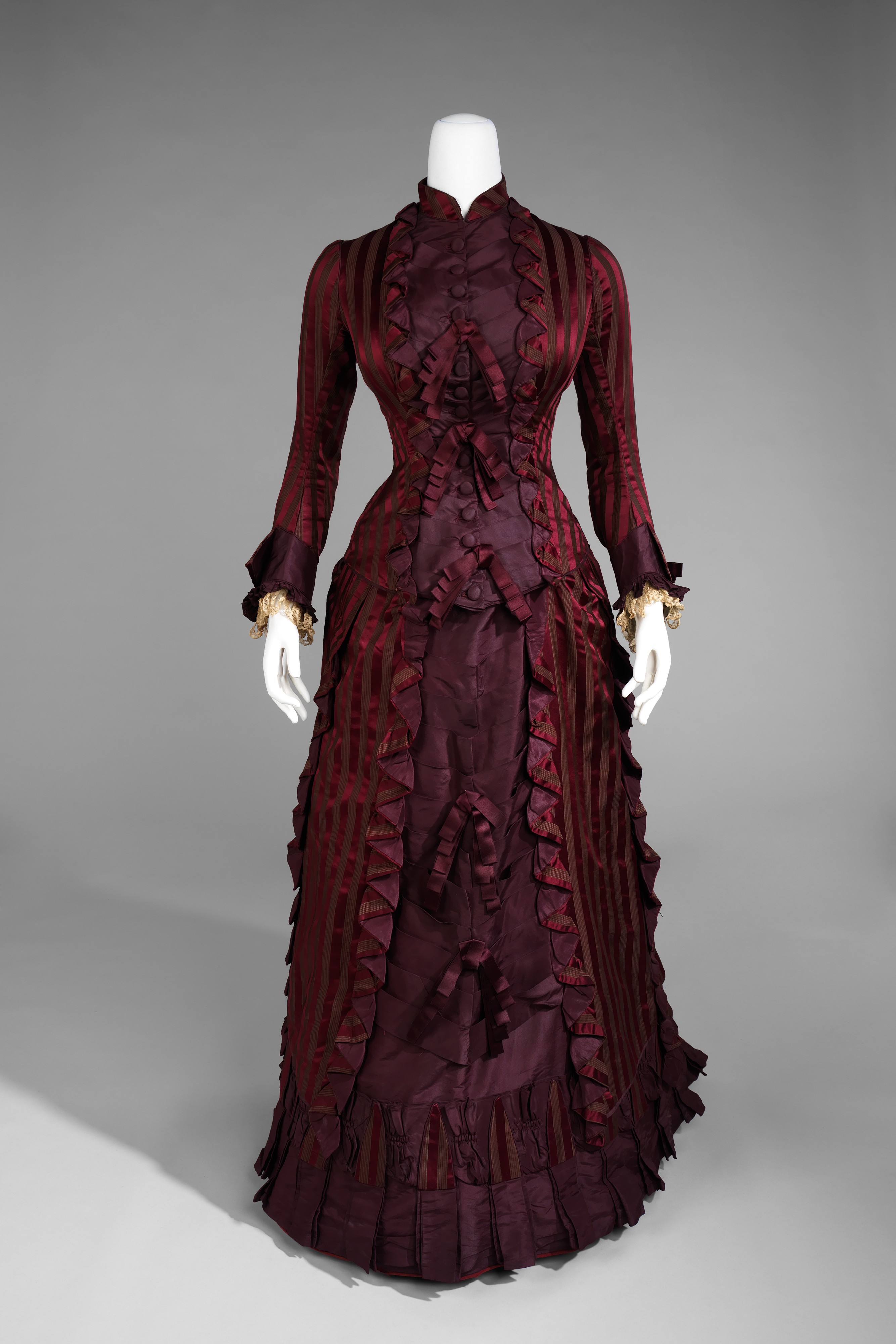
Silent Archives: The American Silk Wedding Ensemble as a Hermeneutic Object
Within the isolated field of aesthetic archaeology, the artifact is not merely an object but a text. This particular specimen—an early 20th-century American wedding ensemble in pure silk—exists in a curated silence, divorced from its original social narrative. This deliberate isolation allows the Natalie Fashion Atelier cabine to engage in a pure hermeneutic exercise. We are not studying a wedding; we are studying a constellation of technical decisions, material dialogues, and sculptural intentions. The "classical elegance" it embodies is not a vague sentiment but a precise architectural philosophy: the reconciliation of bodily presence with an ideal of serene, untroubled form. Deconstructing this philosophy provides the foundational algorithms for 2026's luxury silhouettes, where heritage is not quoted but recomputed.
Deconstruction of a Classical Proposition: Architecture, Not Ornament
The ensemble’s elegance is a product of severe technical reduction. Its silhouette is a study in controlled amplification. The bodice, built upon a foundation of hand-stitched couture seams and minimal boning, employs the inherent tensile strength of dupioni and habutai silks to create structure through material intelligence, not rigid infrastructure. The skirt achieves its volume not through excessive crinoline but through precise circular cutting and graduated pleating, allowing the silk to fall in a parabolic cascade that echoes natural law. This is the first critical insight: classical elegance is the application of structural engineering principles to soft materials. The luxury of 2026 moves beyond overt spectacle to this realm of invisible, intelligent construction. The 2026 silhouette will manifest this as "quiet volume"—architectural shapes born from geometric cutting and material properties rather than external armature, creating a sense of effortless, inherent fullness.
Furthermore, the artifact’s handling of surface reveals a doctrine of intrinsic decoration. The sheen of the silk, its subtle slubs, and the shadow lines created by seam placements are the primary decorative elements. Any embroidery is minimal, serving to accentuate structural lines rather than obscure them. This presents a second axiom: elegance is the elevation of materiality to the level of narrative. For 2026, this translates to a hyper-focused, almost obsessive, dialogue with material. Silks will be engineered not just for drape but for specific acoustic properties (the sound of movement), thermo-regulation, and light interaction. The surface will be the story, demanding a return to the deepest understanding of fiber, weave, and finish as the starting point of design.
Recombinant Genetics: Informing the 2026 Luxury Silhouette
From this deconstruction, we can now synthesize the genetic codes for forward-facing luxury. The 2026 silhouette, informed by this isolated archaeology, will be defined by three core principles: Animated Structure, Asymmetric Equilibrium, and The Monastic Gleam.
Animated Structure: The Kinetic Bodice
Inspired by the artifact’s bodice, which uses material and cut to shape the body with gentle persuasion, the 2026 interpretation evolves into a concept of "animated structure." Utilizing advanced silk blends—perhaps integrating molecularly aligned silk polymers with trace elastomeric threads—the bodice becomes a responsive second skin. It provides sculptural form that adapts to micro-movements, creating a living silhouette. Seam placements will be dictated by muscular and skeletal mapping, not just tradition, resulting in couture that is anatomically intelligent. The elegance is no longer static; it is a dynamic state of being, a continuous, graceful negotiation between body and garment.
Asymmetric Equilibrium: The Discipline of the Unbalanced
The classical ensemble presents perfect bilateral symmetry, the apex of a formal ideal. The 2026 translation, however, seeks a more profound and modern harmony: equilibrium through calculated asymmetry. Imagine the parabolic volume of the original skirt, but reconfigured. A single, dramatic godet may erupt from a minimalist sheath, or pleating may cascade from one hip only, creating a sense of dynamic, frozen movement. The key is that this asymmetry is resolved through impeccable balance in weight distribution and visual tension, a direct application of the artifact’s core architectural discipline to a more expressive, less literal form. The silk’s role is critical here; its fluidity and memory allow for such precise, gravity-defying manipulations.
The Monastic Gleam: A New Theology of Surface
Finally, the artifact’s material piety—its reliance on the innate beauty of silk—informs "The Monastic Gleam." This 2026 principle rejects applied ornament in favor of a deep, almost spiritual, investigation of surface through alchemical treatments. Silks will be finished with techniques that alter their fundamental interaction with light: crushed, waxed, or mineral-coated to produce a luminosity that appears to emanate from within the fiber itself. A gown may possess the austere, columnar silhouette of a monastic habit, yet its surface will shimmer with a subdued, celestial radiance. This creates a powerful paradox: severe, minimalist forms cloaked in a technically achieved, ethereal materiality. It is the very essence of modern elegance—a statement that is both profound and quiet, where luxury is an intimate experience between the wearer and the material.
Conclusion: The Archive as Algorithm
This isolated American silk wedding ensemble, viewed through the lens of aesthetic archaeology, ceases to be a relic of nostalgia. It is re-contextualized as a rigorous set of design protocols. Natalie Fashion Atelier’s methodology extracts these protocols—the primacy of structural materiality, the elegance of reduction, the narrative of surface—and inputs them into the creative mainframe for 2026. The resulting silhouettes are not retrograde but radically evolved: they are garments of animated structure, asymmetric balance, and monastic materiality. They answer a growing desire for intelligent luxury, where heritage is not a visual reference but an embedded, operational logic. In this silent dialogue with the archive, we do not revive the past; we compile its most elegant code to write the future.