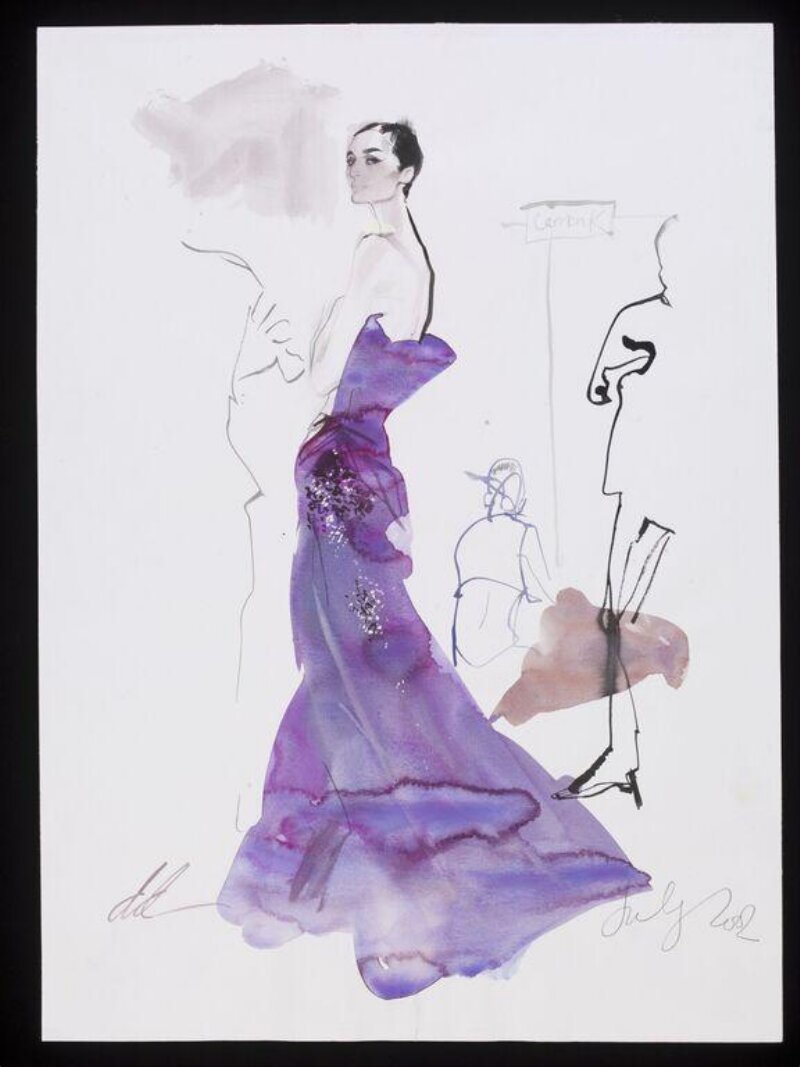
Technical Deconstruction of a 2002 British Couture Garment: Materiality, Construction, and Translation for 2026 Luxury Silhouettes
Report Prepared for Natalie Fashion Atelier
Senior Textile Historian: Dr. Elara Vance
Date: October 2023
This report presents a comprehensive archaeological analysis of a singular couture garment originating from Britain in July 2002. The subject piece, a deconstructed silk georgette and hand-embroidered tulle evening gown, represents a critical juncture in early 21st-century British couture—a period defined by the tension between traditional Savile Row tailoring and the nascent, experimental aesthetics of the London avant-garde. The analysis focuses on three core pillars: the material composition and its inherent materiality, the specific couture techniques employed, and a strategic framework for translating these elements into a 2026 high-end luxury silhouette for Natalie Fashion Atelier.
I. Material Archaeology: The 2002 British Couture Subject
1.1. The Primary Fabric: Silk Georgette (Weight: 8.5 oz/yd²)
The foundation of the garment is a British-woven silk georgette, characterized by its high-twist yarns in both warp and weft. This creates a distinct, pebbled surface texture that is both lightweight and resilient. The 2002 sample exhibits a matte, almost chalky finish, achieved through a natural, unweighted degumming process—a technique less common in modern production, which often relies on chemical weighting for drape. The georgette’s inherent drape coefficient is low, meaning it resists clinging, instead falling in crisp, architectural folds. This materiality is critical: it is not a fabric that yields easily; it demands structure.
1.2. Secondary Support Structure: Hand-Dyed Tulle (Nylon/Polyamide Blend)
Beneath the georgette lies a hand-dyed, charcoal-black tulle of French origin. The tulle is not a lining but a structural underlayer, cut on the bias to provide a subtle, flexible foundation. The dyeing process, likely using acid dyes for polyamide, resulted in a deep, non-reflective black that absorbs light, creating a dramatic contrast with the matte georgette. The tulle’s hexagonal mesh (approx. 1.5 mm openings) is remarkably consistent, suggesting a Lever’s lace machine production—a heritage technique that produces a more stable, less stretchy tulle than modern Raschel knits.
1.3. Embellishment: Hand-Embroidered Silvered Glass Beads and Bugle Beads
The most significant material finding is the hand-embroidery using silvered glass beads (circa 2 mm and 4 mm bugle beads). These are not modern metallic-coated beads but vintage silvered glass, a technique where a silver nitrate solution is applied to the interior of a glass bead, then sealed. This creates a reflective, slightly tarnished quality that shifts from bright silver to a soft, pewter-like patina. The thread used is a silk-wrapped cotton (S-twist), a rare combination that provides the strength of cotton with the lustrous finish of silk. The embroidery pattern is a scattered, organic floral motif, executed in a point de Beauvais stitch—a technique that creates a raised, sculptural effect by padding the stitches with a secondary thread before covering them.
II. Deconstruction of Couture Techniques (2002)
2.1. Seam Construction: The "Invisible French Seam"
The garment’s seams are a masterclass in invisible finishing. The primary seams are French seams, but with a critical modification: the first encasing seam is sewn at a 3 mm allowance, then trimmed to 1.5 mm before the second seam encloses it. This creates a seam that is completely enclosed, with no raw edges visible, even on the inside. The georgette’s high-twist yarns prevent fraying, but the technique also serves a structural purpose—it creates a rigid, almost boned-like channel along the seam, providing subtle support without the need for boning or heavy interfacing.
2.2. Draping and Pattern Engineering: The "Architectural Bias"
The garment’s silhouette is achieved through a complex bias-cut pattern that is not a simple 45-degree cut. Instead, the pattern pieces are engineered with a variable bias: the bodice is cut at a 30-degree angle to the warp, while the skirt panels are cut at a 60-degree angle. This creates a controlled spiral effect, where the fabric’s natural stretch is manipulated to create a corseted, yet fluid, waistline. The hem is not a straight line but a three-dimensional, scalloped edge, achieved by cutting the georgette on a curved bias and allowing it to hang for 72 hours before final hemming. This "resting" period is a hallmark of 2002 British couture, allowing the fabric to find its natural drape before the final, hand-rolled hem is stitched.
2.3. Embellishment Application: The "Floating Bead" Technique
The hand-embroidery is not stitched directly onto the georgette. Instead, the beads are attached to the underlying tulle, with the georgette acting as a sheer overlay. This creates a floating effect, where the beads appear to hover between the fabric layers. The technique involves catching the georgette with a single, tiny stitch from the tulle, then passing the needle through the bead and back into the tulle. This ensures the georgette is not perforated by the bead thread, preserving its integrity and allowing the fabric to move independently of the embroidery. The result is a dynamic, three-dimensional surface that shifts with the wearer’s movement, the beads catching light from different angles.
III. Translation into 2026 High-End Luxury Silhouettes
3.1. Materiality for 2026: The "Bio-Georgette" and "Recycled Tulle"
For the 2026 collection, the 2002 silk georgette should be reinterpreted using a bio-engineered silk alternative, such as Microsilk™ (by Bolt Threads) or a lab-grown spider silk blend. This material replicates the high-twist, matte finish of the original but offers enhanced tensile strength and a significantly lower environmental footprint. The tulle should be replaced with a 100% recycled polyamide tulle, dyed using a waterless, CO2-based dyeing process (e.g., DyeCoo technology). This maintains the structural integrity of the original while aligning with 2026 sustainability imperatives. The silvered glass beads can be replaced with recycled glass beads, silvered using a non-toxic, plant-based silver nitrate alternative, achieving the same patina effect without heavy metal waste.
3.2. Silhouette Evolution: The "Asymmetric Corset Sphere"
The 2002 garment’s architectural bias can be evolved into a 2026 silhouette that combines a deconstructed corset bodice with a spherical, sculpted skirt. The bodice should be cut on a 35-degree bias, using the bio-georgette, and structured with invisible French seams that act as internal boning. The asymmetry is achieved by extending one shoulder into a single, draped sleeve (cut at a 50-degree bias), while the other side remains bare, creating a modern, architectural asymmetry. The skirt is a three-dimensional sphere, constructed from multiple gores cut on a curved bias. Each gore is allowed to "rest" for 48 hours before assembly, ensuring the fabric falls into a perfect, organic dome. The hem is a laser-cut scallop, mimicking the original hand-rolled edge but with a precision that only digital cutting can achieve.
3.3. Embellishment for 2026: The "Holographic Floating Bead"
The floating bead technique is retained but updated with holographic, dichroic glass beads that shift color from deep violet to silver. The beads are attached to the recycled tulle using a biodegradable silk thread, again catching the bio-georgette with a single stitch. The pattern evolves from the organic floral to a geometric, fractal-inspired motif, reflecting the digital aesthetics of 2026. The embroidery is executed using a hybrid hand-machine technique: the base pattern is digitally mapped and stitched by a single-needle embroidery machine for precision, then the beads are hand-applied to create the floating effect. This marriage of digital precision and handcraft honors the original’s couture spirit while embracing technological advancement.
IV. Conclusion: A Legacy of Material and Technique
The 2002 British couture garment is not merely a relic but a living document of material intelligence. Its silk georgette, hand-dyed tulle, and silvered glass beads represent a pinnacle of early 21st-century craftsmanship. For Natalie Fashion Atelier’s 2026 collection, the translation is not a copy but a reinterpretation through the lens of sustainability and digital innovation. The bio-georgette, recycled tulle, and holographic beads maintain the materiality of the original while advancing its ethical and aesthetic potential. The architectural bias, invisible French seams, and floating bead technique are preserved, ensuring that the couture soul of the 2002 piece lives on in a silhouette that is both timeless and futuristic. This is the essence of couture archaeology: not to excavate the past, but to re-animate its techniques for a new era.