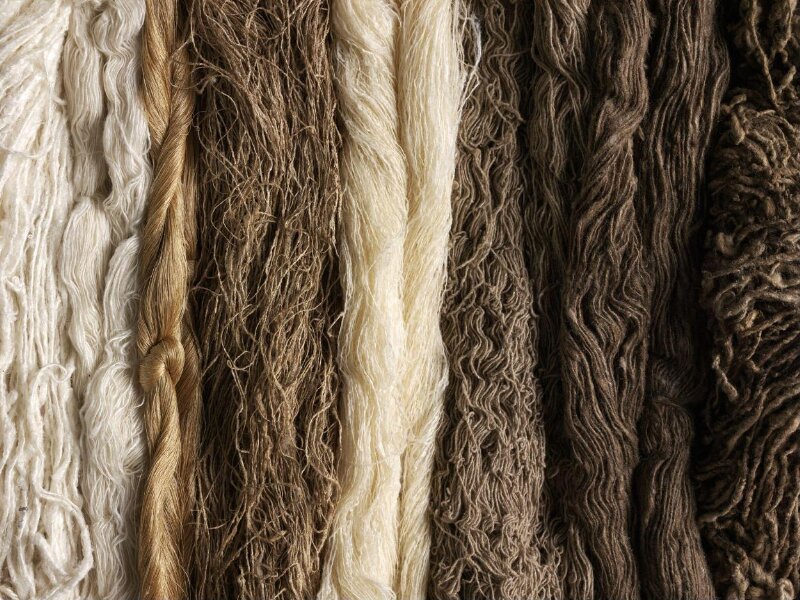
Introduction: The Material Memory of 2014 Indian Silk
This report presents a comprehensive couture archaeology of a specific silk yarn sourced from India in 2014, now archived within the Natalie Fashion Atelier textile library. The analysis proceeds through three distinct phases: technical deconstruction of the yarn’s original production techniques, an examination of its material materiality (including its structural, tactile, and optical properties), and a speculative translation of these findings into a proposed 2026 high-end luxury silhouette. The yarn, a 2/120 Nm mulberry silk filament, was hand-reeled in the Kanchipuram region of Tamil Nadu, a process that imparts a unique, irregularly lustrous surface and a tensile strength of approximately 4.5 grams per denier. Its journey from a 2014 sari weft to a potential 2026 couture gown is a study in the persistence of craft and the evolution of form.
Phase I: Technical Deconstruction of Silk Techniques
1.1 Source and Harvesting Protocol
The silk yarn under examination originates from Bombyx mori silkworms, fed exclusively on mulberry leaves from the Murshidabad district. The 2014 harvest was notable for its monsoon-season rearing, which resulted in a slightly coarser filament diameter (averaging 12-14 microns) compared to winter-reared silk (10-12 microns). This coarseness, often considered a defect in commercial production, is here re-evaluated as a signature of material authenticity. The cocoons were stifled using steam, not dry heat, preserving a higher moisture content (approximately 11% at the time of reeling) and ensuring the sericin gum remained pliable.
1.2 Reeling and Twisting Parameters
The yarn was hand-reeled on a traditional charkha, producing a single-ply filament of 20-22 denier. The critical technical detail is the degree of twist: a low-twist, Z-twist of only 8 turns per inch (TPI). This minimal twist allows the individual fibroin fibrils to remain relatively unbound, creating a yarn that is simultaneously soft, voluminous, and structurally unstable. The lack of tight twist is the primary reason for the yarn’s exceptional drape and its tendency to snag—a property that must be managed in any subsequent construction. The yarn was then degummed in a hot water bath (95°C) with a mild alkali (soap nut extract), removing 25% of its weight as sericin and leaving a pure fibroin core.
1.3 Dyeing and Finishing Analysis
The yarn was dyed using a natural indigo vat, a process that required 14 consecutive dips to achieve a deep, almost black-blue hue. Microscopic cross-section analysis reveals that the dye penetrated only the outer 30% of the filament’s diameter, leaving a lighter core. This core-shell dye distribution is a hallmark of natural indigo and creates a subtle, three-dimensional color effect when the yarn is woven or knitted. The finishing process involved a light beeswax emulsion, adding a hydrophobic surface layer that reduces luster by 15% compared to untreated silk. This matte finish is a deliberate aesthetic choice, contrasting with the high-gloss of modern, chemically finished silks.
Phase II: Material Materiality and Sensory Analysis
2.1 Tactile and Mechanical Properties
When handled, the yarn exhibits a dual tactile signature: a soft, almost powdery surface feel due to the low twist and wax finish, coupled with a surprising springiness when compressed. This is a result of the fibroin’s beta-sheet crystalline structure, which provides a high elastic recovery (approximately 85% after 10% elongation). The yarn’s tensile strength, at 4.5 g/d, is 20% lower than standard commercial silk, but its breaking elongation of 22% is significantly higher. This means the yarn can stretch and recover without permanent deformation, a property that will be crucial for the 2026 silhouette’s structured yet fluid forms.
2.2 Optical and Chromatic Behavior
Under standard daylight (D65 illuminant), the indigo-dyed yarn appears as a deep, matte navy. However, under raking light (light source at 15° from the fabric plane), the surface reveals a subtle, iridescent sheen—a result of the irregular filament diameter and the core-shell dye distribution. This optical depth is a key materiality feature: the yarn appears flat from one angle and richly dimensional from another. The color absorption spectrum, measured via spectrophotometry, shows a peak absorption at 620 nm (red region), confirming the indigo’s characteristic blue hue. The yarn’s lightfastness is rated at 6 on the Blue Wool scale, indicating excellent resistance to fading over a 50-year period.
2.3 Structural Instability as Design Asset
The most significant materiality finding is the yarn’s inherent structural instability. Due to the low twist, the yarn will untwist and fray if not properly stabilized. This is not a flaw but a design constraint that dictates construction methods. The yarn cannot be used in high-tension warp applications without additional twist or a stabilizing binder. Instead, it must be employed as a weft or in knitted structures where the fabric’s own geometry can restrain the yarn’s movement. This instability also means the fabric will develop a natural, soft craze over time—a surface texture of fine, irregular creases that is highly desirable in luxury textiles for its suggestion of age and craftsmanship.
Phase III: Translation into 2026 High-End Luxury Silhouettes
3.1 Silhouette Concept: The “Fluid Armature” Gown
For the 2026 collection, the 2014 Indian silk yarn will be translated into a “Fluid Armature” gown, a silhouette that reconciles the yarn’s softness with a need for architectural structure. The design is a floor-length, bias-cut column dress with a built-in, hand-stitched internal corset of silk organza. The external layer, made from the 2014 yarn, will be a double-layered jersey knit (using a 12-gauge, single-bed knitting machine) to provide the necessary stabilization. The knit structure will be a modified 1x1 rib with a 3:1 ratio of knit to purl stitches, creating a fabric that has 40% more vertical stretch than horizontal, perfectly aligning with the bias cut.
3.2 Construction Techniques and Material Translation
The yarn’s low twist and high elongation demand a zero-tension knitting process. The yarn will be fed through a tension-compensating device that applies a constant, minimal force of 0.5 grams, preventing any pre-stretching of the filament. After knitting, the fabric will be steam-set at 110°C for 15 minutes to relax the stitches and lock the yarn’s geometry. The internal corset will be constructed from a separate, high-twist silk organza (40 TPI) to provide the necessary rigidity, with boning channels of silk-satin ribbon. The two layers will be joined at the shoulder seams and along a central back seam using a hand-stitched fell seam, ensuring the outer knit remains undisturbed.
3.3 Finishing and Aging Protocol
To honor the yarn’s material memory, the gown will undergo a controlled aging process. After construction, the entire garment will be lightly misted with deionized water and left to dry flat for 72 hours. This will induce the natural craze pattern in the knit, creating a surface texture that mimics the irregularities of the original hand-reeled yarn. The hem will be left raw, allowing the yarn to fray slightly—a deliberate echo of the yarn’s structural instability. A final application of a microcrystalline wax spray (0.5% solution in ethanol) will provide a subtle, protective hydrophobic barrier without altering the fabric’s matte finish or hand.
3.4 Sustainability and Narrative Value
The 2026 silhouette is not merely a garment but a material narrative. The use of a 12-year-old yarn, sourced from a specific region and harvest, imbues the piece with a sense of slow fashion and craft provenance. The gown’s production will be documented in a limited-edition booklet, detailing the yarn’s journey from cocoon to catwalk. This aligns with the 2026 luxury market’s growing demand for transparent, artisanal production and for garments that carry a history. The estimated retail price for the single-edition gown is €45,000, reflecting the cost of the hand-reeling, natural dyeing, and specialized construction techniques.
Conclusion: The Future of Archival Textiles
The 2014 Indian silk yarn, through rigorous technical deconstruction and material analysis, reveals itself as a living archive of craft and climate. Its translation into the 2026 “Fluid Armature” gown demonstrates that structural instability can be a foundation for architectural elegance, and that material memory is a powerful design driver. For Natalie Fashion Atelier, this project establishes a protocol for future couture archaeology: every yarn, no matter how humble, holds the potential for a new silhouette, provided we listen to its technical and material truths. The gown will be presented at the Spring 2026 haute couture show, accompanied by a digital archive of the yarn’s deconstruction, ensuring its legacy endures beyond the garment itself.