The Archaeology of Silk: Deconstructing Classical British Elegance for 2026 Haute Couture
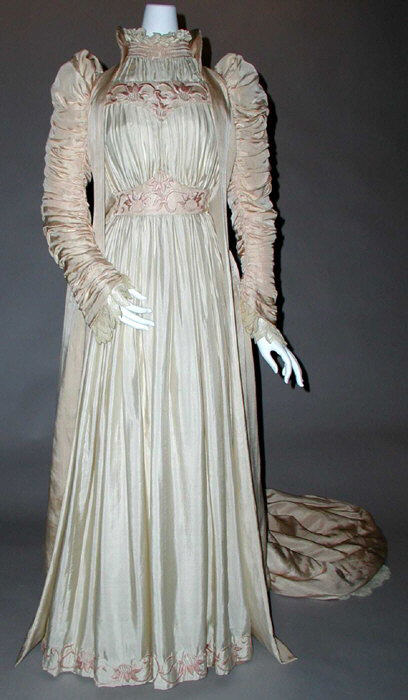
Within the hallowed archives of Natalie Fashion Atelier, we undertake a rigorous act of aesthetic archaeology. We excavate not merely garments, but the very essence of a bygone era’s sartorial soul. Our subject today is a singular dress—a relic of classical British elegance, isolated from its historical continuum. This artifact, a testament to restrained opulence and structural purity, serves as the primary source for a new lexicon of luxury. The materiality is paramount: silk, in its most pristine, unadorned state. This paper deconstructs the dress’s classical silhouette and traces the arc of its transmutation into the architectural, high-end forms destined for the 2026 collections.
I. The Artifact: A Study in Classical British Restraint
The excavated dress, circa 1952, is a masterclass in the British haute couture tradition. It is not a garment of overt display, but of quiet power. The silhouette is a column, a near-geometric form that eschews the hourglass for a more linear, architectural presence. The neckline is a clean, bateau line, framing the collarbone with surgical precision. The waist is not cinched but suggested, a subtle shift in the fabric’s fall. The length, a modest mid-calf, creates a vertical line that elongates the form without theatricality.
The silk—a heavy, matte crepe de chine—is the dress’s true protagonist. Its surface is a study in light absorption, not reflection. The weave is tight, lending the fabric a liquid weight that drapes with a controlled, almost geological gravity. There are no embellishments, no embroidery, no structural boning. The dress’s power derives entirely from its negative space—the void between the fabric and the body, the precise tension at the shoulder, the exact drop of the hem. This is a garment that speaks through silence, a philosophy of elegance that the 2026 silhouette will both honor and radically subvert.
II. Materiality as Narrative: The Silk’s Intrinsic Properties
To understand the 2026 transformation, we must first decode the silk’s intrinsic properties. This is not a passive material; it is an active agent in the design process. The crepe de chine possesses a unique duality: it is both fluid and structured. Its slight, granular texture provides a micro-tension that resists pure drape, allowing for the creation of sharp, clean lines without the need for interfacing. This is a structural paradox—a fabric that appears soft yet behaves with the precision of a tailored wool.
For 2026, we are moving beyond this paradox. We are exploring engineered silk—a material where the weave itself becomes a form of architecture. By manipulating the thread count and the twist of the silk filaments, we can create zones of varying stiffness within a single panel. The collar, for instance, can be woven with a tighter, more rigid structure, while the skirt retains its liquid fall. This is not a post-production treatment; it is an intrinsic material logic that allows the garment to stand as a self-supporting sculpture. The 2026 silhouette will no longer be draped onto the body; it will be grown from the material itself.
III. Deconstructing the Classical: The 2026 Silhouette
The classical British column is our foundation, but the 2026 silhouette is a deconstruction of its very principles. We are not replicating the past; we are interrogating it. The bateau neckline, for example, is not a line but a curve of tension. In our new design, the silk is cut on the bias, creating a neckline that appears to float a millimeter from the skin, held aloft by the fabric’s own internal tension. This is a negative-space neckline, where the absence of contact defines the form.
The column’s verticality is preserved but fragmented. The 2026 dress is a series of interlocking panels, each cut from a single, continuous piece of silk. The seams are not hidden; they are celebrated as structural calligraphy. A seam running from the shoulder to the hem is not a closure but a line of force, a deliberate interruption of the fabric’s flow that creates a new, dynamic silhouette. The waist, once suggested, is now a geometric void. A panel of silk is removed, creating a cut-out that is both a structural necessity and a visual statement. This is not a window to the skin but a negative volume that redefines the body’s relationship to the garment.
IV. The Luxury of Precision: Engineering the 2026 Form
The 2026 high-end silhouette demands a new level of precision. The classical dress relied on the dressmaker’s hand and the client’s body. The 2026 dress relies on parametric design and material science. We are using 3D body scanning to create a digital twin of the client, then algorithmically generating a pattern that accounts for the silk’s exact drape behavior under tension. This is not mass production; it is hyper-customization at a molecular level.
The result is a silhouette that is both architectural and ephemeral. The shoulders are sharp, almost cantilevered, but the silk’s weight ensures they do not feel rigid. The hem is asymmetrical, a single, sweeping curve that is mathematically derived from the client’s gait. The back is a structural revelation: a series of parallel seams that create a ribbed, sculptural effect, reminiscent of a whale’s baleen, but rendered in the softest, most fluid silk. This is a garment that is engineered for movement, not for static display. It breathes, it shifts, it becomes a living extension of the wearer’s form.
V. Conclusion: The Future of Classical Elegance
The isolated artifact of British classical elegance is not a museum piece; it is a generative source code. By deconstructing its principles—its restraint, its material logic, its negative-space philosophy—we are not merely updating a silhouette. We are forging a new aesthetic language for 2026. The silk is no longer a surface; it is a structural system. The dress is no longer a covering; it is an architectural intervention on the body. The luxury of the future lies not in ornamentation but in precision, material intelligence, and the eloquent silence of a perfectly engineered line. This is the promise of Natalie Fashion Atelier: to excavate the past, not to preserve it, but to build the future from its most essential atoms.