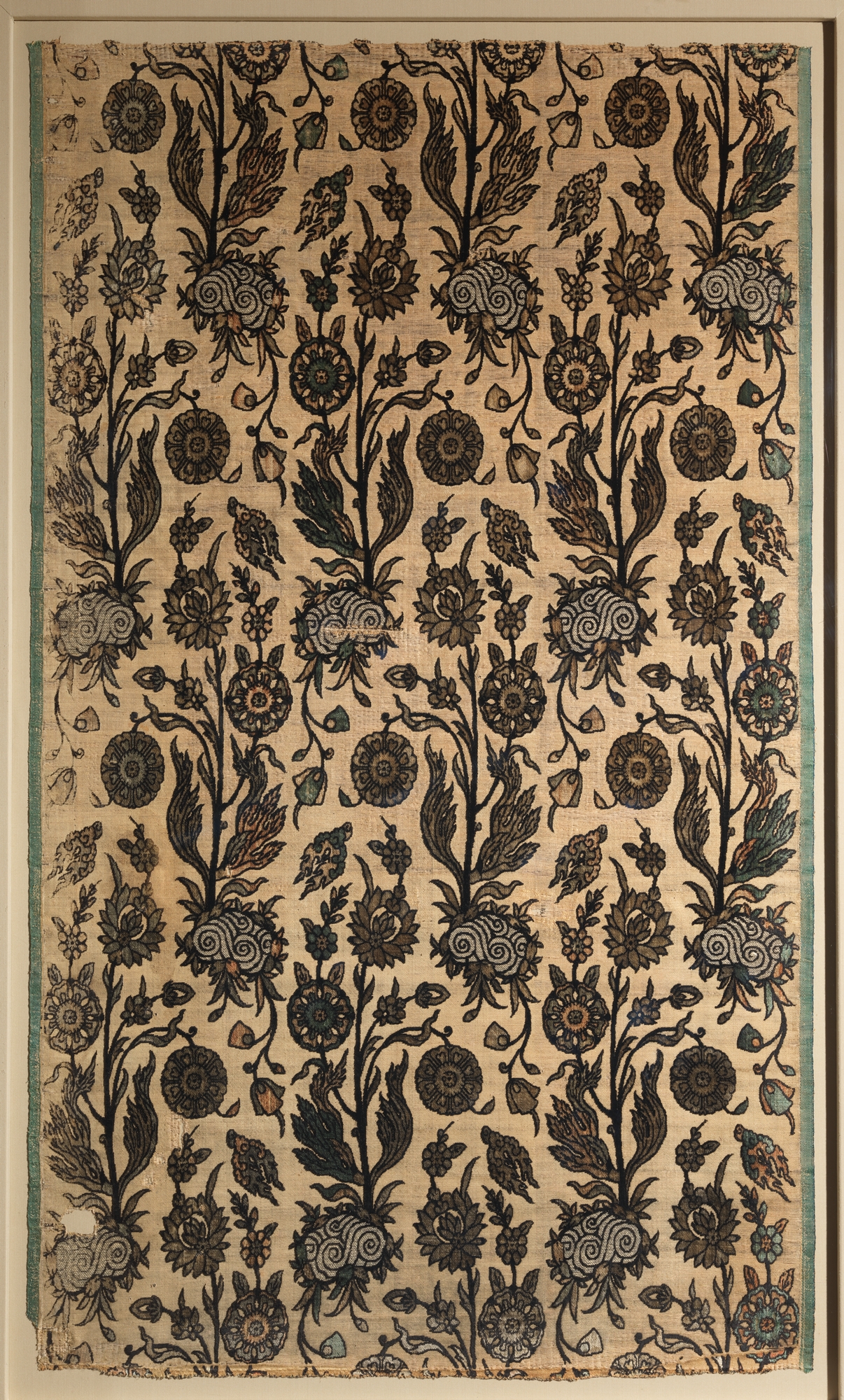
Aesthetic Archaeology: Deconstructing the Velvet Panel with Flowering Plants
The artifact under examination—a velvet panel featuring flowering plants, executed in silk, cotton, and flat metal wrapped thread through the techniques of cut and voided velvet with brocading—represents a pinnacle of textile artistry from a global heritage context. This piece, isolated within the archives of Natalie Fashion Atelier as a subject of aesthetic archaeology, is not merely a decorative fragment but a sophisticated lexicon of material intelligence. Its construction, rooted in the interplay of opulent sheen and deliberate absence, offers a profound blueprint for the 2026 luxury silhouette. The panel’s classical elegance is not static; it is a dynamic tension between surface and void, texture and light, that directly informs the architectural draping and volumetric precision demanded by the coming season.
Materiality as Structural Grammar: Silk, Cotton, and Metal Wrapped Thread
The foundational materials—silk, cotton, and flat metal wrapped thread—are selected not for mere ornamentation but for their intrinsic structural properties. The silk provides a lustrous, fluid base with a high tensile strength, allowing for dramatic, unbroken folds. The cotton, often employed in the voided areas, introduces a matte, absorbent counterpoint, creating a dialogue between light reflection and absorption. The flat metal wrapped thread, typically silver or gold gilt over a silk core, is the critical element of tension. Its rigidity, when brocaded into the velvet, creates a structural armature that resists gravity, enabling silhouettes to hold their shape without internal boning. For 2026, this translates into garments where the textile itself dictates the architecture—jackets with sculpted, cantilevered lapels and gowns with self-supporting, petal-like volumes that emerge from the waist or shoulder.
Cut and Voided Velvet: The Poetics of Absence and Presence
The technique of cut and voided velvet is a masterclass in negative space. The pile is selectively sheared to create a raised, plush surface (the cut velvet) while leaving other areas flat and exposed (the voided ground). This is not a random pattern but a deliberate, rhythmic orchestration of texture. In the panel, the flowering plants emerge from the voided ground, their leaves and petals rendered in high-relief cut velvet, while the background remains a flat, woven silk or cotton. This creates a topographical depth that is both tactile and visual. For the 2026 silhouette, this principle informs the use of strategic cut-outs and layered panels. A gown might feature a bodice where the velvet pile is cut away to reveal a sheer, second-skin underlayer, mimicking the voided technique. The result is a silhouette that breathes, with areas of opacity and translucence that guide the eye across the body’s topography.
Brocading: The Metallic Line as Silhouette Definition
The brocaded metal wrapped thread functions as a linear, almost calligraphic element within the panel. It outlines the stems, veins, and petals of the flowering plants, creating a metallic skeleton that defines the form. This is not a flat embroidery; the thread is woven into the fabric during construction, becoming an integral part of the textile’s structure. For haute couture, this offers a revolutionary approach to silhouette definition. Instead of relying on seams or darts, the designer can use the brocaded line as a structural seam that curves around the body, creating a three-dimensional form from a single piece of fabric. In 2026, we will see this translated into dresses where a single, continuous line of metallic thread spirals from the shoulder to the hem, dictating the garment’s fall and creating a spiral silhouette that is both fluid and anchored.
From Panel to Silhouette: The 2026 Lexicon
The classical elegance of this velvet panel is deconstructed into three core principles for the 2026 luxury silhouette: Topographical Draping, Metallic Armature, and Voided Volume.
Topographical Draping
Inspired by the cut and voided technique, topographical draping treats the garment’s surface as a landscape of varying elevations. The 2026 silhouette will feature dramatic, raised panels of velvet or matte silk that rise from a flat, voided base. This creates a silhouette that is not defined by the body’s natural curves but by the garment’s own internal geography. A coat, for example, might have a smooth, voided back that transitions into a high-relief, cut velvet collar that rises like a topographical peak around the neck. The effect is simultaneously sculptural and fluid, a direct descendant of the panel’s textural hierarchy.
Metallic Armature
The flat metal wrapped thread of the brocading is reimagined as a wearable architecture. For 2026, this manifests as garments where metallic threads are woven into the fabric at strategic stress points—the shoulders, the hips, the waist—to create a structure that supports the silhouette from within. A column gown, for instance, might have a grid of brocaded metal threads that flare out at the hem, creating a bell-like shape without the need for crinoline. The metallic armature is both decorative and functional, a hidden engineering that allows for unprecedented freedom of movement within a defined form.
Voided Volume
The voided areas of the panel are not empty; they are active, negative spaces that define the positive form. In the 2026 silhouette, this translates to garments where sections of the fabric are deliberately removed or rendered transparent, creating a dialogue between the garment and the body. A jacket might have voided panels at the sides, revealing a glimpse of the skin or a contrasting underlayer, while the cut velvet panels at the front and back create a solid, voluminous shape. This technique allows for a silhouette that is both bold and intimate, a direct reference to the panel’s interplay of absence and presence.
Conclusion: The Archival Imperative for 2026
The velvet panel with flowering plants, through its sophisticated materiality and technique, offers a masterclass in structural elegance that is directly applicable to the 2026 luxury silhouette. Its cut and voided velvet teaches us to think of volume as a dialogue between surface and depth. Its brocaded metal thread provides a model for integrating structure into the textile itself. And its global heritage context reminds us that the most innovative silhouettes are often born from a deep understanding of historical craftsmanship. For Natalie Fashion Atelier, this artifact is not a relic but a living lexicon—a technical and aesthetic foundation upon which the silhouettes of the coming season will be built. The 2026 collection will not imitate the panel but will translate its principles into garments that are at once classical and radically contemporary, defined by a topographical draping, a metallic armature, and a voided volume that honors the artifact’s enduring elegance.