Aesthetic Archaeology: The Sampler as a Blueprint for 2026 Haute Couture
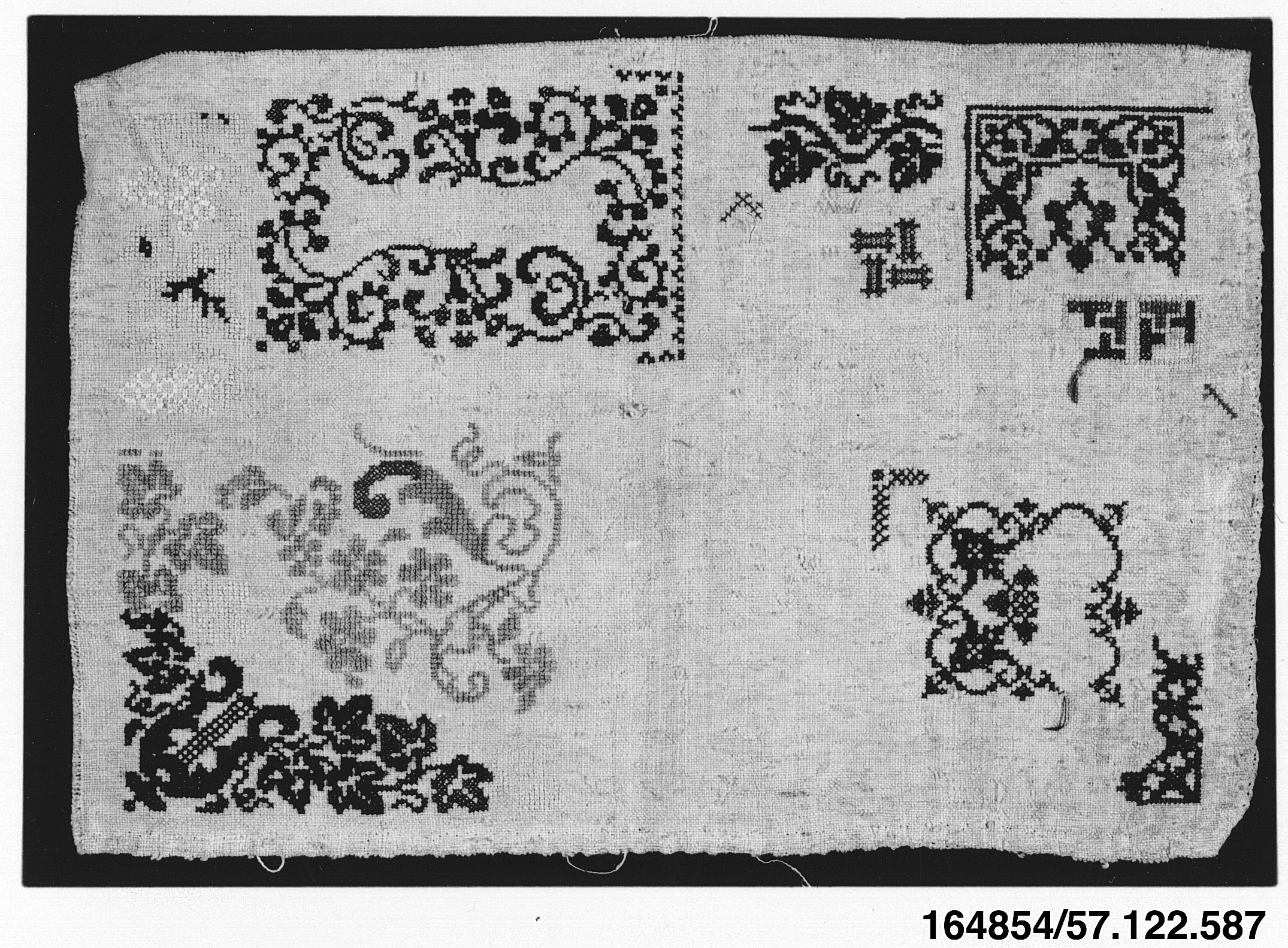
The sampler, a seemingly humble artifact of domestic needlework, holds within its stitched grid a profound lexicon of design intelligence. At Natalie Fashion Atelier, we approach the sampler not as a mere pedagogical tool of a bygone era, but as a masterclass in compositional restraint and tactile narrative. This isolated artifact—a square of hand-spun linen, embroidered with silk and linen threads—offers a silent yet potent dialogue between structure and ornament. For the 2026 haute couture season, we deconstruct this classical elegance to inform a new architectural language for the female silhouette, one that prioritizes material honesty over superfluous volume.
Deconstructing the Classical Grid: From Stitch to Silhouette
The sampler’s foundational structure is the grid. Each cross-stitch, each counted thread, establishes a rhythm of negative and positive space. This is not a rigid cage but a flexible armature. In our 2026 research, we translate this grid into the structural underlay of a garment. The traditional sampler’s border, often a repeating geometric motif, becomes the architectural hem of a coat or the décolleté framing of a gown. The interior, filled with alphabets and floral motifs, is reinterpreted as a dispersed embroidery pattern that breathes across a silk organza base. The classical elegance lies not in symmetry, but in the rhythmic interruption of the grid—a deliberate off-set stitch, a single missing thread—which we replicate as a strategic cut-out or a seamless panel shift in the 2026 silhouette.
This approach informs the modular construction of our key pieces. Consider a column dress: its front panel is a continuous field of linen thread embroidery, echoing the sampler’s central motif. The back panel, however, is left pristine, a void of unadorned silk. This creates a visual tension—a dialogue between the worked and the unworked—that defines the silhouette’s dynamic balance. The garment’s form is not dictated by a pattern piece but by the density of the stitch. Where the embroidery is thickest, the fabric becomes more rigid, creating a sculptural bas-relief that contours the body. Where the linen is bare, the silk falls in liquid folds. Thus, the sampler’s logic of controlled density directly informs the silhouette’s architectural drape.
Materiality: The Dialogue of Silk and Linen on Linen
The material triad—silk thread, linen thread, and linen ground—is a study in tactile hierarchy. The linen ground, with its subtle slubs and natural ecru tone, provides a matte, absorbent canvas. The linen thread, used for the majority of the sampler’s structure, offers a homogeneous matte finish, creating a quiet, almost invisible texture. The silk thread, introduced sparingly for accents or initials, introduces a luminous counterpoint. This is the core of the artifact’s classical elegance: the economy of contrast. For 2026, we exploit this principle to define the silhouette’s surface architecture.
We propose a double-layered construction. The base layer is a fine, unbleached linen—the sampler’s ground. Over this, we apply a second layer of silk organza, onto which we embroider using linen thread. The result is a translucent topographical map. The linen thread, being matte, appears as a shadow on the silk, while the silk ground beneath catches the light. This creates a moiré effect that shifts with movement. For a 2026 evening gown, we use this technique to create a gradient of opacity. The embroidery is densest at the shoulders and hips, forming a structured carapace, and thins to a whisper at the hem, allowing the silk to float. The silhouette thus becomes a narrative of material transition—from solid to ethereal, from linen’s earthiness to silk’s luminosity.
The Isolated Motif: Aesthetics of the Fragment
In the archive context of isolated aesthetic archaeology, we treat the sampler as a fragment of a larger system. We do not replicate its entirety; we extract its generative principles. The most potent of these is the isolated motif—a single flower, a solitary letter—placed within a vast field of empty linen. This negative space is not absence but potential energy. For 2026, we apply this to the silhouette through asymmetric placement. A single, large-scale floral motif, embroidered in linen thread on a silk ground, is positioned at the left hip of a tailored trouser. The rest of the garment is unadorned. This focal compression draws the eye and defines the silhouette’s directional flow. The garment does not need to be fully covered to be fully resolved.
Furthermore, the sampler’s alphabetical sequences—letters in orderly rows—are reinterpreted as typographic calligraphy along a seam. We use the linen thread to inscribe a single, abstracted letterform—a cipher of the atelier’s heritage—at the nape of the neck or the interior of a cuff. This is not visible in full view but is revealed in motion, a secret signature that speaks to the wearer’s connoisseurship. The silhouette, therefore, is not only a visual form but a tactile and intellectual experience.
From Sampler to Silhouette: The 2026 Collection Architecture
The 2026 high-end silhouettes derived from this research are characterized by geometric precision and material austerity. We propose three distinct archetypes:
1. The Grid-Line Tailoring: A double-breasted jacket where the lapels are defined not by fabric folds but by embroidered grid lines in linen thread on a silk base. The silhouette is sharp, almost architectural, with the embroidery acting as a structural stay. The jacket’s hem is left raw, revealing the linen ground, a nod to the sampler’s unfinished edge.
2. The Negative Space Gown: A floor-length column in silk crepe, where the entire front panel is a void of unadorned fabric. The back, however, is a dense field of linen-thread embroidery that forms a corseted exoskeleton. When the wearer moves, the front drapes freely while the back holds the form, creating a dynamic silhouette of controlled release.
3. The Fragmentary Cape: A short cape in linen, overlaid with a single, large-scale silk-thread motif at the left shoulder. The rest of the cape is left bare, the linen’s natural texture the only ornament. The silhouette is monastic in its simplicity, yet the single silk motif catches the light, creating a point of radiant focus.
Conclusion: The Sampler’s Enduring Lexicon
The sampler, as an artifact of global heritage, teaches us that luxury is not abundance but intention. Its classical elegance—born of the interplay between silk and linen on linen, between the stitched and the unstitched—provides a rigorous framework for 2026 haute couture. By deconstructing its grid, isolating its motifs, and honoring its material hierarchy, we create silhouettes that are intellectually rigorous and sensually rich. The sampler is not a relic; it is a living blueprint for a future where every stitch tells a story of place, process, and purpose.