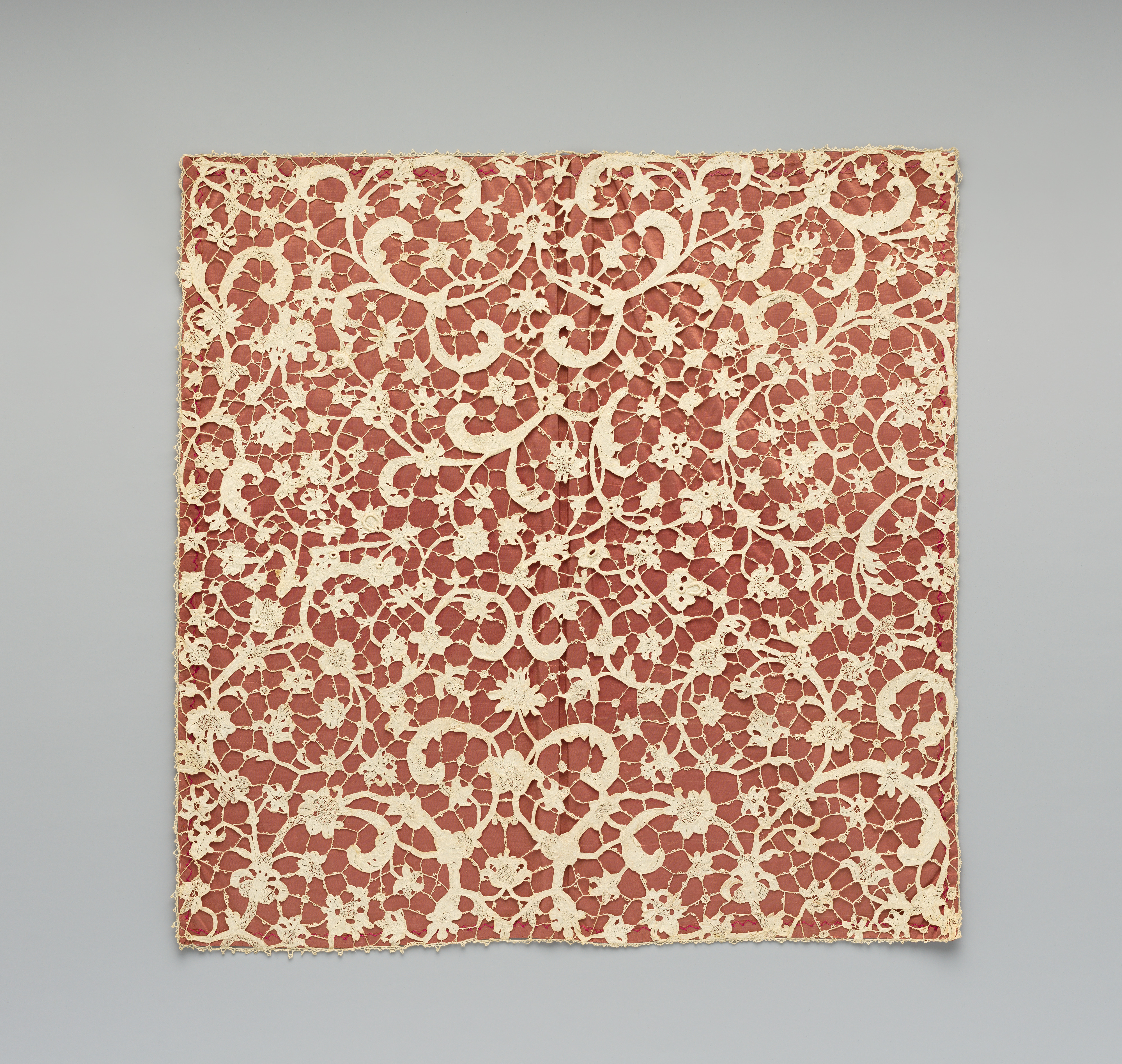
The Chalice Veil: An Archaeological Deconstruction of Needle Lace and Point Plat for 2026 Haute Couture
Within the hallowed archives of Natalie Fashion Atelier, the chalice veil emerges not as a mere liturgical artifact, but as a masterclass in structural fragility and transcendent silhouette. This research artifact, drawn from a practice of isolated aesthetic archaeology, examines the veil’s heritage—a global lineage of sacred drapery—and its specific materiality: needle lace executed in the Point plat technique. By deconstructing its classical elegance, we reveal how this ethereal textile informs the luxury silhouettes of 2026, where volume is redefined as a dialogue between void and substance, and craftsmanship becomes the ultimate expression of power.
Heritage and the Global Chalice Veil
The chalice veil, historically used to cover the Eucharistic cup, possesses a polyglot heritage that transcends European ecclesiastical boundaries. From the opus anglicanum of medieval England to the punto in aria of Renaissance Italy, and the encaje de bolillos of colonial Latin America, the veil’s form has been a constant: a square or rectangular cloth of pure, openwork textile, designed to obscure yet reveal. Its global heritage lies in this paradox—a covering that is simultaneously a window. In the context of 2026 haute couture, this paradox is paramount. The chalice veil is not a shroud; it is a membrane of light. Its aesthetic archaeology demands we consider how sacred geometry—the circle, the square, the cross—can be translated into the architecture of a garment, creating a silhouette that is both protective and permeable.
Materiality: Needle Lace and Point Plat as Structural Systems
The specific materiality of this artifact is needle lace, specifically the Point plat technique. Unlike bobbin lace, which is braided, Point plat is constructed stitch by stitch with a needle and thread, creating a ground of brides (connecting bars) and réseau (net-like background). This is not a fabric in the traditional sense; it is a three-dimensional drawing in space. For the 2026 couturier, Point plat offers a radical proposition: structure without weight. The lace’s grid, with its repeating geometric motifs—often point de Venise or point de France variations—creates a rigid yet flexible armature. Each stitch is a load-bearing element, a micro-architecture that can be scaled to create monumental forms.
The technical implications for silhouette are profound. The negative space of the lace becomes as important as the thread. In a 2026 gown, this translates to a sculptural transparency. A Point plat bodice, for instance, can define the torso without a single solid panel, relying on the tension of the brides to create a corseted effect. The weight of the thread—typically linen or silk—dictates the drape. A heavier thread yields a stiffer, more architectural form; a finer thread produces a fluid, almost liquid silhouette. The chalice veil’s heritage teaches us that the most luxurious material is the one that disappears, leaving only the trace of the hand.
Deconstructing Classical Elegance: The Veil as Silhouette Generator
Classical elegance, in the context of the chalice veil, is defined by restraint and revelation. The veil’s traditional square shape, when draped over the chalice, creates a pyramidal volume that is both static and dynamic. To deconstruct this for 2026, we must isolate its core principles:
- Asymmetrical Draping: The veil is rarely perfectly centered. Its folds create a kinetic asymmetry that can be translated into a one-shoulder silhouette or a trailing train that wraps the body like a second skin.
- Layered Transparency: The veil’s multiple layers of lace—often a single layer over a darker underlayer—create a depth of field. In a 2026 evening gown, this manifests as a dual-skin construction: a nude or tonal base layer, overlaid with a Point plat exoskeleton that mimics the veil’s grid.
- Sacred Geometry: The chalice veil’s motifs—the fleur-de-lis, the pomegranate, the grapevine—are not merely decorative. They are structural nodes that reinforce the lace. For 2026, these motifs can be scaled into three-dimensional appliqués that act as architectural brackets, holding the silhouette in tension.
Informing 2026 Luxury Silhouettes: The Point Plat Exoskeleton
The most direct translation of the chalice veil into a 2026 silhouette is the Point Plat exoskeleton. This is a garment that is all structure and no fabric. Imagine a column dress constructed entirely of needle lace panels, with point de Venise motifs forming a cage-like corset that extends into a flared skirt. The silhouette is A-line but with a rigid transparency—the body is visible through the lace, yet the form is unyielding. This is the new power dressing: a silhouette that commands attention through its craftsmanship and restraint.
For a more fluid interpretation, the chalice veil’s draped square can be reimagined as a caped gown. The Point plat is cut on the bias, allowing the lace to stretch and contract, creating a waterfall effect of openwork. The silhouette here is empire-waist, with the lace cascading from a high neckline to the floor, the brides acting as a structural knit that holds the shape without a single seam. This is elegance as negative space—the garment is defined by what it is not.
Conclusion: The Archaeology of Light
The chalice veil, in its isolated aesthetic archaeology, offers a blueprint for the future. It teaches us that luxury in 2026 is not about abundance, but about precision and absence. The Point plat technique, with its stitch-by-stitch construction, is a meditation on time and materiality. The silhouettes it informs—the exoskeleton, the draped cape, the transparent column—are not trends; they are architectural statements. They speak of a heritage that is global, a craftsmanship that is sacred, and a vision where the most powerful garment is the one that is almost not there. In the hands of Natalie Fashion Atelier, the chalice veil becomes a luminous artifact, a bridge between the sacred past and the luxury of the future.