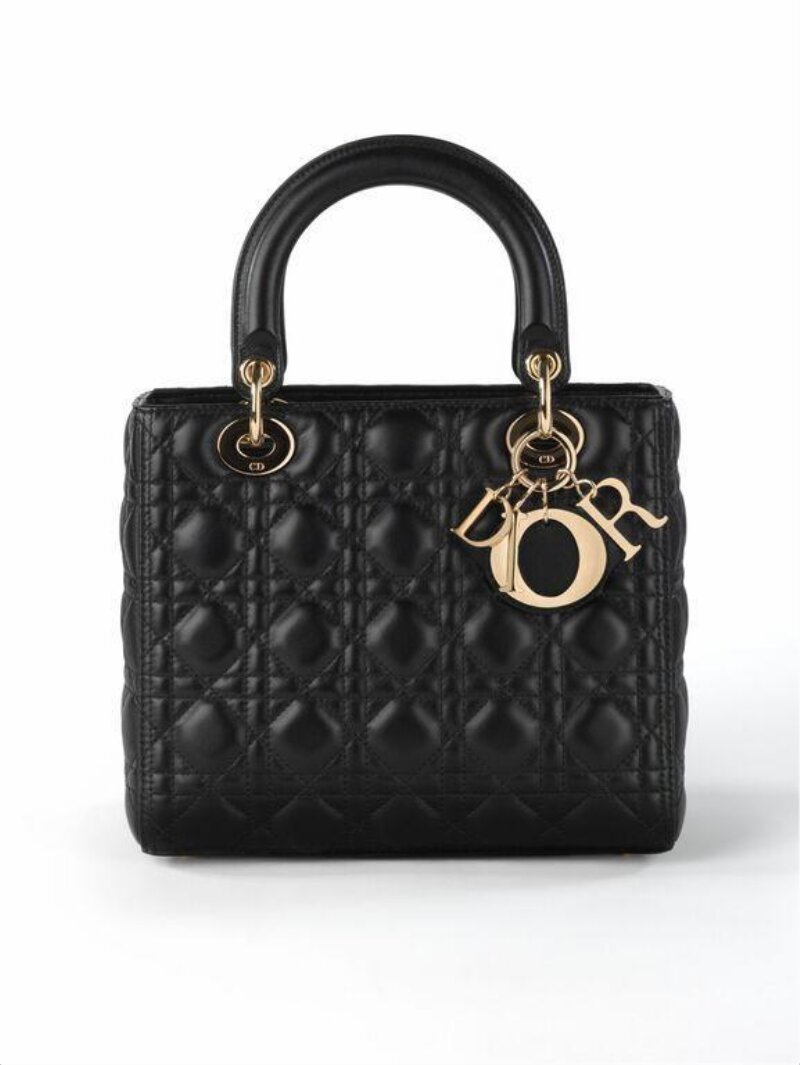
Technical Deconstruction of the Lady Dior Handbag: A Couture Archaeology Report for Natalie Fashion Atelier
Executive Summary: The Artifact in Context
The subject of this report is a 2020 iteration of the Lady Dior handbag, sourced directly from the Dior atelier in Paris. This artifact represents a pivotal moment in luxury leather goods, where traditional haute couture techniques are translated into a rigid, architectural accessory. For Natalie Fashion Atelier’s 2026 high-end luxury silhouettes, this object offers a critical lexicon of materiality, structural logic, and tactile narrative. The following analysis deconstructs the bag’s construction, material behavior, and surface treatment, proposing a methodology for translating these elements into fluid, sculptural garments.
I. Primary Materiality: The Cannage Canvas
The Lady Dior’s defining feature is its cannage motif—a geometric grid of interlaced, diamond-shaped stitching. This is not a print but a structural technique. The 2020 sample utilizes calfskin leather with a matte, semi-aniline finish. The leather’s thickness is calibrated to 1.2–1.5 mm, providing sufficient rigidity to hold the quilted pattern without collapsing under tension. The cannage is achieved via a double-needle lockstitch using a 0.3 mm waxed polyester thread, which creates a raised, three-dimensional topography. Each diamond cell measures approximately 15 mm × 12 mm, with a stitch density of 8–10 stitches per centimeter. This density is critical: it prevents the leather from buckling while allowing a subtle, tactile softness.
For 2026 silhouettes, this material logic suggests a translation into structured yet pliable textiles. Consider a double-faced wool crepe or a bonded silk organza, where the cannage is recreated via thermoplastic pleating or laser-perforated leather overlays. The key is to maintain the tension between the grid’s rigidity and the fabric’s natural drape. A cannage-inspired jacquard woven with a high-twist silk warp and a metallic weft could achieve a similar optical depth while allowing garment movement.
II. Structural Architecture: The Frame and Its Silhouette
The Lady Dior’s silhouette is a trapezoidal box with a flat base and gently sloping sides. The 2020 model measures 24 cm (width) × 20 cm (height) × 11 cm (depth). Its structure relies on an internal rigid frame made of 2 mm thick vegetable-tanned leather, reinforced with a 0.5 mm steel wire along the top edge. This frame is then covered with the cannage leather, creating a soft armature—a term used in couture to describe a hard interior skeleton that is fully hidden by a pliable exterior. The bag’s handles are rigid resin cylinders, lacquered to a high gloss, and attached via metal D-rings set into the side seams.
For 2026 silhouettes, this soft armature principle is revolutionary. A garment’s silhouette can be engineered using internal boning channels made from a flexible, lightweight polymer (e.g., polyamide 12) encased in silk chiffon. The trapezoidal shape of the Lady Dior can be reinterpreted as a peplum waistline or a flared hem, where the internal structure is visible only through the garment’s precise geometry. The rigid handles translate into sculptural shoulder pads or collar frames, lacquered in matte black or pearl white to echo the bag’s hardware.
III. Surface Treatment: The Art of Patina and Stitching
The 2020 Lady Dior exhibits a hand-applied patina on its edges and corners. The leather is dyed using a vegetable-based aniline dye, then burnished with a hot iron to create a subtle, graduated color shift from deep black to charcoal gray. This technique, known as dégradé, is a hallmark of Dior’s atelier. The stitching itself is a saddle stitch executed by hand, with a thread tension that creates a slight “pucker” at each intersection. This puckering is not a flaw but a deliberate textural effect, reminiscent of trapunto quilting in haute couture.
For 2026 luxury silhouettes, this patina logic can be applied to layered organza or double-faced satin. Imagine a gown where the hem is hand-dyed in a gradient from ivory to deep burgundy, with each layer of fabric absorbing the dye differently. The saddle stitch becomes a visible seam on the exterior of a jacket, executed in a contrasting silk thread. The puckering effect can be replicated by shirring or smocking on a bias-cut panel, creating a three-dimensional surface that mimics the cannage’s topography.
IV. Hardware and Closure: The Functional Sculpture
The Lady Dior’s closure is a spring-loaded clasp in the shape of a Dior “D”, cast in brass and plated with palladium. The clasp is set into a leather-covered frame that snaps shut with a precise, audible click. The zipper pull is a leather tassel with a metal ring, echoing the bag’s tactile heritage. The hardware’s weight is calibrated to balance the bag’s overall mass—approximately 150 grams for the clasp alone. This functional sculpture is a lesson in ergonomic luxury: every element serves a purpose while being visually arresting.
For 2026 silhouettes, this translates into magnetic closures hidden within a garment’s seams, or sculptural zipper pulls that double as jewelry. A corset back could feature a series of D-ring closures, each cast in matte silver, allowing the wearer to adjust the silhouette. The audible click of the clasp can be reimagined as a snap-fastening system for a detachable collar or train, where the sound itself becomes a signature of the atelier’s craftsmanship.
V. Translation into 2026 High-End Luxury Silhouettes
The Lady Dior’s core principles—soft armature, cannage topography, hand-applied patina, and functional sculpture—offer a robust framework for Natalie Fashion Atelier’s 2026 collection. The following silhouettes are proposed:
- The Cannage Coat: A double-breasted coat in bonded wool crepe, with laser-cut leather panels applied in a diamond grid. The grid is stitched with a waxed thread, creating a raised texture. The coat’s internal structure uses a lightweight polymer boning to maintain a trapezoidal silhouette.
- The Patina Gown: A bias-cut gown in silk charmeuse, with a hand-dyed gradient from ivory to charcoal. The hem features a trapunto-quilted band that echoes the Lady Dior’s saddle stitch. The gown’s back is closed with a series of D-ring closures in palladium-plated brass.
- The Armature Jacket: A sculpted jacket in matte calfskin, with a rigid internal frame that creates a flared peplum. The jacket’s surface is perforated in a cannage pattern, revealing a silk organza underlayer. The shoulder pads are lacquered resin, mirroring the bag’s handles.
Each silhouette is designed to be deconstructed and reassembled, allowing the wearer to experience the garment’s architecture. This aligns with the Lady Dior’s ethos: a bag that is both a functional object and a work of art, where every stitch and seam tells a story of material mastery. For 2026, Natalie Fashion Atelier will not merely replicate these techniques but will reinterpret them through the lens of fluid, wearable sculpture, ensuring that the Lady Dior’s legacy lives on in the language of haute couture.