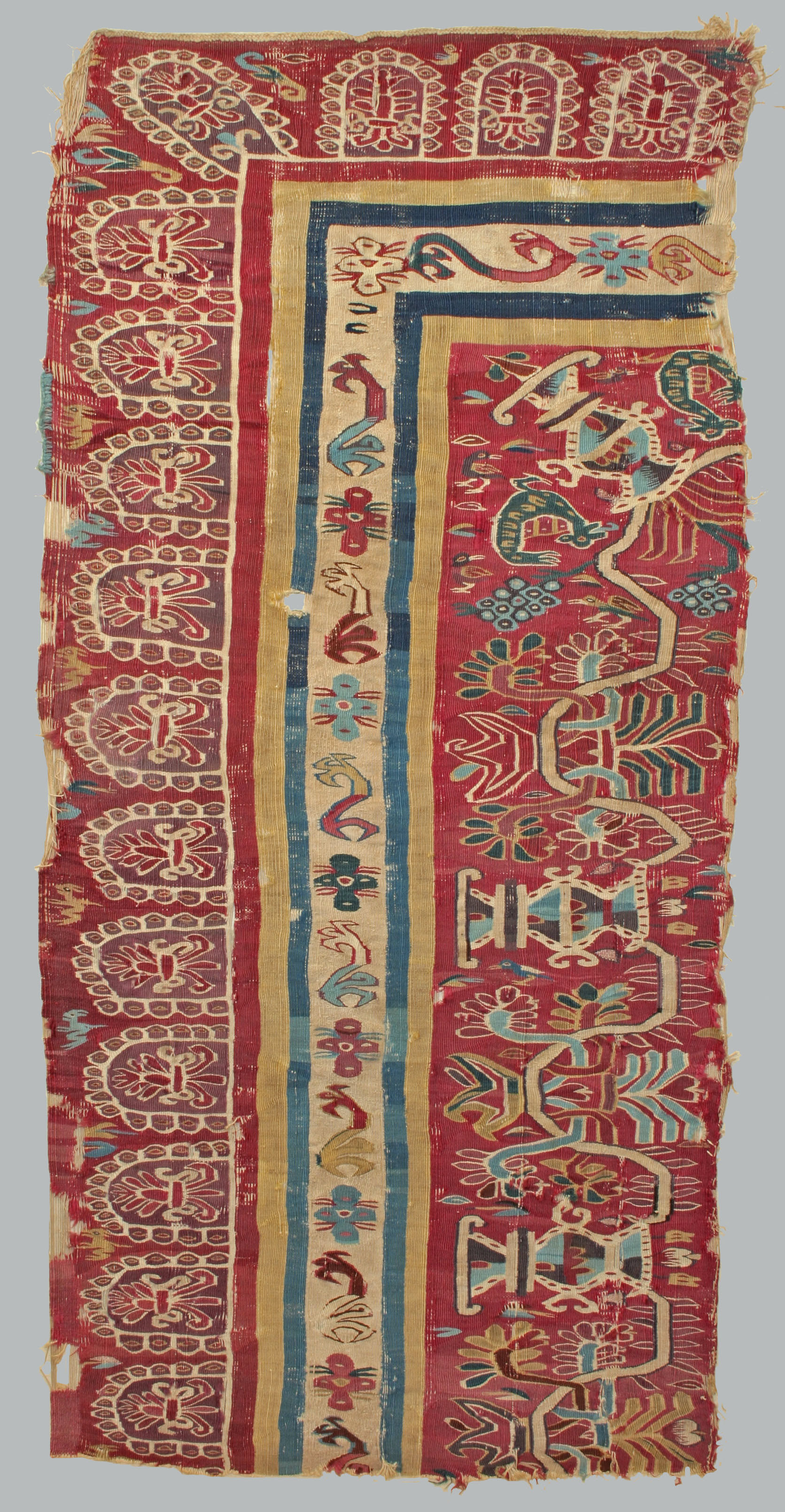
Deconstructing the Hanging Fragment: Aesthetic Archaeology and the 2026 Silhouette
The artifact in question—a Peruvian hanging fragment composed of camelid hair and cotton—presents a compelling paradox for the contemporary couturier. Isolated from its original ceremonial or domestic context, it exists now as a pure aesthetic object, a relic of a sophisticated textile tradition that predates European contact. For the Natalie Fashion Atelier, this fragment is not a mere historical curiosity but a blueprint for structural innovation. Its technical language—the interplay of rigid warp and pliant weft, the deliberate asymmetry of its hanging form, and the textural dialogue between animal and plant fibers—informs a new lexicon for the 2026 high-end silhouette. This paper deconstructs the classical elegance inherent in the fragment’s materiality and construction, then translates these principles into a series of propositions for the coming season.
Materiality as Structural Grammar
The primary material, camelid hair (likely from alpaca or vicuña), possesses a unique mechanical profile. Its fibers are hollow, offering exceptional thermal regulation and a natural, subtle luster. In tension, the hair creates a firm, almost architectural warp; in compression or draping, it yields a soft, fluid fall. The cotton weft acts as a counterpoint—a stabilizing, matte element that introduces a controlled rigidity. The fragment’s survival is a testament to this synergy: the camelid hair provides tensile strength and a memory of form, while the cotton prevents excessive distortion.
For the 2026 silhouette, this duality is paramount. The classical elegance of a tailored jacket or a column skirt is often achieved through a single, dominant material. The fragment, however, suggests a layered materiality where two distinct fibers are woven into a single, responsive plane. This informs a new approach to hybridized construction. Consider a gown where the bodice is constructed from a densely woven camelid hair, creating a structured, almost corseted shell, while the skirt transitions into a looser, cotton-dominant weave that cascades in soft, controlled folds. The silhouette is not static but dynamic, responding to the wearer’s movement with a pre-programmed architectural logic.
The Hanging Form: Asymmetry and Suspension
The fragment’s status as a “hanging” artifact is not accidental. Its original function likely involved suspension—from a wall, a doorway, or a ceremonial structure. This verticality is encoded in its weave: the warp threads bear the primary load, while the weft threads create the surface pattern. The fragment’s edges are often uneven, a result of natural wear or deliberate shaping, creating a deliberate asymmetry that challenges the rigid symmetry of classical European tailoring.
This principle of suspension translates directly into the 2026 silhouette. The classical elegance of a balanced, symmetrical form is subverted by the fragment’s lesson: a garment can be hung from a single point, creating a cascade of fabric that is both controlled and organic. For instance, a coat might be constructed with a single, off-center shoulder seam that acts as the primary load-bearing point, allowing the rest of the fabric to fall in a sweeping, asymmetrical line. The silhouette is no longer defined by the body’s bilateral symmetry but by the vector of gravity and the tension of the weave. The fragment’s uneven edges become a design feature: raw, unfinished hems that echo the artifact’s authenticity, lending a deconstructed elegance to the final form.
Texture and Light: The Luminous Surface
The interplay of camelid hair and cotton creates a textural spectrum that is both tactile and visual. The camelid hair, when brushed or left in its natural state, produces a soft, diffused halo of light. The cotton, in contrast, offers a flat, matte surface that absorbs light. The fragment’s original weavers exploited this contrast, creating patterns that emerge not from dye but from the differential reflection of light. This is a classical elegance rooted in material honesty, not ornamentation.
For the 2026 haute couture, this principle informs a luminous silhouette. Rather than relying on embellishment, the garment’s surface becomes a canvas for light manipulation. A dress might feature a bodice woven from tightly packed camelid hair, creating a soft, glowing sheen, while the skirt transitions to a looser, cotton-dominant weave that appears matte and absorbent. The silhouette is thus defined by zones of luminosity, guiding the eye across the form. The fragment’s subtle, undulating patterns—achieved through variations in weave density—suggest a new approach to textural patterning, where the garment’s surface is not printed but woven with a gradient of light and shadow.
Propositions for 2026: The Fragment-Informed Silhouette
Based on the aesthetic archaeology of this Peruvian hanging fragment, the Natalie Fashion Atelier proposes three distinct silhouette archetypes for the 2026 season:
1. The Suspended Column: A floor-length gown that hangs from a single, asymmetrical shoulder yoke. The bodice is constructed from a dense camelid hair weave, creating a structured, architectural shell. The skirt transitions into a cotton-dominant weave that falls in a controlled, asymmetrical cascade. The silhouette is defined by its vertical tension and the deliberate imbalance of its form. The hem is left raw, echoing the fragment’s unfinished edges.
2. The Luminous Cocoon: A coat or cape that envelops the body in a single, seamless plane of woven fabric. The exterior is composed of brushed camelid hair, creating a soft, luminous surface. The interior is lined with a cotton weave, providing structure and a matte counterpoint. The silhouette is voluminous yet controlled, with the fabric’s natural memory of form creating a cocoon-like shape that is both protective and elegant. The coat’s closure is minimal—a single, hidden toggle that allows the fabric to hang freely.
3. The Deconstructed Tailoring: A jacket or bolero that deconstructs the classical tailored silhouette. The garment is constructed from panels of camelid hair and cotton, each woven with a different density and texture. The panels are joined with visible, hand-stitched seams that echo the fragment’s warp and weft structure. The silhouette is fragmented yet cohesive, with each panel contributing to an overall sense of balance and asymmetry. The jacket’s lapels are replaced by a single, hanging panel that falls from the shoulder, mimicking the fragment’s hanging form.
Conclusion: The Fragment as a Living Archive
The Peruvian hanging fragment, isolated from its original context, becomes a living archive for the contemporary couturier. Its materiality—the dialogue between camelid hair and cotton—offers a structural grammar that challenges the conventions of classical tailoring. Its hanging form, with its deliberate asymmetry and uneven edges, informs a new silhouette that is both elegant and deconstructed. Its textural surface, which manipulates light through weave density, provides a model for a luminous, honest aesthetic. For the 2026 haute couture, this fragment is not a relic of the past but a blueprint for the future—a testament to the enduring power of aesthetic archaeology to inform the most advanced luxury silhouettes.