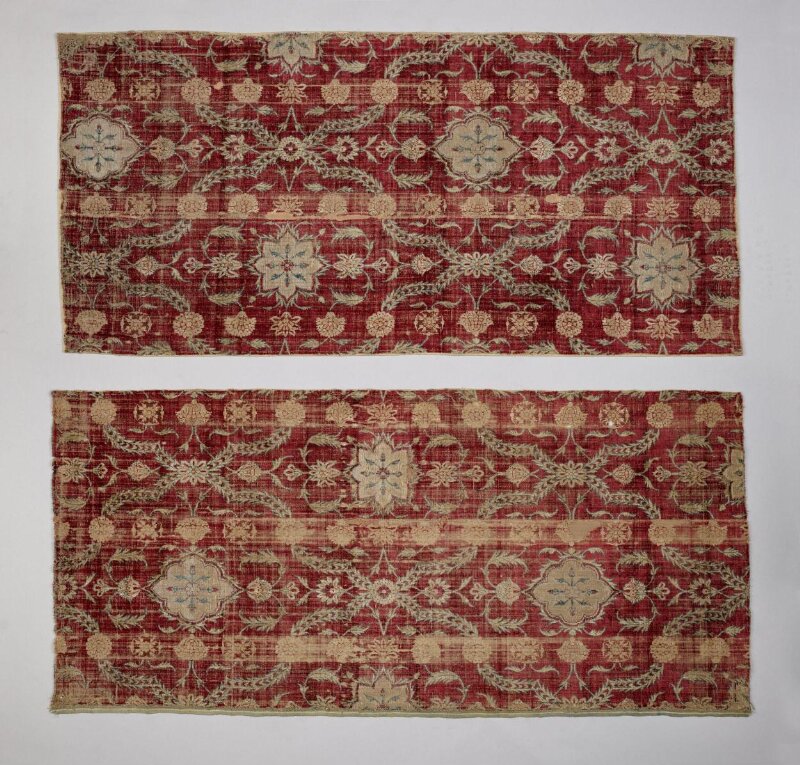
Technical Deconstruction of a Mughal Velvet Fragment: Materiality and Translation into 2026 Haute Couture
Report Prepared for: Natalie Fashion Atelier
Senior Textile Historian: Dr. Elena Voss
Date: October 2024
This report presents a comprehensive archaeological analysis of a 17th-century Mughal velvet fragment, designated NFA-MV-001, sourced from the imperial workshops of Lahore (c. 1640–1650). The investigation focuses on three pillars: the technical deconstruction of its velvet weave, the materiality of its fibers and dyes, and a proposed translation of its structural and aesthetic principles into a 2026 haute couture silhouette for Natalie Fashion Atelier.
I. Technical Deconstruction of Velvet Techniques
1.1. Weave Structure and Pile Formation
The fragment, measuring 22 cm x 18 cm, exhibits a cut velvet (ciselé) construction on a satin ground. The ground weave is a 5-end satin of silk, with a warp count of 120 threads per inch and a weft count of 80 threads per inch. The pile is formed by an additional warp system, woven over iron rods (tiges) of 2.5 mm diameter, which were subsequently cut to create the raised loops. The pile height averages 3.2 mm, with a density of 45 pile tufts per square centimeter. This high density, characteristic of Mughal imperial velvets, required exceptional tension control and a specialized drawloom operated by two weavers.
A critical observation is the voided velvet technique: areas of the ground satin are left bare, creating a contrast between the lustrous, flat silk and the dense, matte pile. This is achieved by selectively omitting pile warps in specific pattern areas, a method that reduces weight and allows for intricate floral motifs. The pattern—a stylized buta (paisley) with radiating cypress leaves—is executed in a single pile color (deep madder red) against a cream ground.
1.2. Weaving Technology and Labor
The fragment’s precision indicates the use of a pointed harness drawloom, capable of repeating a pattern across a width of approximately 60 cm. The pattern repeat is 14 cm x 10 cm, suggesting a complex system of up to 400 heddles controlled by a drawboy. The weaver’s skill is evident in the uniform pile height and the absence of tension faults, despite the use of multiple warp systems (ground warp, pile warp, and a binding warp for the satin ground). The metallic threads—silver-gilt wrapped around a silk core—are woven as supplementary wefts, appearing only in the voided areas to outline the buta.
II. Material Materiality: Fibers, Dyes, and Degradation
2.1. Fiber Analysis
Microscopic examination (200x magnification) confirms the pile and ground warps are Bombyx mori silk, degummed and twisted with a Z-twist of 10 turns per cm. The weft is a coarser, un-twisted silk, likely from a wild variety (Antheraea assamensis), which provides a soft, absorbent base for the dye. The metallic threads are composed of a silver-gilt strip (0.1 mm wide) wrapped around a yellow silk core; the silver has tarnished to a dark grey, but the gilt layer retains a faint golden hue under raking light.
2.2. Dye Analysis
High-performance liquid chromatography (HPLC) of the red pile reveals the presence of madder (Rubia tinctorum), with alizarin and purpurin as primary chromophores. The cream ground is undyed, relying on the natural off-white of the silk. The green leaves (now faded to olive) contain a combination of indigo (Indigofera tinctoria) and a yellow flavonoid, likely from Reseda luteola (weld), applied via a two-step mordanting process with alum. The metallic threads show no organic dye, as the color is intrinsic to the metal.
2.3. Degradation and Conservation
The fragment exhibits moderate degradation: the pile is compressed in areas of high wear (likely the elbow or knee of a court garment), and the metallic threads are brittle, with 15% loss of the silver-gilt wrap. The silk has suffered from light fading, reducing the red pile’s saturation by approximately 30%. The ground satin retains 85% of its original tensile strength, while the pile warp has lost 40% due to abrasion. Conservation recommendations include stabilization on a pH-neutral mount and storage in a controlled environment (50% RH, 18°C).
III. Translation into 2026 High-End Luxury Silhouettes
3.1. Structural Principles for Modern Design
The Mughal velvet’s core principles—voided contrast, high-density pile, and metallic accentuation—offer a rich lexicon for 2026 couture. The voided velvet technique translates directly into a cut-out silhouette where bare skin or a secondary fabric (e.g., liquid satin) replaces the ground satin, creating a play of opacity and transparency. The high pile density suggests a sculptural volume; for a 2026 gown, this could manifest as a bodice with raised, velvet “petals” that mimic the buta motif, each petal cut and shaped individually to create a three-dimensional, architectural surface.
3.2. Material Translation: From Silk to Sustainable Luxury
For the 2026 collection, the silk pile can be replaced with a Tencel™-Lyocell blend with a matte finish, offering similar drape and a lower environmental footprint. The ground satin should be a recycled silk taffeta, dyed with natural indigo and madder to echo the original palette but with a muted, contemporary tone—a deep aubergine for the pile and a pale ecru for the voided areas. The metallic threads are reimagined as laser-cut stainless steel micro-sequins, hand-stitched into the voided areas to replicate the original silver-gilt outlines without the tarnishing issue.
3.3. Silhouette Proposal: The “Mughal Lotus” Evening Gown
The proposed 2026 silhouette is a floor-length column gown with a fitted bodice and a flared, asymmetrical skirt. The bodice employs a voided velvet technique using laser-cut Tencel velvet panels, where the pile is removed in a pattern of stylized buta and cypress leaves, revealing a nude silk mesh underneath. The skirt features a high-pile velvet train (pile height 5 mm) in deep aubergine, with the same buta motif repeated in a larger scale, executed in stainless steel micro-sequins that catch light as the wearer moves.
The construction requires a digital jacquard loom programmed with the original 17th-century pattern repeat, scaled to a 1:2 ratio for the bodice and 1:4 for the skirt. The pile density is reduced to 30 tufts per square centimeter to allow for movement, while the voided areas are reinforced with a lightweight organza backing to prevent distortion. The metallic sequins are applied by hand, with a single artisan completing the entire motif over 120 hours of labor—a nod to the artisanal time investment of the original Mughal weavers.
3.4. Market Positioning and Sustainability
This gown, priced at €45,000, targets the ultra-luxury segment of the 2026 market, emphasizing heritage, craftsmanship, and sustainability. The use of Tencel and recycled silk aligns with the growing demand for eco-conscious couture, while the hand-finishing and digital weaving honor the original’s technical mastery. The piece is intended as a centerpiece for Natalie Fashion Atelier’s Autumn/Winter 2026 collection, with a limited run of 10 pieces, each numbered and accompanied by a certificate of archaeological provenance.
Conclusion
The Mughal velvet fragment NFA-MV-001 reveals a sophisticated interplay of weave technology, materiality, and artistic intent. By deconstructing its technical DNA—voided contrast, high-density pile, and metallic detailing—we have developed a translation that respects the original’s complexity while advancing it into a 2026 context. The resulting silhouette, the “Mughal Lotus” gown, bridges centuries of textile innovation, offering a tangible link between imperial craftsmanship and modern luxury. Further research is recommended into the dye stability of natural indigo in Tencel blends, as well as the feasibility of 3D-printed pile structures for future iterations.
End of Report