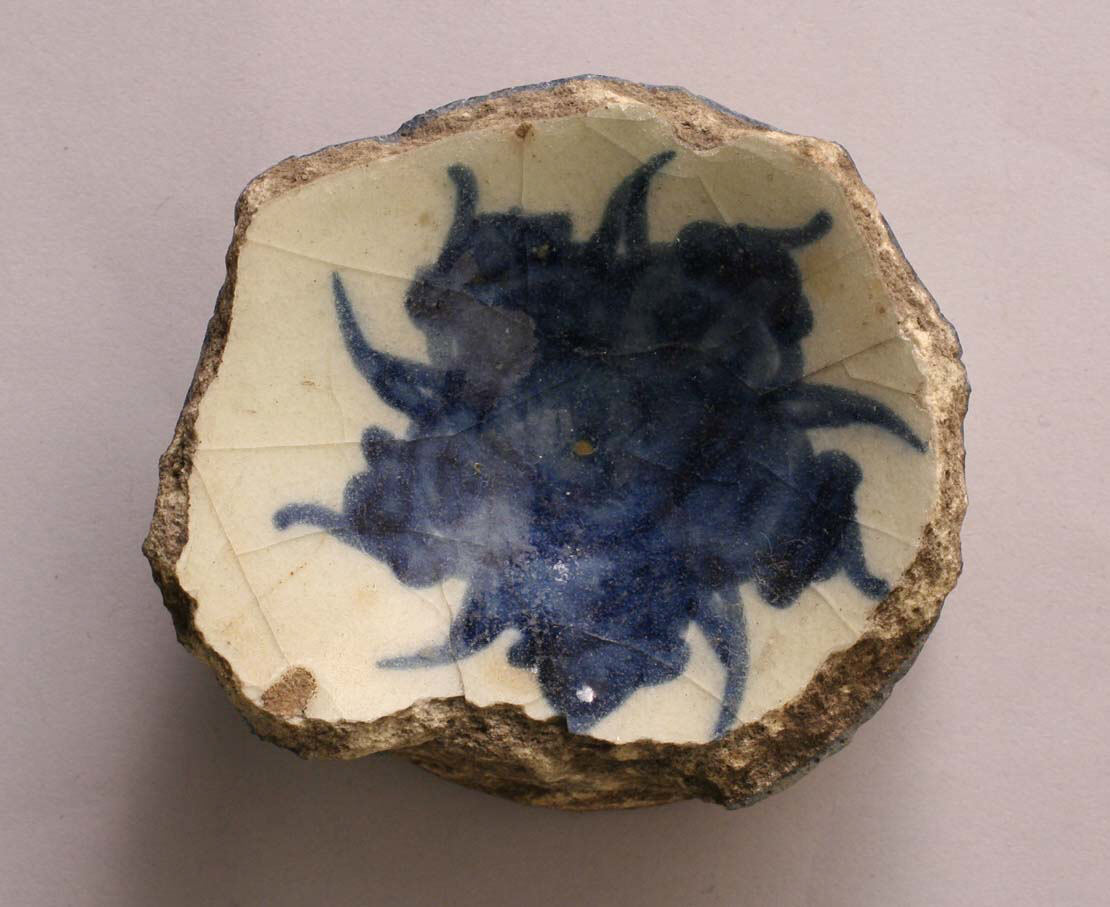
Fragment of a Bowl or Cup: Stonepaste and the Syntax of 2026 Silhouettes
Within the hallowed archives of Natalie Fashion Atelier, we engage in a practice of aesthetic archaeology—the systematic excavation of form, material, and technique from historical masterpieces to inform the architectural logic of future couture. The subject of this research artifact is a singular fragment: a shard of a bowl or cup, rendered in stonepaste and adorned with pigment under a transparent glaze. Though isolated from its cultural continuum, this fragment speaks a universal language of elegance, tension, and surface. Its heritage is global, its lessons immediate. For the 2026 haute couture season, this shard does not merely inspire; it dictates a new syntax for silhouette, drape, and materiality.
The Materiality of Stonepaste: A Study in Structural Lightness
Stonepaste, a ceramic composite of quartz, white clay, and frit, was a revolutionary material in the medieval Islamic world, prized for its ability to mimic the translucency of Chinese porcelain while maintaining a robust, sculptural integrity. The fragment in our possession exhibits a matte, granular body that is paradoxically both dense and airy. The painted decoration—likely cobalt or manganese—sits beneath a glassy, transparent glaze, creating a luminous depth that is neither fully opaque nor fully transparent.
Translating Density into Drape
For 2026, this material duality informs a new category of structural draping. The stonepaste fragment teaches us that weight can be an illusion. We propose a silhouette where heavy, matte fabrics—such as double-faced wool or compacted silk gazar—are undercut with sheer, liquid insets. The result is a garment that appears carved from a single block of matter, yet moves with the fluidity of glaze. The shoulder line becomes a ceramic rim: crisp, unyielding, and defined by a subtle inward curve. The bodice is a vessel, its volume controlled by internal boning that mimics the fragment’s interior concavity.
Painted Under Glaze: The Art of Subsurface Color
The technique of painting under a transparent glaze is a lesson in restrained opulence. The pigment is not applied to the surface; it is suspended within the material’s depth. This creates a soft, diffused effect—color that breathes rather than shouts. The fragment’s pattern, though incomplete, suggests a rhythmic, geometric motif that is both precise and organic.
The 2026 Color Palette: Diffused Chroma
We extract from this a chromatic strategy for 2026: colors that are layered, not printed. The palette will center on deep cobalt, oxidized copper, and a muted cerulean, all applied through double-dye techniques on silk organza and plissé chiffon. The transparency of the glaze is replicated through micro-pleated organza overlays that sit above a solid base, creating a subsurface glow. The pattern—a fragmented arabesque—is embroidered in metallic thread that catches light only at certain angles, mimicking the way glaze refracts over painted stonepaste.
Fragment as Form: The Silhouette of Incompletion
The fragment’s power lies in its incompleteness. It is a shard, a memory of a whole. This aesthetic of the broken vessel is profoundly relevant to 2026 luxury, which is moving away from totalitarian perfection toward a more narrative, archaeological elegance. The silhouette must evoke the curve of a bowl’s rim, the sharp break of a missing edge, and the smooth interior of a cup.
Architectural Silhouettes: The Vessel and the Void
We propose three primary silhouettes derived from the fragment:
1. The Rimmed Column. A floor-length gown with a high, flared neckline that mimics the lip of the bowl. The fabric is structured at the top and falls in a liquid column to the floor, with a single, asymmetrical seam that suggests a crack. The interior of the garment is lined in a contrasting, glossy satin—visible only when the wearer moves—replicating the glazed interior of the cup.
2. The Broken Arc. A tailored jacket with a missing panel at the waist, revealing a sheer, embroidered underlayer. The shoulder is rounded and continuous, like the curve of the vessel, while the hem is deliberately jagged, echoing the fracture. This silhouette plays with positive and negative space, the void becoming as important as the cloth.
3. The Glazed Cocoon. An outer coat in double-faced cashmere, with a matte exterior and a high-gloss, almost lacquered interior. The coat is cut in a single, sweeping arc that wraps the body, with sleeves that are integrated into the volume rather than set in. The lapel is a fragment—a sharp, triangular piece that folds back to reveal the glossy lining, a direct translation of the shard’s broken edge.
Surface and Glaze: The Finish as Narrative
The transparent glaze of the stonepaste fragment is not a protective afterthought; it is the final act of creation, the element that unifies the disparate materials beneath. In 2026 couture, the finish must be treated with equal reverence. We are developing a surface treatment that combines matte and gloss in a single garment. A silk crepe dress, for example, will have a matte, sand-washed finish on the front, while the back and interior are coated in a liquid, resin-like sheen. This duality of touch—rough and smooth, dry and wet—is the textile equivalent of stonepaste and glaze.
Embroidery as Painted Decoration
The painted pattern under the glaze is translated into embroidery that is embedded, not appliquéd. Using a technique of subsurface couching, threads are laid between two layers of tulle, creating a diffused, floating pattern that appears to exist within the fabric itself. The motifs are geometric and abstract, referencing the fragment’s design while remaining deliberately incomplete. This is not decoration; it is material memory.
Conclusion: The Fragment as Future
This isolated fragment of stonepaste, painted under transparent glaze, is not a relic. It is a blueprint for 2026 luxury. It teaches us that elegance resides in structural lightness, subsurface color, and the poetry of the incomplete. The silhouettes we propose—the rimmed column, the broken arc, the glazed cocoon—are not mere homages; they are archaeological reconstructions of a form that never existed. Through the lens of aesthetic archaeology, the fragment becomes a living syntax, dictating the drape, the finish, and the very philosophy of the garment. At Natalie Fashion Atelier, we do not copy the past; we excavate its principles and reconstruct them for a new century. The shard is whole. The cup is complete. The 2026 silhouette is born.