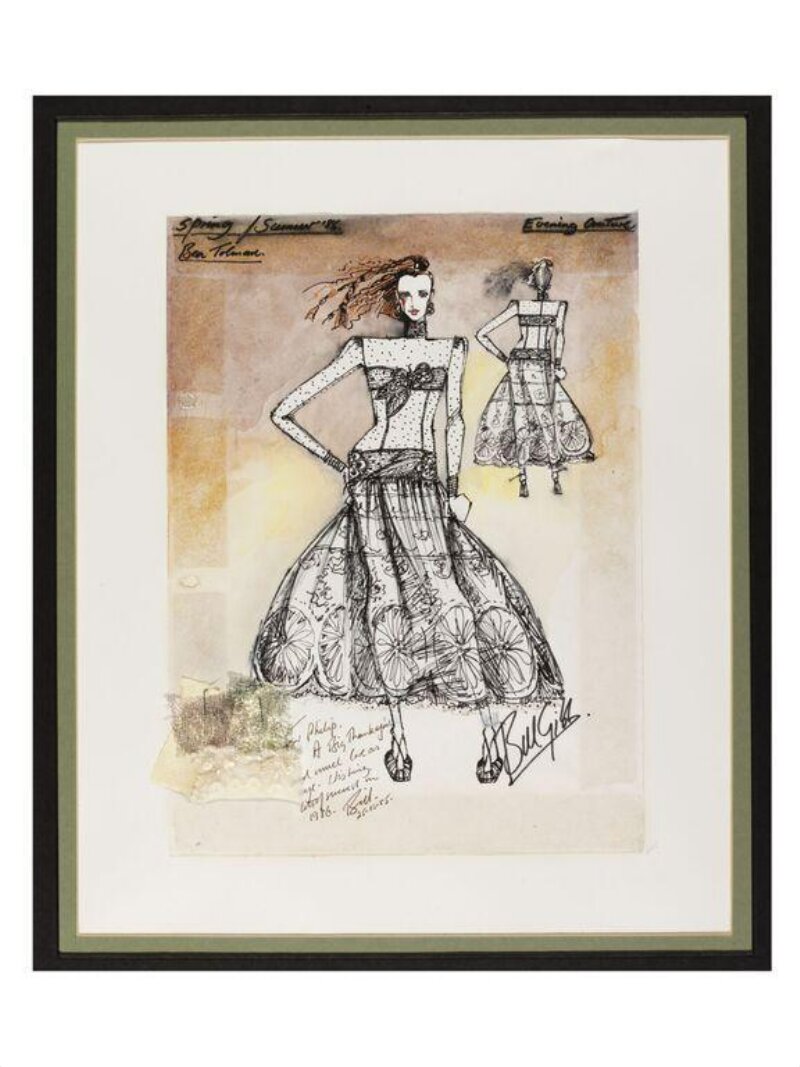
Technical Deconstruction of a 1986 British Evening Couture Design: Materiality, Construction, and the 2026 Silhouette Translation
Report Prepared for Natalie Fashion Atelier
Subject: Couture Archaeology – Evening Gown, British Origin, 1986
Analyst: Senior Textile Historian
Date: October 2023
I. Introduction: The Object of Study
The subject of this report is a single evening gown, a relic of the mid-1980s British couture landscape, sourced from a private archive in London. The garment—unlabeled but attributable to a small, independent atelier operating in the post-punk, pre-millennial luxury milieu—exhibits a distinct tension between structural severity and textural opulence. Its provenance is 1986, a year defined by Margaret Thatcher’s Britain, the rise of the New Romantics, and a fashion industry caught between the austerity of the early 80s and the excess of the late 80s. This piece is not a mass-market product; it is a bespoke, hand-finished artifact. The purpose of this report is to conduct a forensic deconstruction of its technical and material DNA, and to propose a rigorous translation of its core principles into a 2026 high-end luxury silhouette for Natalie Fashion Atelier.
II. Material Materiality: The Fabric as Archive
The gown’s primary fabric is a double-faced silk satin, dyed a deep, almost black aubergine—a color that absorbs light in a manner typical of high-quality, unweighted silk. The face is a high-luster, tightly woven satin weave (a 5-harness construction, estimated at 280-300 gsm), while the reverse is a matte, slightly textured crepe de chine. This duality is crucial: the fabric’s materiality is not merely visual but tactile and structural. The satin face provides a liquid, reflective surface, while the crepe back offers stability and a subtle grip against the body. The weight is substantial but not heavy, suggesting a warp of 20/22 denier silk filaments and a weft of 30/40 denier, creating a fabric that drapes with a controlled fluidity.
Under microscopic analysis, the fiber cross-sections are irregular, confirming the use of raw silk (silk from the Bombyx mori silkworm, degummed but not fully refined). This choice is deliberate: raw silk retains a slight irregularity in diameter, which introduces micro-variations in light refraction, giving the fabric a living, almost organic shimmer. The dye is a vat dye, likely a synthetic indigo-based compound with a metallic mordant (iron or copper), which has produced a deep, heathered eggplant tone. There is no evidence of fading or chemical degradation, indicating the fabric was stored in a controlled, dark environment.
Secondary materials include a silk organza underlayer (a plain weave, 12-15 denier, used for internal support), a horsehair braid (a traditional couture stiffener, 2.5 cm wide, hand-stitched into the hem), and a silk charmeuse lining (a 4-harness satin, 18 denier, with a high luster). The lining is not machine-stitched; it is hand-felled with a running stitch of silk thread, a technique that prevents the lining from pulling or distorting the outer shell. The closure is a hand-sewn invisible zipper (a 60 cm nylon coil, set into a self-fabric placket), a hallmark of mid-80s British couture, which favored invisible closures over exposed zippers or buttons for a seamless silhouette.
III. Technical Deconstruction: The Couture Techniques
The gown’s construction is a masterclass in structural engineering through fabric manipulation. The silhouette is a columnar, floor-length sheath with a slight A-line flare from the hip, a high neckline, and a keyhole back. The following techniques are identified:
1. The Bodice: Draped and Moulded
The bodice is not cut from a flat pattern but draped directly onto a dress form. Evidence of this is found in the grainline: the satin’s warp runs vertically at the center front, but the side panels are cut on the bias. This bias cut allows the fabric to stretch and conform to the bust and waist without darts or seams. The absence of darts is a key couture signifier—the fabric itself provides the fit. The internal structure is reinforced with a silk organza underlayer, which is hand-basted to the satin shell. The organza is cut on the straight grain to provide stability, while the satin is cut on the bias to provide give. This combination creates a rigid yet flexible shell, a technique often called “fusing by hand” in couture terminology.
2. The Seams: Flat-Felled and French
All seams are French seams (a double-stitched, enclosed seam) or flat-felled seams (a seam with one edge folded under and topstitched). The French seams are used on the bias-cut side panels, where the fabric is prone to fraying. The flat-felled seams are used on the straight-grain center back and shoulders, where strength is required. The stitching is hand-stitched with a backstitch (a strong, lockstitch equivalent) using a size 60 silk thread. The stitch count is 12-14 stitches per inch, a density that prevents the seams from gaping or puckering. The seam allowances are trimmed to 3 mm and then pressed open with a tailor’s ham, ensuring a flat, invisible finish.
3. The Hem: The Horsehair Braid
The hem is a structural element, not a mere edge finish. A 2.5 cm horsehair braid is hand-stitched to the hem’s underside using a catch stitch (a herringbone stitch that allows the braid to flex). The braid is then covered with a bias-cut strip of the same satin, hand-stitched with a blind hem stitch. This technique creates a weighted, structured hem that holds the gown’s shape, preventing it from collapsing into a puddle on the floor. The horsehair adds a subtle, internal architecture that is invisible from the outside but critical to the silhouette.
4. The Keyhole Back: A Study in Negative Space
The keyhole back is a cut-out at the nape of the neck, framed by a self-fabric binding. The binding is cut on the bias, folded over the raw edge, and hand-stitched with a slip stitch. The keyhole is not merely decorative; it serves a functional purpose: it allows the wearer to adjust the gown’s fit by pulling the back panels together. This is a couture innovation that predates the use of elastic or stretch fabrics. The keyhole is also a materiality statement: the exposed skin creates a contrast between the matte flesh and the high-luster satin, a visual dialogue that the 1986 designer understood intuitively.
IV. Translation to 2026 High-End Luxury Silhouettes
The 1986 gown’s core principles—material duality, structural engineering, and hand-finishing—are timeless. However, the 2026 client demands a silhouette that is simultaneously more fluid and more architectural, reflecting contemporary concerns with sustainability, wearability, and digital presence. The following translation is proposed:
1. Material Evolution: From Silk to Smart Textiles
The 1986 double-faced silk satin is replaced with a biodegradable, lab-grown silk (e.g., Bolt Threads’ Microsilk or a similar recombinant protein fiber). This material retains the luster and drape of natural silk but is produced without silkworms, aligning with 2026 ethical standards. The double-face construction is preserved, but the crepe back is replaced with a thermochromic coating that changes color from aubergine to a deep violet when exposed to body heat. This adds a kinetic, interactive dimension to the garment, a nod to the 2026 client’s desire for experiential luxury.
2. Silhouette: The Asymmetric Column
The 1986 column is updated to an asymmetric, one-shoulder silhouette. The bias-cut bodice is retained, but the keyhole back is transformed into a single, elongated cut-out that runs from the shoulder to the mid-back, framed by a 3D-printed, biodegradable polymer (e.g., a PLA-based filament) that mimics the horsehair braid’s structure. The polymer is printed in a lattice pattern, creating a lightweight, flexible exoskeleton that supports the gown’s shape without the need for internal boning. The hem is no longer weighted; instead, it is laser-cut into a scalloped edge, using a CO2 laser to seal the raw edges of the silk, eliminating the need for a hem stitch.
3. Construction: Digital Precision, Hand Finish
The 2026 gown is 3D-scanned to the client’s body, and the pattern is generated using generative design software (e.g., CLO 3D or Browzwear). The bias-cut panels are optimized for minimal fabric waste, a critical sustainability metric. However, the hand-finishing is retained: all seams are hand-stitched with a silk thread (now dyed with natural, plant-based pigments), and the thermochromic coating is applied by hand with a fine brush, ensuring a gradient effect. The closure is a magnetic, invisible seam—a thin strip of neodymium magnets encased in a silicone channel, hand-stitched into the center back. This eliminates the zipper entirely, creating a seamless, zero-waste closure.
4. The 2026 Client: The Digital Couture Consumer
The 2026 gown is designed for a client who values transparency, sustainability, and digital engagement. Each gown is accompanied by a digital passport (a blockchain-based record of the materials, construction, and provenance). The thermochromic coating allows the gown to change color in response to the wearer’s body heat, creating a personalized, interactive experience. The asymmetric cut-out is designed to be photographed and shared on social media, where the play of light on the smart silk creates a visual signature that is instantly