The Joseph Cabinet as a Textile Construct: Deconstructing Classical Elegance for 2026 Silhouettes
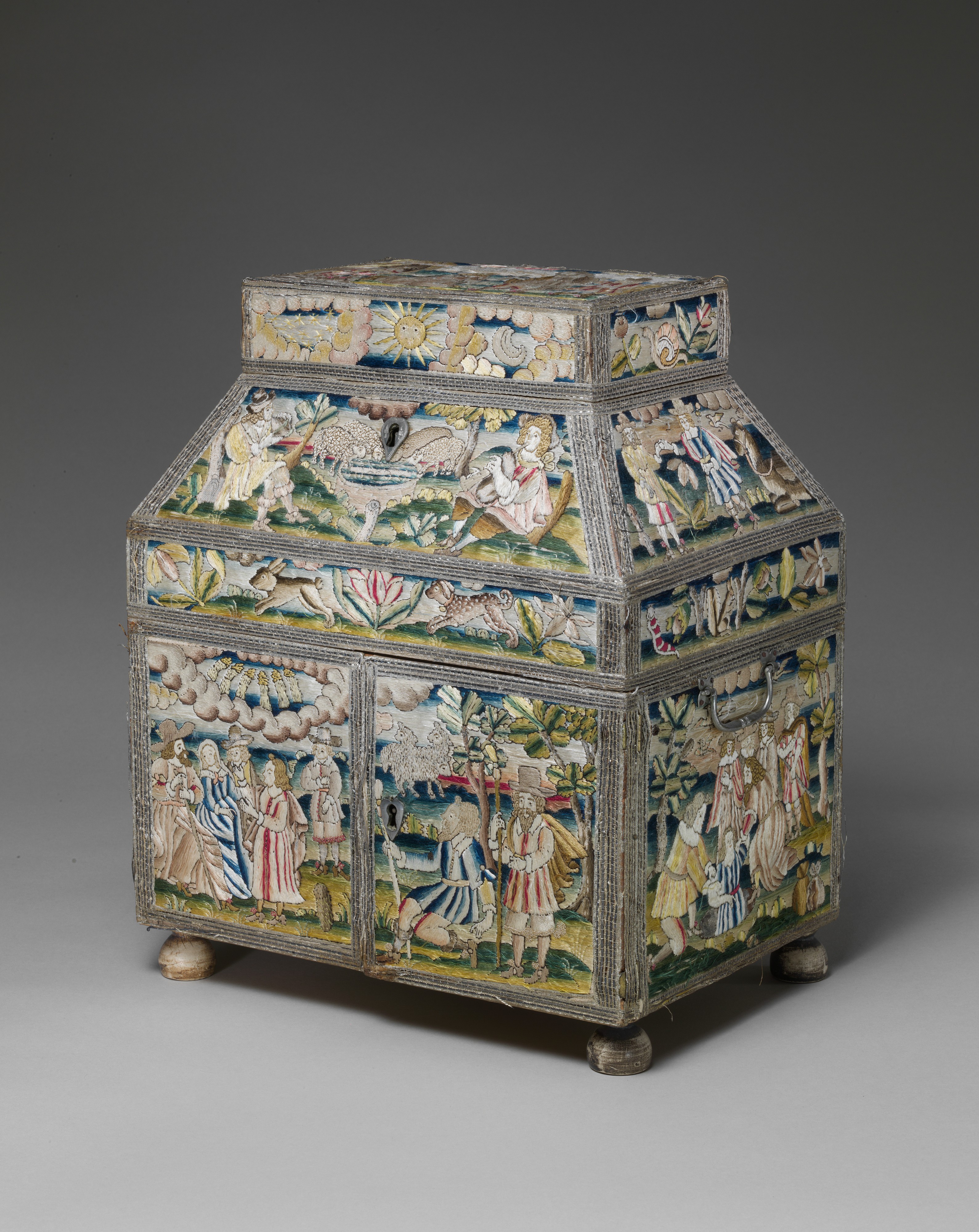
The Cabinet with scenes from the Life of Joseph represents a pinnacle of narrative embroidery, where linen serves not merely as a ground but as a structural membrane. Executed in laid work, split, knot, satin, and sheaf stitches, with a metal thread trim and a silk-lined interior, this artifact is a masterclass in controlled tension and volumetric illusion. For the 2026 Haute Couture season, its aesthetic archaeology offers a profound lexicon for reimagining the luxury silhouette—moving beyond decorative appliqué toward a philosophy of architectural drape, surface tension, and structural transparency.
Materiality as Structural Syntax: Linen and Silk Thread
The choice of linen as the primary substrate is critical. Unlike silk or cotton, linen possesses a high tensile modulus and a low elasticity coefficient. This inherent rigidity, when worked with silk thread, creates a dialectic between the stiff ground and the pliable, lustrous fiber. In 2026, this translates directly into silhouettes that reject fluid draping in favor of controlled, engineered volumes. The linen acts as a self-supporting shell, akin to a couture corset or a sculpted peplum, while the silk embroidery introduces a secondary, shimmering skin.
The laid work stitch, where long, parallel threads are couched down, creates a dense, almost metallic surface. This technique informs a new category of “armored” evening wear—jackets and bodices that feel solid, yet are breathable. The split stitch, used for fine outlines, suggests a method for creating precise, graphic seams that define the silhouette’s architecture. The knot stitch (French knots) introduces a micro-textural element, ideal for creating a tactile, pointillist effect on shoulders or cuffs, adding a discreet, weighty embellishment that influences the garment’s fall.
Stitch Logic and Silhouette Engineering
The satin stitch, with its smooth, reflective surface, is the most direct translator of classical elegance. In the Joseph Cabinet, it is used to depict flesh and drapery, creating a high-contrast, polished finish. For 2026, satin stitch panels can be deployed as structural inserts—for example, a satin-stitched yoke that provides a rigid, gleaming frame for a softer, sheer bodice. This creates a visual and textural hierarchy, guiding the eye across the silhouette.
The sheaf stitch, a composite stitch that bundles threads into a bound cluster, is the most architecturally significant. It creates a three-dimensional, raised ridge that mimics the folds of a column or the pleats of a fan. In a 2026 context, the sheaf stitch can be scaled up and used as a functional pleat or a structural dart. Imagine a skirt where the sheaf stitches run vertically, creating a series of rigid, sculptural columns that flare at the hem—a direct homage to the cabinet’s turned wood feet, which anchor the piece visually. This technique allows for a silhouette that is pre-formed, not draped, offering a new vocabulary for the “hard-soft” hybrid that defines contemporary luxury.
Metal Thread Trim and the New Armature
The metal thread trim on the cabinet is not merely decorative; it functions as a structural binding, reinforcing the edges and defining the compartments. In 2026 Haute Couture, this translates into the use of metallic gimp, couched wire, or chainette as a primary structural element. Rather than being a passive trim, the metal thread becomes a boning system—a visible, articulated skeleton that defines the silhouette’s perimeter. A jacket’s hem, for instance, can be weighted and shaped by a thick, embroidered metal thread edge, creating a sharp, architectural line that holds its own against gravity. This technique directly informs the “exoskeleton” silhouette—a garment where the structure is worn on the outside, revealing the craftsmanship.
Wood Frame and Silk Lining: The Inner/Outer Dialectic
The cabinet’s wood frame and silk lining offer a lesson in internal versus external architecture. The frame is the unseen skeleton; the silk lining is the hidden luxury. For 2026, this suggests a silhouette where the lining is as important as the outer shell. A coat may be constructed with a rigid, embroidered linen exterior (the “cabinet”) and a fluid, contrasting silk interior (the “lining”) that is revealed through a dramatic open back or a deep, asymmetrical slit. The turned wood feet—small, turned pedestals—inspire a new approach to hemline engineering. Imagine a skirt that ends in a series of small, embroidered “feet” or pedestal-like pleats, lifting the garment off the body and creating a sense of weightlessness and historical reverence.
Aesthetic Archaeology: The Isolated Fragment as a Design Motif
The isolated aesthetic archaeology of this cabinet—its removal from a functional context—allows us to see it as a pure textile sculpture. The scenes from the Life of Joseph are not just narrative; they are compositions of tension and release. The laid work backgrounds are calm, while the satin stitch figures are dynamic. This binary informs a 2026 silhouette that is asymmetrical and compartmentalized. A gown might feature a calm, laid-work bodice and a dynamic, satin-stitched train, creating a visual narrative of movement and stasis. The knot stitch can be used to create a “pointillist” gradient, transitioning from dense, opaque embroidery to sheer, open linen—a technique that echoes the cabinet’s interplay of solid wood and open compartments.
Conclusion: The 2026 Silhouette as a Textile Cabinet
The Cabinet with scenes from the Life of Joseph is not a source of motifs but a system of construction. Its materiality—linen, silk, metal, wood—offers a complete toolkit for the 2026 couturier. The sheaf stitch provides volume; the satin stitch provides polish; the metal thread provides structure; the silk lining provides hidden opulence. The resulting silhouette is one of controlled grandeur—a garment that stands as a testament to the hand, yet moves with the precision of engineering. It is a silhouette that is archaeological in spirit, but futuristic in form, where every stitch is a structural decision, and every panel is a compartment of beauty. This is the luxury of 2026: not the absence of history, but its meticulous, technical re-inscription onto the body.