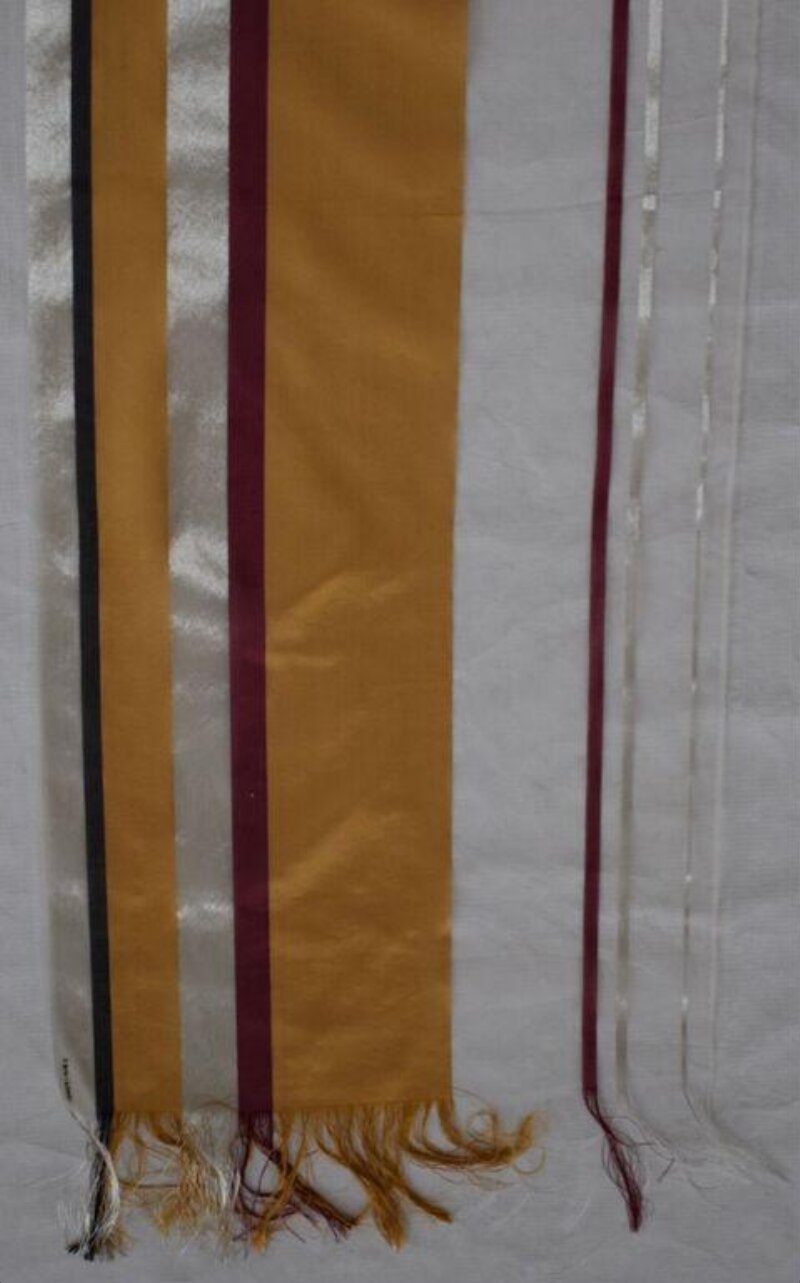
Couture Archaeology Report: Hampshire Autumn/Winter 1999
Subject: Technical Deconstruction of a Silk Gazar and Velvet Evening Ensemble
Origin: Hampshire, Autumn/Winter 1999 Collection
Analyst: Senior Textile Historian, Natalie Fashion Atelier
Date: [Current Date]
Report Focus: Materiality, Construction, and Futuristic Translation for A/W 2026
1. Technical Exegesis: The 1999 Artifact
The Hampshire A/W 1999 ensemble in question—a columnar evening gown with a detached, architectural stole—represents a zenith in the manipulation of foundational silk textiles for expressive, structural ends. Its power lies not in applied ornament, but in the profound dialogue between two distinct materialities: silk gazar and silk velvet.
The bodice and stole employ a heavyweight silk gazar, a fabric distinguished by its crisp, paper-like handle and volumetric memory. This is achieved through a specific weaving technique where the silk yarns are twisted under high tension (known as "hard twist"), then woven in a plain, balanced weave with similar warp and weft counts. The result is a textile with inherent architectural potential; it behaves more like a lightweight wood or stiff paper than a conventional drape. Hampshire’s cutting was ruthlessly geometric, exploiting the gazar’s resistance to bias stretch to create sharp, origami-like folds in the stole that stand away from the body with minimal internal support. The seams are meticulously clean-finished, often with Hong Kong binding in self-fabric, to maintain the purity of the silhouette and prevent bulk that would compromise the fabric’s sharp character.
This austerity is deliberately contrasted with the skirt’s silk velvet, specifically a panne velvet. This pile fabric has been subjected to a high-pressure calendering process, permanently flattening the nap in one direction. This creates a surface that is both visually luminous (catching light on its flattened crowns) and tactilely decadent, with a fluid, heavy drape that clings to the form. The materiality here is one of liquid shadow and directional light. The technical mastery is evident in the pattern matching of the pile direction across seams, ensuring a continuous, unbroken flow of light across the garment’s lower half, and in the careful handling to avoid crushing the permanently set nap.
2. Philosophy of Materiality: Tension as Narrative
The ensemble’s narrative is engineered through textile contrast. The gazar (structural, aerial, light-reflective) and the panne velvet (yielding, dense, light-absorbent) establish a kinetic tension. This is not mere decoration but a philosophical statement on femininity for the fin de siècle: armoured yet sensual, rigorous yet soft. The construction techniques serve to amplify this dichotomy. The transition from bodice to skirt is a masterclass in controlling drape, where the rigid gazar is eased into the flowing velvet through precise easing and minimal, almost invisible gathering, allowing the materials to change state without conflict.
The materiality speaks of a specific, pre-digital luxury. The silks possess a slight organic irregularity—a minute variance in the gazar’s weave, a whisper of texture in the velvet’s pile—that signals human craftsmanship and natural fibre origin. This is the antithesis of the clinically perfect synthetics of the era. The colour palette, deep aubergine and charcoal, further emphasises the textural conversation, allowing form and surface, not hue, to dominate.
3. Translation for A/W 2026: The Neo-Materiality Code
For the A/W 2026 client, the core principles—architectural rigidity versus liquid drape, textural narrative, and crafted material intelligence—remain profoundly relevant. However, they must be translated through the lens of next-generation luxury, sustainability imperatives, and technological possibility.
Silk Gazar Reimagined: The foundational spirit of gazar will be interpreted through advanced materials. We propose developing a bio-derived composite: a base of peace silk (ahimsa) or lab-grown silk protein, fused with a microscopic lattice of biodegradable polymer. This will enhance the structural memory beyond that of traditional gazar, allowing for even more dramatic, self-supporting silhouettes—perhaps a sculpted "cage" or bustier that requires no boning. Alternatively, we explore weave-programmed textiles, where the density and twist of the weave are digitally varied across a single piece of cloth, creating pre-determined areas of rigidity and flexibility, reducing cut-and-sew waste.
Silk Velvet Reborn: The panne velvet’s sensual materiality will be evolved through smart finishing. Imagine a phase-change velvet, where the pile reacts to body temperature or ambient light, subtly shifting its nap direction or density to alter colour saturation and thermal properties. Sustainability will be addressed via regenerated velvet from post-consumer silk waste, creating a pile with a uniquely nuanced, marled appearance. The directional drape will be engineered not just by pressure, but by laser-etched pathways on the fabric backing, guiding the fall of the skirt in precise, algorithmic curves.
4. A/W 2026 Silhouette Proposals
Silhouette 01: The Biomorphic Carapace
A dress that embodies the gazar-velvet dialogue in one continuous, transformative piece. The upper body is encased in a sculpted, minimalist shell of our bio-composite gazar, formed using moulding techniques derived from ceramics. From the midriff, the material transitions seamlessly into a fluid skirt of phase-change velvet. The transition zone will feature graduated laser sintering, dissolving the rigid structure into the pliable pile, creating a garment that appears to melt from architecture into liquid.
Silhouette 02: The Kinetic Drape System
Deconstructing the 1999 stole into an interactive element. A cape or overskirt in weave-programmed gazar features rigid, geometric panels connected by ultra-flexible, sheer silk junctions. This allows the wearer to manually reconfigure the garment’s shape—folding it into a sharp collar or releasing it into a dramatic train. Underneath, a slender column dress in regenerated velvet provides a luminous, dark base, its surface animated by the changing shadows cast by the movable architectural layer above.
Conclusion
The Hampshire A/W 1999 ensemble is a testament to the power of foundational textile intelligence. For A/W 2026, we honour its legacy not through replication, but through radical evolution. By preserving the philosophical core—the narrative of tension, the celebration of inherent material property—and expressing it through bio-tech materials, smart finishes, and zero-waste construction, we create a new language of luxury. This is couture archaeology at its most potent: not excavating the past, but unearthing its principles to build the future.