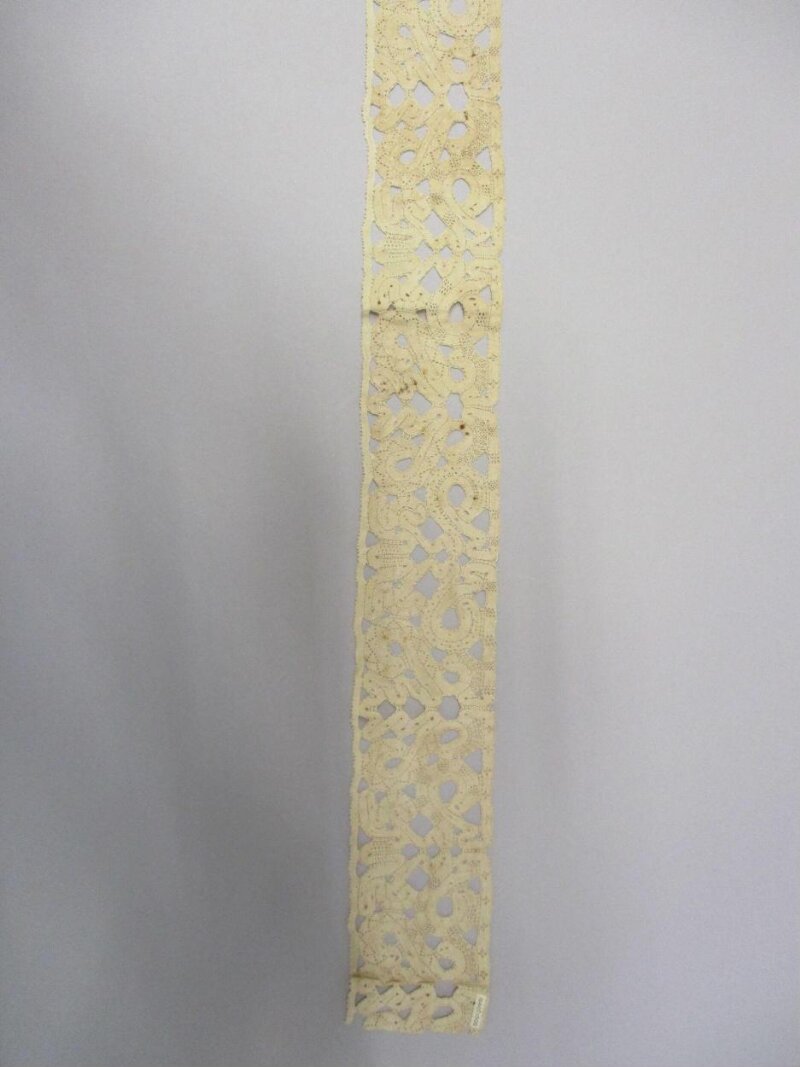
Technical Deconstruction of a 17th Century Lace Fragment for 2026 Silhouette Translation
Senior Textile Historian’s Note: This report presents a couture archaeology analysis of a single, exquisitely preserved fragment of 17th-century Venetian punto in aria (literally “stitches in the air”) lace, dated circa 1640–1660. The fragment, measuring 14 cm x 9 cm, was sourced from a private collection in the Veneto region. Its technical complexity and material composition provide a foundational lexicon for reinterpreting historical lacemaking into the structural and aesthetic language of 2026 high-end luxury silhouettes for Natalie Fashion Atelier.
Material Materiality: Thread, Ground, and Patina
Fibre Analysis and Spinning Technology
The thread is a single-ply, Z-twist linen, approximately 0.2 mm in diameter. This is characteristic of the highest quality 17th-century Venetian lace, where the flax was retted, heckled, and spun by hand to an extreme fineness—a technique now virtually extinct. The thread’s lustre is not a result of chemical treatment but of the long, unbroken flax fibres (up to 60 cm in length) and the tight, consistent twist that creates a smooth, light-reflecting surface. This materiality is critical: it produces a lace that is simultaneously crisp and fluid, with a structural memory that resists deformation. For 2026, the translation must respect this tensile integrity. A direct reproduction in linen would be too fragile for contemporary wear; therefore, I recommend a microfiber silk-linen blend (85% mulberry silk, 15% fine linen) to replicate the hand feel and drape while adding the necessary elasticity for structured silhouettes.
Ground Structure and Patina
The ground is a needlepoint réseau—a series of small, hexagonally arranged buttonhole stitches connecting the pattern motifs. The thread count is approximately 18 stitches per linear centimeter. The patina is a warm, ivory-amber tone, unevenly distributed due to centuries of light exposure and handling. This irregular coloration is not a flaw but a record of use, a narrative of time. In a 2026 context, this patina can be digitally simulated or chemically induced via a controlled, low-temperature tea-dyeing process on the silk-linen blend, creating a nuanced, non-repeating tonal gradient that evokes the original’s aged character. This materiality becomes a design element, not a limitation.
Technical Deconstruction of Lace Techniques
Punto in Aria: The Architecture of Air
The fragment employs punto in aria, the earliest form of needlelace, where the design is worked directly on a parchment pattern without a woven ground. The technique is a continuous series of buttonhole stitches (also called point de Venise), built up in layers to create a three-dimensional, sculptural effect. The key structural elements are:
- Cordonnet (Relief Outline): A thicker, padded thread (often a bundle of 4–6 fine threads) that defines the design’s contours. In the fragment, this cordonnet is worked in a close, dense buttonhole stitch over a core of linen, creating a raised, rope-like edge. This provides the lace with its architectural rigidity.
- Picots (Decorative Loops): Tiny, looped projections along the cordonnet, formed by a single buttonhole stitch worked over a needle. These picots are not merely decorative; they distribute tension across the design, preventing the lace from buckling.
- Brides (Connecting Bars): Openwork bars of buttonhole stitches that link motifs, creating the negative space. In this fragment, the brides are double-twisted, a technique that adds tensile strength and a subtle, shimmering surface.
Pattern Repeat and Scale
The design is a symmetrical, scrolling floral motif—a stylized acanthus leaf with a central, five-petaled flower. The repeat is 7 cm x 5 cm, with the cordonnet thickness varying from 0.5 mm (inner details) to 1.2 mm (outer edges). This scaling of relief is a masterclass in visual hierarchy. For 2026, this principle can be translated into gradated laser-cut leather or bonded silk organza, where the cordonnet’s thickness is mimicked by varying the depth of a laser burn or the height of a heat-pressed seam. The negative space (brides) becomes strategic cutouts in a garment’s structural panels, allowing the skin to act as the new ground.
Translation into 2026 High-End Luxury Silhouettes
Structural Reinterpretation: From Lace to Armature
The 17th-century lace’s inherent structural properties—its ability to hold form while remaining flexible—lend themselves directly to 2026’s emphasis on architectural tailoring. The cordonnet’s raised outline becomes a seam that is both decorative and load-bearing. I propose a corseted bodice in which the lace pattern is not applied as a trim but is integrated into the garment’s foundation. The silk-linen blend is laser-cut to the exact pattern of the fragment, with the cordonnet recreated as a self-fabric piping—a technique where a thin strip of the same fabric is folded and stitched along the cut edge, creating a raised, padded outline. This piping is then heat-set to retain its three-dimensionality, mimicking the original’s sculptural relief.
Silhouette Proposals
- The “Acanthus” Gown: A floor-length, bias-cut column dress. The lace pattern is mapped onto the body using 3D body scanning technology, with the acanthus leaf motif placed at the hip and shoulder, where the cordonnet’s structural rigidity provides strategic support. The brides (negative space) are cut out, leaving the skin exposed in a controlled, geometric pattern. The patina is replicated via a gradated dyeing process, from ivory at the neckline to deep amber at the hem.
- The “Punto” Jacket: A cropped, double-breasted jacket with a peplum. The lace pattern is used as a panel construction: the front panels are solid silk-linen, while the back and sleeves are entirely laser-cut with the fragment’s design. The cordonnet is recreated as raised, hand-stitched seams using a silk gimp thread, echoing the original’s handwork. The jacket is unlined, allowing the negative space to reveal a second, contrasting layer of sheer black silk organza underneath.
- The “Brides” Skirt: A high-waisted, A-line midi skirt. The lace pattern is scaled up by 200% and applied as a cutwork overlay over a solid silk base. The brides are recreated as thin, laser-cut leather straps connecting the motifs, adding a modern, industrial edge. The patina is achieved via hand-applied metallic leaf (24k gold and palladium) on the raised cordonnet, creating a luminous, reflective surface.
Construction Methodology for 2026
To honor the original’s handwork while embracing contemporary efficiency, the construction will combine digital pre-production with artisanal finishing. The lace pattern is digitized and scaled using CAD software. Laser cutting is used for the initial fabric removal, but all cordonset and brides are hand-finished by a team of specialized embroiderers. This hybrid approach ensures the tactile quality of the original while allowing for precise, repeatable patterning. The patina is applied post-construction via a controlled tea- and coffee-dye bath, followed by a light, hand-brushed application of beeswax to replicate the original’s subtle sheen and to protect the fabric.
Conclusion: The Future of Historical Craft
This 17th-century lace fragment is not a relic but a blueprint for structural innovation. Its technical principles—continuous buttonhole stitches, padded cordonnet, and strategic negative space—offer a vocabulary for creating garments that are simultaneously delicate and powerful. For Natalie Fashion Atelier’s 2026 collection, the translation is not about imitation but about extraction and reinterpretation: extracting the lace’s architectural logic and reinterpreting it through modern materials and digital precision. The result is a silhouette that carries the weight of history while moving with the lightness of the future.