The Fragment Reimagined: Silk as a Conduit for 2026 Haute Couture Silhouettes
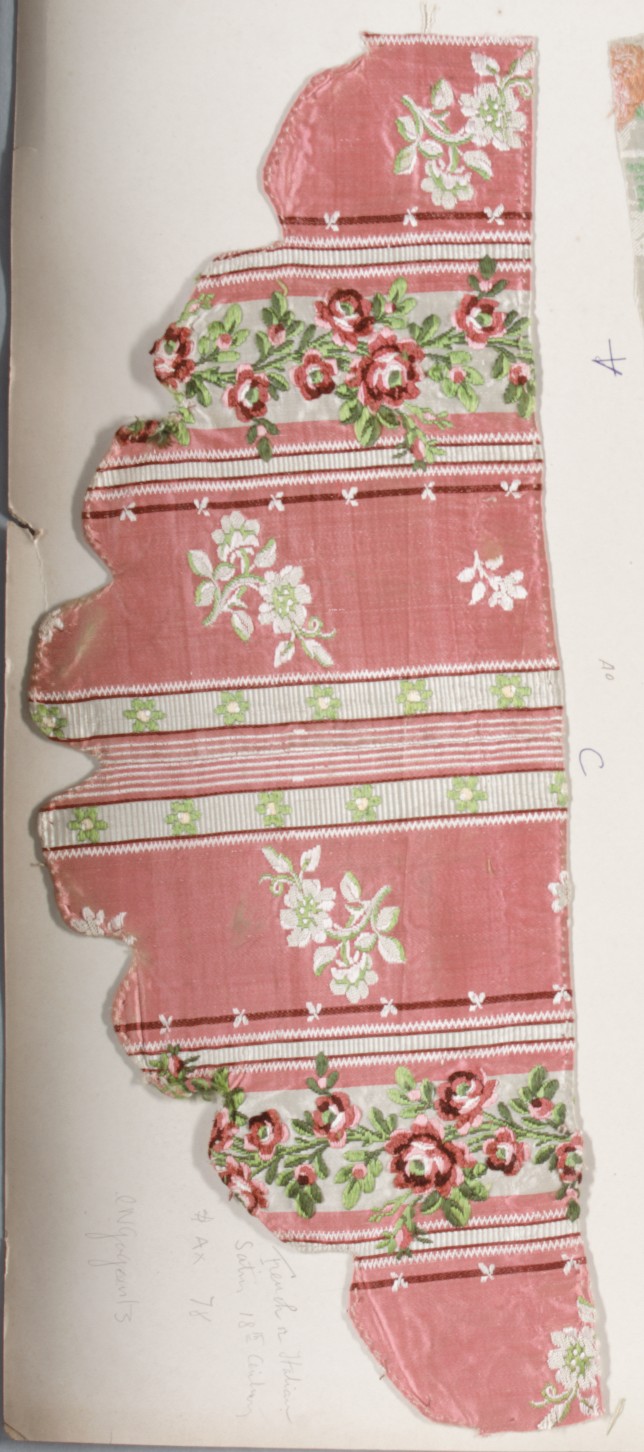
Within the hallowed archives of Natalie Fashion Atelier, the concept of the fragment transcends mere physical remnants. It becomes a philosophical and aesthetic archaeology, a process of extracting the essential from the ephemeral. This research artifact examines a specific, isolated fragment of global heritage: a meticulously preserved swatch of antique silk, its weave and patina whispering of a bygone era of craftsmanship. Our inquiry focuses on how this singular material, in its fragmented state, can be decoded to inform the architectural and textural language of 2026 high-end silhouettes, challenging the very notion of classical elegance through a lens of refined deconstruction.
I. Aesthetic Archaeology: The Fragment as a Primary Source
The isolated silk fragment, likely originating from a late 18th-century French or Italian atelier, presents a paradox. It is both a complete object in its own right and a synecdoche for a lost whole. Its value lies not in its pristine condition, but in its imperfection: the subtle fading of its original dye, the delicate fraying at its edges, the faint traces of a hand-embroidered motif. This is not a flaw to be corrected, but a narrative to be preserved and reinterpreted. The fragment’s isolated state forces a concentrated focus on its intrinsic qualities—the drape, the luster, the tactile memory of its weave. This archaeological approach allows us to isolate the genetic code of luxury, stripping away the historical context of the complete garment to reveal the pure materiality and structural logic of the silk itself.
The global heritage dimension is critical. This fragment, while European in origin, embodies a universal language of luxury craftsmanship. Its warp and weft speak to a pre-industrial era where time was a material, and every thread was a commitment. For the 2026 collection, this fragment serves as a master key—a singular point of departure from which a new vocabulary of silhouette can be forged. The goal is not to replicate the past, but to channel its essence through a contemporary, almost surgical, precision.
II. Materiality as a Structural Blueprint: The Silk’s Intrinsic Logic
The specific silk under analysis—a gros de Tours with a subtle, irregular rib—offers a unique structural dialogue. Its weight and slight stiffness, combined with a luminous surface, create a fabric that is both sculptural and fluid. In the context of 2026 haute couture, this materiality dictates a move away from purely draped or purely tailored silhouettes. Instead, it suggests a hybrid architecture.
We observe three key structural properties:
1. The Memory of the Fold: The fragment’s preserved creases and folds are not random. They are the fossilized evidence of a previous life, a garment that once existed. For 2026, we harness this memory through controlled, permanent pleating and laser-etched creases that mimic the fragment’s topography. This creates a silhouette that is static yet dynamic, a frozen moment of movement.
2. The Luminous Weight: The silk’s ability to catch and reflect light is its most potent tool. In a 2026 silhouette, this is leveraged through negative space. Panels of the silk are used to define the body’s architecture, while voids—cutouts, sheer insets, or asymmetrical draping—allow the fabric to become a frame for the skin, rather than a covering. The weight of the silk anchors the design, preventing it from becoming ethereal.
3. The Frayed Edge as a Design Element: The fragment’s fraying is not a sign of decay, but a terminal detail. For 2026, we recontextualize this as a deliberate, raw hem. This is not a sloppy finish, but a controlled deconstruction—a dialogue between the perfection of the weave and the inevitable entropy of time. This technique will be applied to cuffs, necklines, and the trailing edges of trains, creating a silhouette that is simultaneously finished and unfinished, classical and avant-garde.
III. Deconstructing Classical Elegance: The 2026 Silhouette
The classical elegance of the 18th century was defined by symmetry, volume, and a clear delineation of the body. The fragment, however, suggests a different path. It proposes an elegance born from asymmetry, tension, and revelation. The 2026 silhouette, therefore, is not a dress; it is a sculptural construction that respects the body’s form while challenging its perception.
We propose three distinct silhouette archetypes derived from the fragment:
Archetype 1: The Fragmentary Column
This silhouette is a vertical, elongated form, but it is not a simple sheath. It is constructed from multiple, overlapping panels of the silk, each cut to a different length and width. The panels are joined at the shoulder and hip, but left open along the side seams, creating a series of fragmentary layers that flutter and shift with movement. The raw, frayed edges of each panel echo the original fragment, creating a visual rhythm of decay and renewal. The silhouette is classical in its verticality, but radically deconstructed in its execution. It is a column that is perpetually falling apart, yet held together by the tension of its own construction.
Archetype 2: The Torsion Gown
Here, the silk’s structural memory is exploited through a single, continuous piece of fabric that is twisted and anchored at key points—the shoulder, the waist, the hip. This creates a torsion effect, where the fabric appears to be in a state of constant, controlled rotation. The silhouette is asymmetrical, with one shoulder bare and the other fully covered, the fabric cascading into a train that is deliberately left unhemmed. The fragment’s faded dye is echoed in a subtle, ombré effect, where the color deepens at the points of tension and fades to near-white at the edges. This is elegance as a verb, not a noun—a state of becoming, not being.
Archetype 3: The Armature Shell
This is the most architectural of the three. The silk is used as a skin over a rigid, internal armature made of lightweight, carbon-fiber boning. The armature defines the silhouette—a sharp, geometric shoulder line, a cinched waist, a flared hip—while the silk is draped and pinned over it, creating a tension between the hard structure and the soft material. The fragment’s frayed edge is replicated on the armature’s exposed points, creating a dialogue between the organic and the industrial. This silhouette is a fossil of the future, a garment that is both a relic and a prototype.
IV. Technical Execution and Material Dialogue
The realization of these silhouettes requires a re-evaluation of traditional couture techniques. The silk, while precious, must be treated as a structural element, not merely a decorative surface. We employ a technique of controlled tension, where the fabric is stretched and anchored to achieve the desired architectural form. This is combined with a surgical approach to seam finishes: raw edges are stabilized with a micro-fine, transparent adhesive that prevents further fraying while preserving the aesthetic of the fragment. The dyeing process is equally deliberate. We use a differential dyeing technique, where the silk is partially submerged in a dye bath, creating a gradient that mimics the natural fading of the historical fragment. This is not a uniform color; it is a record of time.
In conclusion, the isolated silk fragment is not a limitation but a liberation. It forces a departure from the historical canon of the complete garment and invites a new, fragmentary logic. The 2026 silhouettes for Natalie Fashion Atelier are not merely inspired by the past; they are archaeological reconstructions of a future that has yet to be written, using the silk as both the primary source and the final destination. The fragment is the blueprint, and the silhouette is the architecture of a new elegance.