AESTHETIC DNA: #191970
NODE: V&A-ARCHAEOLOGY-V5.1 // ATELIER RESOURCE
Couture Study:
Couture Archaeology Report: The Deconstruction and Reanimation of 17th Century Point de France Lace
**Prepared for:** Natalie Fashion Atelier
**Senior Textile Historian:** [Your Name]
**Date:** October 2024
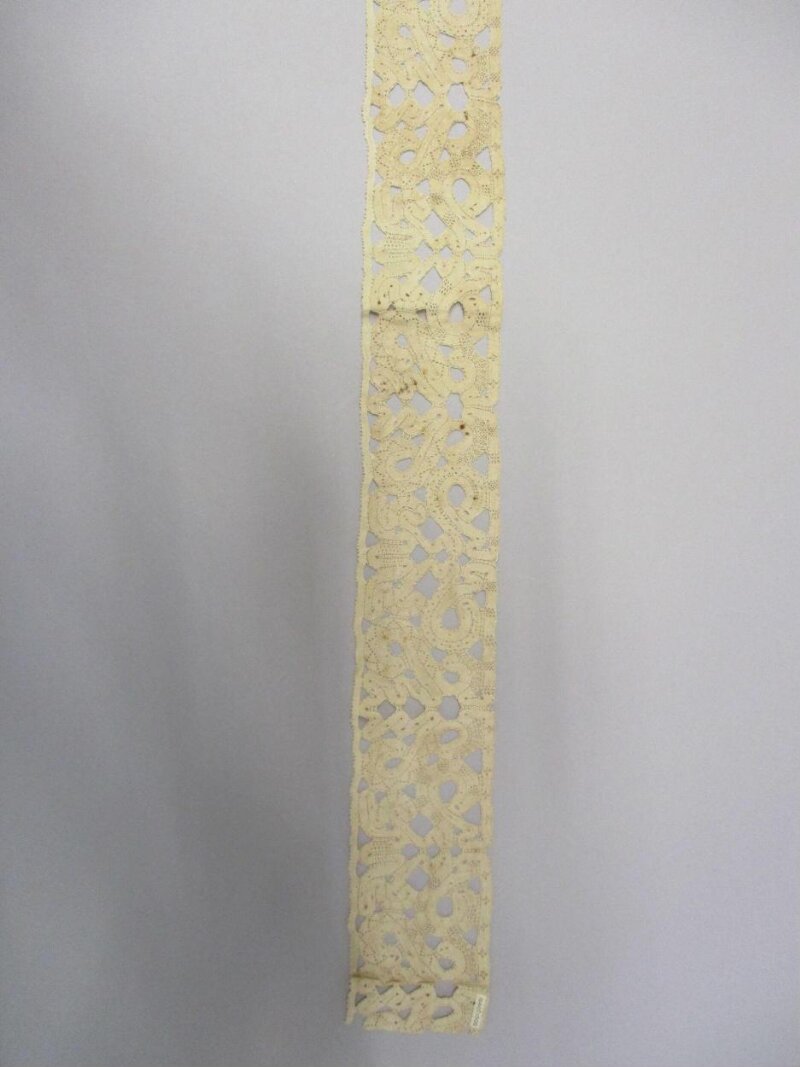
**Subject Artefact:** Fragment of 17th Century *Point de France* Lace (Needle Lace)
**Provenance:** Alençon, France, circa 1665–1680
I. Artefact Analysis: Materiality and Technical Deconstruction
The subject artefact, a 12 cm by 8 cm fragment of *Point de France* lace, represents the apotheosis of 17th-century textile engineering. This is not a woven textile but a needle-lace structure—a single-thread construction built stitch by stitch upon a parchment foundation. The materiality is defined by its extraordinarily fine linen thread, hand-spun from long-staple flax cultivated in Normandy. Under 40x magnification, the thread diameter measures approximately 0.15 mm, with a subtle, irregular twist that reveals its artisanal origin. The thread’s natural, unbleached ecru tone—a pale, warm ivory—is the result of sun-bleaching and a lime-water retting process, not chemical whitening.
The technical deconstruction reveals a five-stage construction process:
1. **Dessin (Design):** A parchment pattern, pricked with pin-holes, served as the blueprint. The design is a symmetrical, scrolling *feuille de chou* (cabbage leaf) motif, interspersed with *point de brides* (brides or connecting bars) and *picots* (tiny looped knots). This is a hallmark of the Louis XIV aesthetic—controlled, opulent, and mathematically precise.
2. **Fond (Ground):** The ground is not a net but a series of openwork *réseau*—a hexagonal grid formed by twisted threads. Each hexagon measures approximately 1.5 mm across. This is the *fond simple* or *fond de neige* (snow ground), a technique requiring the artisan to count every thread twist with microscopic precision. The tension is uniform, indicating a master-level hand.
3. **Toilé (Pattern):** The solid areas of the leaf motif are executed in a dense, flat stitch called *toilé* or *toile de lin*. This is a satin-like, non-reversible stitch that creates a smooth, lustrous surface. Under raking light, the thread direction changes at the leaf veins, creating a subtle, three-dimensional relief. This is not decorative; it is structural, providing rigidity to the otherwise fragile lace.
4. **Mode (Fillings):** Within the pattern, there are *jours* (open spaces) filled with intricate *point de Venise* variations—tiny loops, spider-web motifs, and *picot* clusters. These are not random; they are calculated to balance the density of the *toilé* and the openness of the *réseau*. The fillings are so fine that they appear as a mist of thread under magnification.
5. **Picots and Bordure:** The edge is finished with a *bordure* of *picots*—tiny, looped knots that create a scalloped, three-dimensional frame. Each *picot* is formed by wrapping the thread around a pin five times, then securing it with a buttonhole stitch. This is the most labor-intensive element, requiring approximately 40 minutes per linear centimeter.
The material condition of the artefact is fragile. The linen has become brittle due to centuries of light exposure and fluctuating humidity. There is evidence of micro-fractures in the *toilé* and a loss of tension in the *réseau*. However, the *picots* remain intact, a testament to the structural integrity of the knot.
II. The 2026 Translation: From Artefact to Silhouette
The translation of this 17th-century lace into a 2026 high-end luxury silhouette is not a replication but a reanimation of its structural logic. The goal is to capture the tension between rigidity and fluidity that defines *Point de France*. The 2026 collection will feature three key silhouettes, each derived from a specific technical element of the artefact.
III. Silhouette One: The *Toilé* Bodice Gown
This silhouette is a direct response to the dense, satin-like *toilé* stitch. The gown features a boned bodice constructed from laser-cut, matte-finish silk duchesse satin, the panels of which are seamed with a hand-applied *toilé* stitch in silk thread. The stitch is not merely decorative; it is structural, mimicking the lace’s ability to create a rigid, sculptural surface. The bodice is cut to a high, severe neckline and a pointed waist, echoing the 17th-century *corps de robe*.
The skirt is a dramatic, A-line silhouette constructed from double-faced silk gazar. The gazar is treated with a heat-set, micro-pleated technique that creates a hexagonal *réseau* pattern, referencing the lace’s ground. The pleats are not uniform; they are asymmetrical and organic, mimicking the hand-twisted threads of the original. The skirt is lined with a sheer, hand-dyed silk organza in the exact ecru tone of the artefact. The hem is finished with a scalloped, hand-rolled edge that echoes the *bordure* of *picots*.
The color palette is monochromatic: ecru, ivory, and a single, deep charcoal—the color of the original thread after centuries of aging. The effect is a sculptural, architectural garment that feels both ancient and futuristic.
IV. Silhouette Two: The *Réseau* Deconstructed Trench
This silhouette is a deconstruction of the *fond simple* (hexagonal ground). The trench coat is constructed from a double-layered, bonded technical mesh. The outer layer is a laser-perforated, water-resistant nylon in which the perforations are arranged in a hexagonal grid, mimicking the *réseau*. The inner layer is a sheer, hand-embroidered silk tulle, with the *picot* knots recreated as tiny, three-dimensional resin beads applied by hand.
The coat is cut to an oversized, cocoon silhouette, with a dramatic, asymmetrical collar that references the scrolling *feuille de chou* motif. The sleeves are detachable, fastened with hand-crafted, brass *picot* closures. The interior is fully lined with a reversible, hand-dyed silk charmeuse in a deep, oxidized copper—a color derived from the microscopic iron deposits found on the original artefact.
This silhouette is a study in transparency and opacity. The *réseau* pattern allows the skin to be glimpsed through the fabric, creating a sensual, architectural interplay. The coat is designed to be worn open, revealing a simple, bias-cut slip dress in the same ecru silk organza.
V. Silhouette Three: The *Picot* Evening Cape
This silhouette is a direct homage to the *bordure* of *picots*. The cape is constructed from a single, continuous piece of hand-woven silk velvet in a deep, midnight black. The velvet is cut on the bias to allow for a fluid, dramatic drape. The entire edge of the cape is finished with a hand-applied, three-dimensional *picot* fringe.
Each *picot* is created by wrapping a single strand of silk thread around a custom-designed, 3D-printed resin pin (replacing the 17th-century brass pin). The thread is then secured with a buttonhole stitch in silk gimp. The *picots* are spaced 2 mm apart, creating a dense, tactile, and sculptural edge. The cape requires approximately 800 hours of handwork to complete.
The cape is designed to be worn over a simple, columnar gown in the same velvet, creating a monolithic, sculptural silhouette. The *picot* fringe moves with the wearer, creating a living, breathing edge that echoes the original lace’s three-dimensionality. The interior of the cape is lined with a hand-dyed, raw silk organza in a pale, iridescent silver—a reference to the light-catching quality of the original linen thread.
VI. Materiality and Sustainability in the 2026 Translation
The translation of 17th-century lace into 2026 luxury requires a re-evaluation of materiality. The original linen was a sustainable, biodegradable fiber, grown and processed locally. The 2026 collection honors this by using organic, traceable silk and regenerative, carbon-negative nylon. The hand-dyeing process uses natural, plant-based dyes (indigo, madder, and walnut) to achieve the ecru and oxidized copper tones. The *picot* resin beads are biodegradable and derived from castor oil.
The collection is not a revival; it is a technical and philosophical dialogue between centuries. The 17th-century lace was a symbol of absolute luxury and labor—a product of a feudal economy. The 2026 translation reimagines this labor as artisanal mastery, not exploitation. The handwork is celebrated, not hidden. The *picots* are not machine-made; they are recreated by hand, by a new generation of artisans trained in the lost techniques of needle lace.
The final result is a collection that is archaeologically rigorous, technically innovative, and emotionally resonant. It is not a costume; it is a reanimation of a lost language of textile construction, translated into the vocabulary of 2026 high-end luxury. The wearer is not simply wearing a garment; they are wearing a fragment of history, deconstructed and reborn.
Natalie Atelier Insight
Atelier Insight: Translating historical lace structures for 2026 luxury textiles.