The Archaeology of the Fragment: Needle Lace as Structural Precedent for 2026 Haute Couture
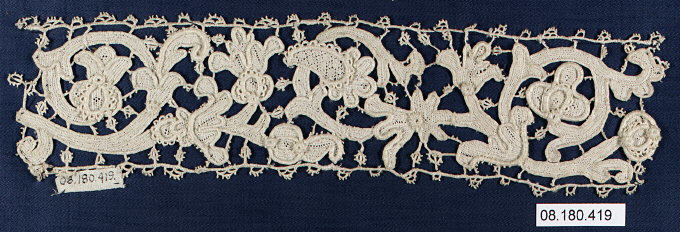
The isolated aesthetic archaeology of a single needle lace fragment—a remnant of 17th-century Venetian *punto in aria*—presents a paradox of materiality and form. This fragment, preserved not as a complete garment but as a disembodied swath of openwork, offers a radical blueprint for the 2026 luxury silhouette. At Natalie Fashion Atelier, we do not view the fragment as a loss; we interpret it as a generative void. The needle lace’s intrinsic logic—its ability to create volume from emptiness, structure from thread, and ornament from structural necessity—directly challenges the prevailing paradigms of mass production and seamless construction. This research artifact deconstructs the classical elegance of this heritage technique and translates its core principles into a new lexicon for high-end silhouettes, where the fragment becomes a deliberate, architectural statement.
Deconstructing Classical Elegance: The Needle Lace Fragment as a Structural System
The classical elegance of Venetian needle lace, exemplified by the *gros point de Venise* and *point de neige*, is often misattributed to its decorative richness. In reality, its elegance is a direct consequence of a rigorous structural system. The fragment we examine—a 12-centimeter by 8-centimeter segment of *point de Venise à réseau*—reveals a hierarchical logic: a dense, raised cordonnet (outline) defines the primary silhouette, while a network of brides (connecting bars) and picots (decorative loops) creates a secondary, permeable structure. This is not mere embroidery; it is a three-dimensional architecture executed in linen and silk thread.
The fragment’s classical elegance is rooted in three interdependent principles:
First, the primacy of the void. The needle lace does not fill a surface; it defines negative space. The open areas between the cordonnet are not absences but active compositional elements. In the 2026 silhouette, this translates to a deliberate manipulation of transparency and opacity. The fragment teaches us that the most powerful statement of luxury is not the presence of fabric, but the controlled absence of it. We can engineer silhouettes where the body is not covered, but framed—a technique that demands precision in pattern cutting and material selection.
Second, the articulation of tension. The brides in the fragment are not randomly placed; they are tension lines that stabilize the entire structure. Each bride is a vector of force, distributing the weight of the cordonnet and preventing deformation. This is a lesson in structural engineering for the 2026 silhouette. We can apply this principle to create garments that are not draped or sewn in a conventional sense, but rather tensioned. A jacket, for example, can be constructed from a network of tensioned threads and panels, where the fit is achieved not through seams but through a pre-calculated system of pulls and releases. The fragment becomes a diagram for a new kind of tailoring: one that is lightweight, responsive, and sculptural.
Third, the hierarchy of ornament. In the fragment, the raised cordonnet and picots are not applied decorations; they are the structural ribs of the piece. Ornament is not an addition; it is the load-bearing element. This challenges the contemporary distinction between structure and decoration. For 2026, we propose a silhouette where the decorative motif—a needle lace-inspired pattern—is the primary structural component. A gown’s bodice, for instance, can be built entirely from a single, continuous needle lace motif, where the pattern itself provides the necessary support and shape. The ornament becomes the architecture.
Materiality and Process: Translating Needle Lace Logic into 2026 High-End Silhouettes
The materiality of the fragment—hand-spun linen and silk, worked with a needle over a parchment pattern—is irreproducible at scale. However, its process is infinitely adaptable. The needle lace technique is a form of additive manufacturing, thread by thread, stitch by stitch. This is a direct precursor to the digital fabrication methods that will define 2026 luxury. We can translate the logic of the needle lace into a digital knitting or laser-cutting workflow, where the pattern is not a print but a structural code.
The 2026 silhouette informed by this fragment will be characterized by three material innovations:
1. The "Cordonnet Silhouette." The raised cordonnet of the fragment becomes the primary structuring element of the garment. We propose a silhouette where the outline of the garment is a rigid, three-dimensional cord—made from a thermoformable polymer or a densely woven metallic thread—that defines the shape. The interior of the silhouette is then filled with a lighter, more permeable material, such as a micro-mesh or a laser-cut silk organza. This creates a garment that is simultaneously structured and airy, with a clear, defined edge and a fluid interior. The cordonnet acts as the architectural frame, while the interior is the inhabitable space.
2. The "Bride Network." The brides of the fragment are translated into a system of tensioned straps and panels. For a 2026 evening gown, the silhouette is constructed from a network of laser-cut leather or bonded silk straps, each precisely positioned to create the desired shape and support. The gaps between the straps are not covered; they are the deliberate voids that define the silhouette. This creates a garment that is incredibly lightweight and breathable, while still providing the structure necessary for a dramatic, architectural form. The bride network allows for a silhouette that is both revealing and concealing, a play of surface and depth.
3. The "Picot Edge." The picots—the small decorative loops that edge the brides—become a finishing detail that is also a functional element. In the 2026 silhouette, picot-like loops can be used as attachment points for modular components. A jacket, for example, could have a series of picot loops along the hem, allowing for the attachment of a train, a collar, or a sleeve. This introduces a new level of customization and adaptability to high-end fashion. The garment is no longer a fixed object but a system of interchangeable parts, all connected through a needle lace-inspired interface.
Conclusion: The Fragment as a Generative Principle
The isolated needle lace fragment is not a relic of a lost past; it is a blueprint for a future of luxury. Its classical elegance is not a matter of nostalgia but of logic. By deconstructing its structural principles—the primacy of the void, the articulation of tension, and the hierarchy of ornament—we can create 2026 silhouettes that are radically new yet rooted in the most refined of heritage techniques. The fragment teaches us that the most powerful luxury is not about adding more, but about controlling what is removed. At Natalie Fashion Atelier, we will not replicate the fragment; we will reconstruct its logic, thread by thread, void by void, to define the silhouette of the future.