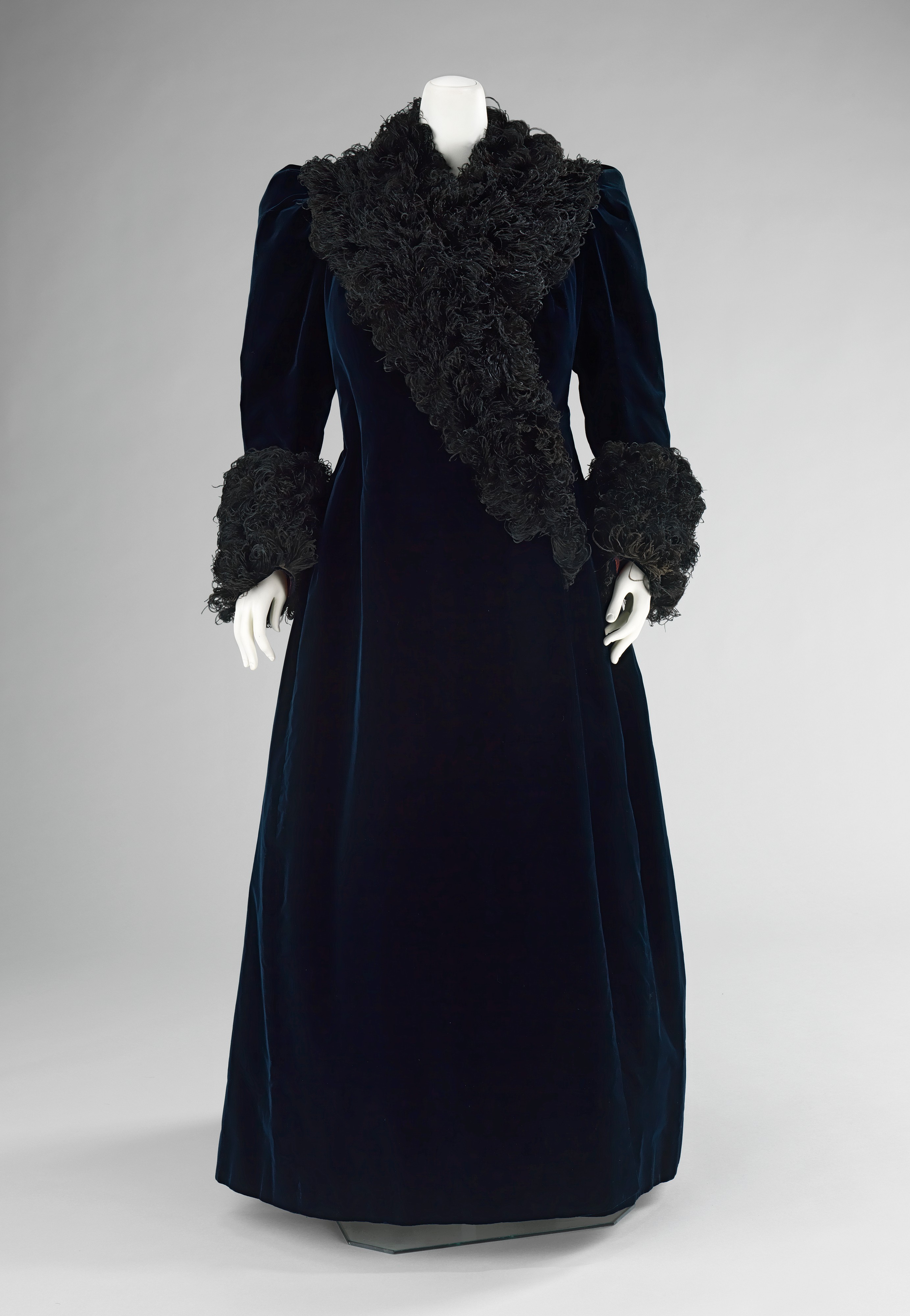
Deconstructing Classical Elegance: The Silk and Feather Evening Coat as a Blueprint for 2026 Haute Couture Silhouettes
Within the hallowed archives of Natalie Fashion Atelier, the evening coat stands as a singular artifact of aesthetic archaeology. Isolated from its temporal context, this garment—a masterwork of French craftsmanship—reveals a lexicon of structural principles and material dialogues that transcend mere fashion history. This research artifact deconstructs the classical elegance of a silk and feather evening coat, extracting its core architectural and textural logics to inform the luxury silhouettes of 2026. The analysis proceeds through three distinct vectors: the structural grammar of the coat’s silhouette, the kinetic physics of its feathered surface, and the chromatic alchemy of its silk foundation. Each vector yields a set of actionable design principles for the forthcoming season.
I. The Structural Grammar of the Silhouette: From Rigid Armature to Fluid Architecture
The classical evening coat, as preserved in the archive, is characterized by a paradox of rigidity and fluidity. Its foundational silhouette—a fitted shoulder, a nipped waist, and a sweeping, bell-shaped skirt—is achieved through a complex internal armature of couture boning, horsehair canvas, and meticulous hand-stitching. This is not a garment of passive drape; it is an engineered volume. The shoulder, for instance, is not merely a point of suspension but a cantilevered structure, often reinforced with a subtle pad or a tailored sleeve head that projects the fabric outward, creating a distinct, almost architectural, line from the collarbone to the deltoid. This architectural shoulder is the primary generator of the coat’s authoritative presence.
For 2026, this principle is reimagined not as a rigid corsetry but as a fluid armature. The boning is replaced by high-tensile, micro-perforated silk organza, layered and heat-set to create a semi-rigid, memory-retaining structure. The waist is no longer cinched but subtly articulated through a series of internal, invisible seams that create a “negative space” waist—a visual compression without physical constriction. The skirt volume, once achieved through heavy underlinings, is now generated by a geometric cutwork of silk panels that are angled and seamed to produce a controlled, airy bell shape. The 2026 silhouette, therefore, retains the classical coat’s monumental presence while achieving a weightless, almost ethereal, physicality. The coat no longer encases the body; it orbits it.
II. The Kinetic Physics of Feathers: From Static Ornament to Dynamic Surface
The feathered surface of the archival coat is typically applied as a static, decorative overlay—a dense, uniform field of marabou, ostrich, or coq feathers, meticulously hand-sewn onto a silk base. This treatment, while visually opulent, treats the feather as a fixed, two-dimensional texture. The aesthetic archaeology of this piece, however, reveals a latent kinetic potential. The feathers, when examined under magnification, show a natural, microscopic barb structure that catches and refracts light differently depending on the angle of the wearer’s movement. This is a dynamic micro-architecture that has been historically underutilized.
For 2026, the feather is liberated from its static role. Our research proposes a layered, kinetic feather system. Instead of a uniform field, feathers are applied in graduated, overlapping “scales” of varying lengths and densities, anchored to a flexible, micro-mesh underlay. This creates a surface that is constantly in motion—a living, breathing epidermis. The longest, most diaphanous feathers are reserved for the coat’s hem and trailing edges, where they catch the air and create a subtle, undulating fringe. The denser, shorter feathers are concentrated at the shoulder and collar, forming a visual anchor. The chromatic interplay is equally critical. Rather than a single dyed hue, we employ a gradient of natural and dyed feathers—from a deep, ink-black at the base to a shimmering, iridescent silver at the tips—to simulate the light-play of a nocturnal bird’s plumage. This is not ornamentation; it is a textural algorithm that translates the wearer’s movement into a visual language of light and shadow.
III. The Chromatic Alchemy of Silk: From Surface to Substrate
The silk foundation of the archival coat is often dismissed as a mere substrate. Yet, in the context of aesthetic archaeology, it is the silent protagonist. The silk—typically a duchesse satin or a charmeuse—provides the structural integrity and the luminous, liquid surface against which the feathers are juxtaposed. Its chromatic depth is achieved through a complex, multi-step dyeing process, often involving a base dye followed by a hand-applied, transparent glaze of metallic or pearlized pigment. This creates a color that is not flat but possesses a volumetric, internal glow.
For 2026, the silk is elevated from substrate to primary protagonist. We propose a reversible chromatic system. The coat’s exterior is a deep, almost black, midnight blue silk, achieved through a lacquer-dye technique that creates a matte, light-absorbing surface. This exterior serves as a visual void, a negative space that allows the feathered surface to dominate. The interior, however, is a revelation: a hand-painted, iridescent silk in a palette of molten gold, copper, and pale rose. This interior is visible only through the deliberate, controlled movements of the wearer—a flash of color when the coat is opened, a glimpse of gold at the cuff. This hidden chromatic architecture transforms the coat from a static object into a performative experience. The silk is no longer a backdrop; it is a secret, luminous narrative that unfolds only in the context of the wearer’s gesture.
IV. Synthesis: The 2026 Evening Coat as a Living Artifact
The synthesis of these three vectors—the fluid armature, the kinetic feather system, and the reversible chromatic silk—produces a 2026 silhouette that is both a homage to and a transcendence of its classical predecessor. The coat is no longer a garment of static opulence but a living artifact of embodied movement. Its silhouette is not fixed but responsive, its surface not decorative but algorithmic, its color not applied but revealed. The wearer becomes a co-creator, activating the coat’s kinetic and chromatic potential with every gesture. This is the essence of aesthetic archaeology: not the preservation of a form but the extraction of its underlying principles—its structural logic, its material physics, its chromatic alchemy—and their re-synthesis into a new, contemporary language of luxury. For Natalie Fashion Atelier, the 2026 evening coat is not a revival; it is a morphological evolution, a garment that carries the memory of its own history while being fully, irrevocably, of its moment.