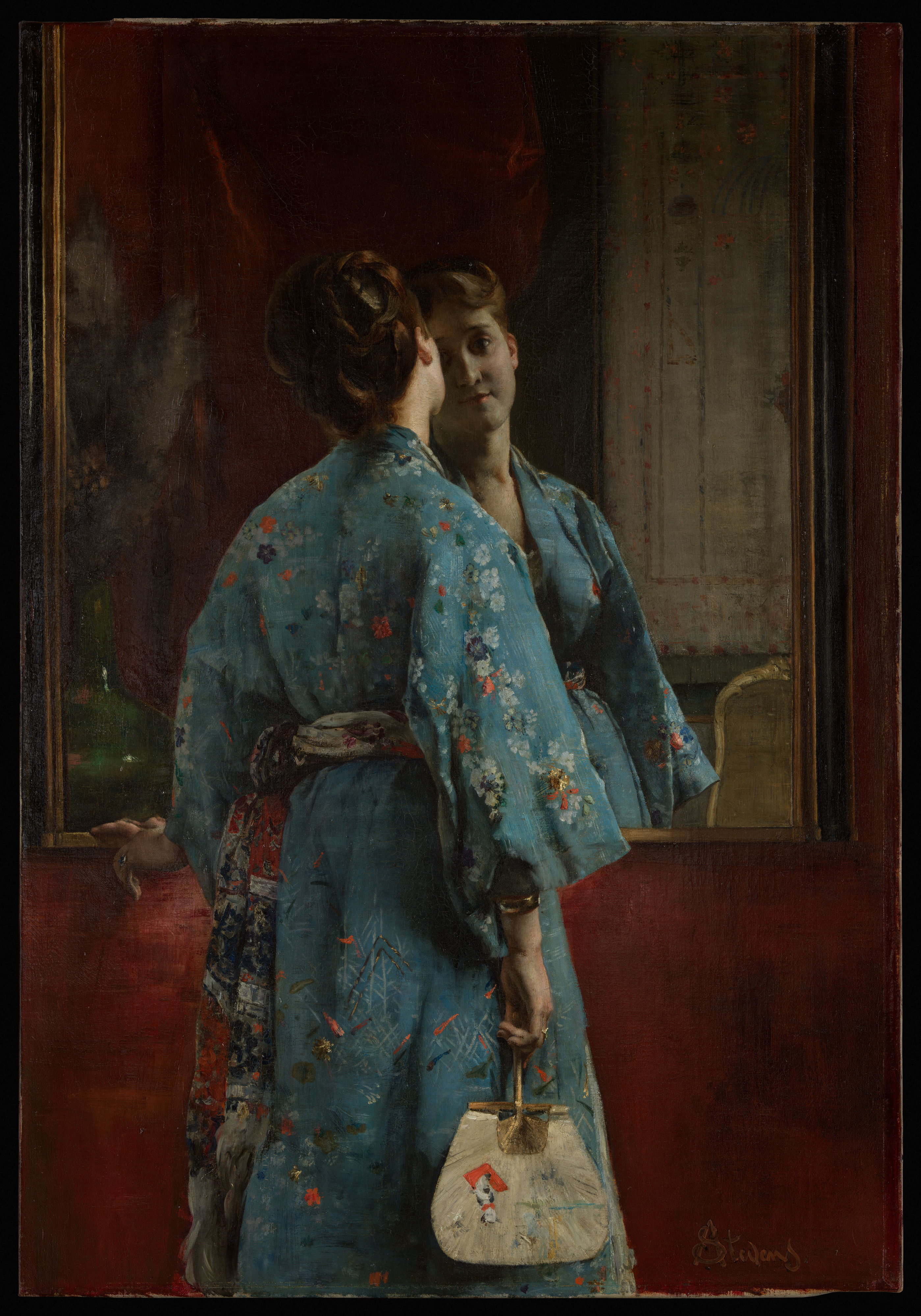
Deconstructing the Kimono: An Aesthetic Archaeology of Oil on Canvas
The Japanese robe, specifically the kimono, represents a pinnacle of global heritage in garment construction—a masterclass in flat patterning, negative space, and the celebration of textile as a primary narrative medium. For the 2026 Haute Couture season, Natalie Fashion Atelier undertakes a rigorous process of aesthetic archaeology, isolating this historical artifact not as a costume, but as a structural and philosophical blueprint. Our research focuses on a specific archival interpretation: the Japanese robe rendered in oil on canvas. This medium, typically reserved for portraiture and still life, introduces a radical materiality that decouples the kimono from its traditional silk and cotton contexts, forcing a re-evaluation of its silhouette, drape, and volume for the modern luxury consumer.
I. The Paradox of Flatness: Structural Logic and the Canvas Imprint
The classical kimono is defined by its T-shape construction, a system of straight lines and minimal curves that relies entirely on the body’s interaction with the fabric for its three-dimensional form. When we analyze this silhouette through the lens of oil on canvas, we encounter a fundamental paradox. Canvas is a stiff, primed support; it resists the fluid, cascading drape of a silk kimono. This resistance becomes the central design thesis for 2026.
Our archaeological extraction reveals that the oil-on-canvas kimono is not a garment that moves with the body, but one that is sculpted against it. The stiffness of the medium—the weave of the linen, the weight of the pigment—creates a new category of silhouette: the architectural tunic. For the Atelier, this translates into high-end pieces where the shoulders are not merely padded but are cantilevered. The sleeves, traditionally the sode of the kimono, become rigid, almost wing-like extensions of the bodice. The 2026 interpretation abandons fluidity in favor of a controlled, volumetric rigidity. The silhouette is informed by the tension between the canvas’s fixed geometry and the body’s organic movement, resulting in a structured, almost cubist aesthetic.
II. Materiality as Narrative: The Canvas Ground and Surface Treatment
In traditional oil painting, the canvas ground—the initial layer of gesso—is the silent foundation. In our aesthetic archaeology, we treat this ground as the primary structural layer of the garment. The 2026 silhouette is not merely a fabric cut; it is a composite construction. We propose a new material hierarchy: a base layer of heavy, unbleached linen (the canvas) is treated with a matte, mineral-based resin (the gesso) to provide a rigid, painterly surface.
The oil paint itself informs the surface treatment of the couture piece. The layering of pigment—impasto for texture, glazing for depth—is translated into appliqué, embroidery, and lacquer. The 2026 silhouette is not printed; it is painted. Each garment becomes a unique canvas. The traditional obi (sash) is reimagined as a structural corset belt, painted with thick, oil-like pigments that mimic the heavy, reflective quality of wet paint. This creates a silhouette that is frontally dominant, echoing the flat, two-dimensional presentation of a painted portrait, yet possessing the three-dimensional volume of a sculpted form.
III. The Collar and the Frame: Reinterpreting the Eri
The eri, or collar, of the kimono is its most intimate and defining architectural element. It is a banded, cross-over construction that frames the neck and décolletage. In the oil-on-canvas context, the collar is no longer a soft fold but a rigid, painted frame. For 2026, we deconstruct this element into a stand-alone, detachable collar—a piece of wearable sculpture.
This collar is constructed from a molded, resin-infused canvas, shaped to follow the clavicle and jawline. It functions as a negative-space frame, drawing the eye to the skin as the canvas ground draws the eye to the painted image. The silhouette of the entire garment is thus anchored by this single, powerful element. The body of the robe—the miyatsukuri—is then allowed to fall in a single, unbroken plane from this frame, creating a monolithic, columnar shape. This is a direct inversion of the classical kimono’s layered volume; here, the volume is concentrated at the top, with the body serving as a pure, vertical extension.
IV. The Sleeve as a Painted Wing: Volume and the Sode
The sode (sleeve) of the kimono is a deep, hanging pocket, often with a trailing length. In our oil-on-canvas translation, the sleeve is the most radical departure. The stiffness of the medium allows us to treat the sleeve as a cantilevered plane. The 2026 silhouette features a sleeve that is not attached at the shoulder but is structurally integrated into the bodice, creating a single, continuous surface. This is achieved through internal armatures—lightweight, carbon-fiber or whalebone-like structures—that hold the sleeve in a fixed, wing-like position.
The volume is not soft; it is architectural and graphic. The sleeve becomes a painted wing, its surface a canvas for the same oil-on-canvas treatment. The trailing length of the classical furisode (long-sleeved kimono) is compressed into a dramatic, floor-sweeping point at the back of the sleeve, creating a silhouette that is both medieval in its heraldry and modern in its minimalism. This sleeve is not for function; it is for narrative presence.
V. The Hem and the Horizon Line: Grounding the Silhouette
In a classical kimono, the hem is a soft, weighted line that brushes the floor. In the oil-on-canvas interpretation, the hem becomes a hard, painted horizon. The 2026 silhouette is defined by a clean, unyielding edge. The canvas is cut with precision, and the hem is treated with a thick, resin-based binding that mimics the edge of a stretched canvas. This creates a silhouette that is monumental and grounded. The garment does not trail; it stands.
This grounding is essential for the luxury consumer. It signifies permanence, weight, and value. The hem is no longer a point of wear but a statement of finality. The overall silhouette is one of a living painting—a figure standing within a frame, the garment itself the frame.
VI. Conclusion: The 2026 Silhouette as a Painted Artifact
By performing an aesthetic archaeology on the Japanese robe through the materiality of oil on canvas, Natalie Fashion Atelier has extracted a new language for the 2026 Haute Couture silhouette. This is not a revival of the kimono; it is a structural and philosophical re-engineering. The 2026 collection is defined by:
- Rigid, cantilevered volumes that replace fluid drape.
- Frontal, painterly surfaces that prioritize the visual plane over tactile movement.
- Detachable, sculptural frames at the collar and sleeve.
- Monumental, grounded hems that confer a sense of artifact.
The result is a silhouette that is architectural, painterly, and profoundly elegant. It speaks to a client who understands that luxury is not about ease, but about presence. The Japanese robe, stripped of its traditional materiality and reconstituted in oil on canvas, becomes a masterpiece of controlled volume—a testament to the power of structural archaeology in defining the future of couture.