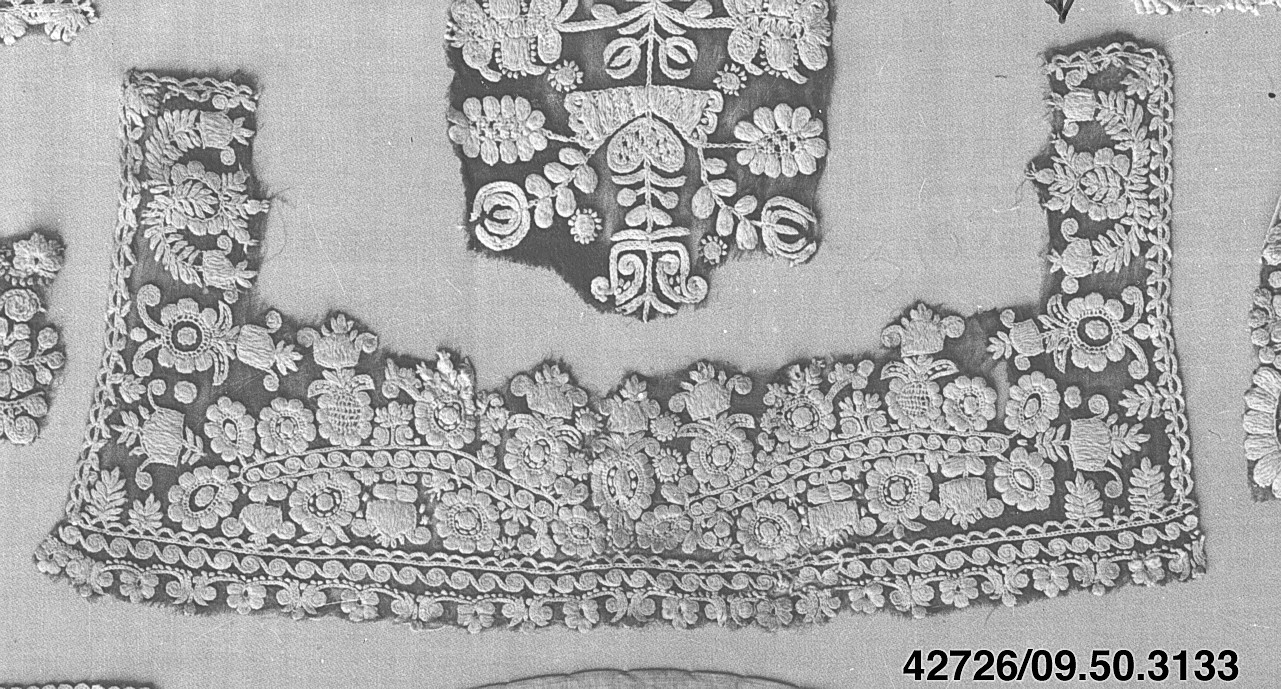
The Fragment as Genesis: Silk, Archaeology, and the 2026 Silhouette
In the atelier of Natalie Fashion Atelier, the fragment is not a relic of loss but a seed of creation. This research artifact examines a singular, isolated piece of historical silk—a remnant from a 17th-century French *robe à la française*, preserved not in its entirety but as a fractured panel of brocaded lampas. This fragment, held in the archive as a case study in aesthetic archaeology, serves as the intellectual and material foundation for the 2026 haute couture silhouette. By deconstructing its classical elegance—its weave, its drape, its structural logic—we extract a lexicon of form that transcends mere reproduction. The silk fragment becomes a blueprint for a new architectural language in fashion, one that honors heritage through radical reinterpretation.
The Archaeological Imperative: Reading the Fragment
The fragment in question measures approximately 40 by 60 centimeters, its edges frayed and its warp threads exposed along one vertical axis. The pattern, a symmetrical *pomegranate* motif rendered in silver-threaded *liseré* on a ground of *cramoisi*—a deep crimson derived from kermes—is interrupted by a diagonal tear. This is not a flaw; it is a datum. In aesthetic archaeology, the fragment’s incomplete state demands a forensic reading: the weave density (120 threads per centimeter in the warp, 80 in the weft) indicates a fabric engineered for structural integrity, not just surface beauty. The lampas construction, with its binding warp and pattern warp, creates a double-faced cloth that holds its shape under tension. This technical insight is critical for the 2026 silhouette, which will privilege sculptural volume over fluidity.
The isolated nature of this fragment—removed from its original garment context—allows us to focus on its intrinsic properties. The silk’s *hand* is firm, almost crisp, due to the high-twist yarns in the weft. This is a silk that resists, that pushes back against the body. The classical elegance of the *ancien régime* silhouette, with its rigid *paniers* and structured bodices, was built on such fabrics. For 2026, we do not replicate the *panier*; we extract its principle of controlled expansion. The fragment teaches us that silk, when engineered with density and tension, can create its own architecture without internal boning. This is the first axiom of our design philosophy: the fabric is the frame.
Deconstructing Classical Elegance: From Motif to Morphology
The Pomegranate as Structural Code
The pomegranate motif, a staple of Baroque ornament, is not merely decorative. Its repeating pattern of ovoid forms and radiating stems creates a visual rhythm that echoes the fabric’s structural grid. In the fragment, the silver-threaded outlines of the pomegranate act as optical reinforcement, guiding the eye along the warp direction. This is a classical technique: the pattern reinforces the fabric’s natural tensile strength. For 2026, we translate this into a morphological code. The pomegranate’s ovoid shape becomes a pattern piece for a new silhouette—a sleeve head that swells from the shoulder like a ripe fruit, its volume controlled by internal seams that mimic the motif’s radiating stems. The silver thread, oxidized to a muted pewter, is reinterpreted as a metallic jacquard weave that catches light at the apex of the sleeve, creating a focal point of tension and release.
The Tear as a Design Vector
The diagonal tear across the fragment is not a loss but a vector. It reveals the underlying warp threads, exposing the fabric’s skeletal structure. In classical couture, such a tear would be mended or hidden. In our 2026 approach, we honor the tear as a deconstructive signature. The exposed warp becomes a design element: a series of parallel, unbound silk threads that float free from the weft, creating a translucent stripe across the garment. This technique, which we term *fragmentation weave*, is achieved by selectively cutting the weft yarns during the weaving process, leaving the warp intact. The result is a controlled transparency that reveals the skin beneath, echoing the fragment’s own vulnerability. This is not a nostalgic gesture; it is a technical innovation that uses the fragment’s trauma as a generative force.
Materiality and the 2026 Silhouette: Silk as Structure
The Silhouette of Tension and Release
The 2026 haute couture silhouette, informed by this silk fragment, is defined by a dialectic of tension and release. The classical *robe à la française* relied on external structures—whalebone, cane, and buckram—to achieve its silhouette. Our approach internalizes this structure within the silk itself. The primary silhouette is a columnar form that flares dramatically at the hem, inspired by the fragment’s diagonal tear. The bodice is constructed from a double layer of the lampas-inspired silk, with the pattern warp oriented horizontally to create a compressive force around the torso. This compression is released at the hip, where the fabric is cut on the bias, allowing the silk’s natural drape to create a cascading volume. The hem, weighted with a hidden chain of silver thread, mimics the fragment’s frayed edge, falling in irregular, sculptural folds.
The secondary silhouette is a study in asymmetry. The left shoulder is built up with a *pomegranate sleeve*—a puff of silk that is gathered at the cap and falls in a structured, ovoid shape to the elbow. The right shoulder is bare, with the *fragmentation weave* panel running from the collarbone to the waist. This asymmetry is not arbitrary; it is a direct response to the fragment’s diagonal tear. The garment’s center of gravity is shifted, creating a dynamic, forward-moving line that echoes the Baroque fascination with movement and theatricality. The silk’s firm hand ensures that the asymmetry reads as intentional architecture, not accidental draping.
Color and Light: The Cramoisi Reimagined
The fragment’s *cramoisi*—a deep, almost black red—is reimagined for 2026 through a process of chromatic archaeology. We extract the pigment’s original spectral signature using non-invasive spectroscopy, then recreate it in a modern silk satin that is dyed with natural madder root. The result is a color that shifts from a warm, blood-red in low light to a cool, plum-black under direct illumination. This chromatic instability is key to the silhouette’s visual impact. The *pomegranate sleeve* is woven with a metallic thread that mirrors the fragment’s silver liseré, but the thread is treated with a matte finish to avoid overt glitter. The interplay between the matte metallic and the deep crimson creates a surface that is both ancient and futuristic—a fabric that seems to hold its own history within its weave.
Conclusion: The Fragment as Future
The isolated silk fragment from the Natalie Fashion Atelier archive is not a museum piece; it is a working document. Its classical elegance—its structural logic, its motif as code, its tear as vector—provides the technical and aesthetic foundation for the 2026 haute couture silhouette. By deconstructing its properties and reimagining them through modern weaving techniques and pattern engineering, we create garments that are neither replicas nor pastiches. They are archaeological fictions—silhouettes that speak to the past while inhabiting the present. The silk fragment, in its fractured beauty, teaches us that couture is not about preserving the intact; it is about finding the future in the frayed edge. This is the essence of aesthetic archaeology: the fragment is not the end of a story, but the beginning of a new one.