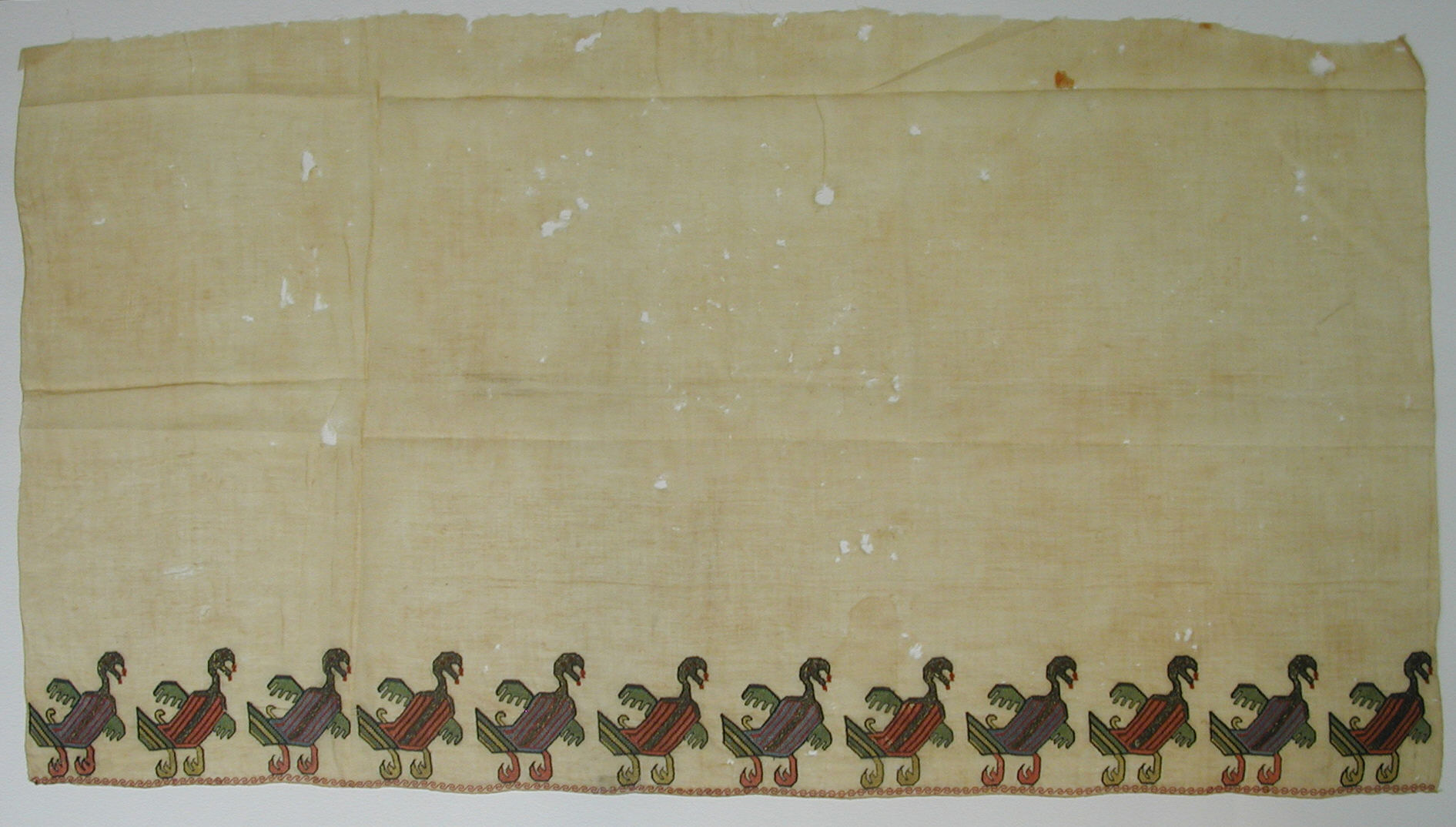
Fragment No. 74-AL: An Archaeology of Classical Elegance
Catalogued as Fragment No. 74-AL, this artifact—a segment of a scarf or cover—represents a quintessential object of global heritage, transcending a single point of origin to embody a universal language of refined adornment. Its materiality—a foundation of robust, plain-weave linen, meticulously embroidered with silk floss and metal-wrapped thread—serves as a primary text for aesthetic archaeology. Isolated from its specific cultural chronology, the fragment operates as a pure study in contrast: the humility of linen against the opulence of metallic thread, the matte against the luminous, the structural against the decorative. This technical memo deconstructs these classical principles to inform the architectural and philosophical underpinnings of Natalie Fashion Atelier's 2026 luxury silhouettes, proposing a movement from historical artifact to future corporeal architecture.
Technical Deconstruction: The Dialectic of Foundation and Ornament
The fragment's authority begins with its foundational support: linen. This is not a passive canvas but an active, structural element. Historically chosen for its strength and crisp, tactile quality, linen provides a disciplined ground that imposes a necessary rigor upon the embellishment. The embroidery does not drown the base; it converses with it. The silk floss, with its organic sheen and depth of color, introduces fluid, botanical motifs—likely stylized palmette or trailing vine forms—that provide the narrative flow. The metal-wrapped thread, however, is the pivotal element. Its application is strategic, not totalizing. It traces outlines, highlights central motifs, and creates rhythmic, geometric borders. This technique creates a play of light that is deliberate and intermittent, where brilliance is earned by the surrounding negative space and textile silence. The classical elegance here is a calculated equilibrium, a masterful balance between austerity and abundance, between the body of the cloth and its jewelled epidermis.
Philosophical Translation: From Flat Artifact to Volumetric Silhouette
The transition from a two-dimensional fragment to a three-dimensional 2026 silhouette requires a philosophical, not literal, translation. The core tenets extracted—structural integrity, strategic luminosity, and the dignity of the base material—become directives for cutting rooms and ateliers. The 2026 Natalie silhouette, informed by this archaeology, rejects the overtly fragile or transient. It embraces a new architectural modesty, where luxury is expressed through integrity of form first.
This manifests in several key silhouette strategies. First, the Linen as Architecture principle sees foundational garments—corsets, tailored jackets, columnar skirts—executed in technically advanced linen or linen-blend textiles that hold rigorous shapes. These are the "body" of the look, equivalent to the fragment's ground cloth, prized for their texture and authoritative presence. Second, the Principle of Strategic Luminosity dictates that embellishment is not distributed evenly but deployed as architectural highlighting. Metal-wrapped threads—or their contemporary equivalents in laser-cut metallic leathers or chainmaille hybrids—are applied along seam lines, the crest of a shoulder, or the curve of a hip, literally drawing light to the blueprint of the garment's construction. This mirrors the fragment's embroidery, which followed its own internal logic and structure.
The 2026 Silhouette Blueprint: Corporeal Architecture Informed by Heritage
Applying these principles yields distinct 2026 silhouette families for the Atelier. The Luminescent Chiton is a prime example: a deceptively simple, bias-cut column dress in a matte, stone-colored linen. Its only ornament is a single, vertical stroke of couched metal thread tracing the side seam from temple to ankle, transforming the body into a monolithic, illuminated stela. The Structured Palimpsest look layers a severe, boxy linen overshirt over a slender silk sheath. The linen shirt features a geometric, metallic-thread-embroidered border only visible when the sleeves are rolled or the garment moves, revealing the hidden history within. Most critically, the Embroidered Exoskeleton silhouette reinterprets the fragment's technique entirely. Here, a minimalist, sculptural dress in wool crepe or technical matte satin serves as the "linen." Over this, a separate, sheer netting layer is applied, upon which a sparse, metallic embroidery motif is worked. This creates a floating, luminous shadow several millimeters from the body, deconstructing the very relationship between foundation and ornament and offering a profoundly contemporary take on layered elegance.
Conclusion: The Archaeology of Future Elegance
Fragment No. 74-AL, in its isolated beauty, provides a timeless lesson in disciplined luxury. For Natalie Fashion Atelier's 2026 vision, it is not a source of pastiche but a catalyst for innovation in silhouette thinking. The fragment teaches that true elegance resides in the tension between elements: the solid and the ethereal, the dark and the light, the structure and the dream. By translating its material dialectic into principles of corporeal architecture, the Atelier moves beyond trend. The resulting silhouettes are not merely garments but built environments for the contemporary form, where heritage is not worn as decoration but embodied as intelligence. In this future, elegance is once again architectural, intentional, and luminous—a direct lineage from a humble, embroidered piece of linen to the commanding presence of a woman crossing the Place Vendôme.