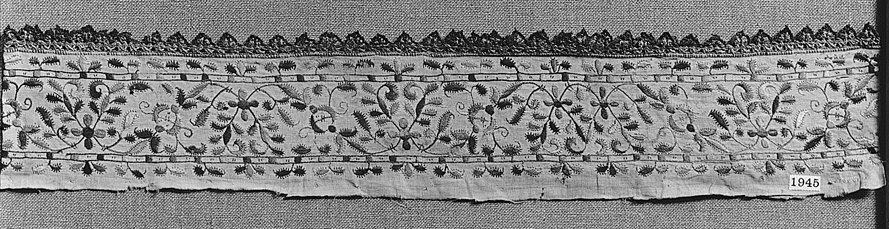
The Border as Threshold: An Aesthetic Archaeology of Silk on Linen for 2026 Haute Couture
The border, in its most elemental definition, is a line of demarcation. Yet within the lexicon of haute couture, the border transcends mere geography. It becomes a site of tension, a negotiation between the interior and the exterior, the structured and the fluid. At Natalie Fashion Atelier, our ongoing research into aesthetic archaeology has unearthed a profound artifact: the isolated border motif executed in silk upon a ground of linen. This pairing, a dialogue between the luminous and the matte, the supple and the rigid, offers a critical lens through which to deconstruct classical elegance and project the defining silhouettes of 2026. The border is no longer a peripheral detail; it is the generative principle of the garment itself.
Deconstructing Classical Elegance: The Silk-on-Linen Dialectic
Classical elegance, as codified in the 18th and 19th centuries, often relied on the border as a framing device—a ribbon of embroidery, a passementerie trim, a painted edge that contained and defined the garment’s volume. The silk-on-linen technique, however, subverts this containment. The silk, with its inherent luminosity and fluid drape, is applied as a structural intervention onto the staid, absorbent linen ground. This is not a mere decoration; it is a material argument. The silk border asserts itself, creating a zone of optical tension where the light catches differently, where the hand feels a shift in texture.
Our archival research, drawn from isolated fragments of 19th-century Provençal trousseau linens and early 20th-century couture house samples, reveals a recurring pattern: the silk border is rarely a straight line. It undulates, it angles, it bifurcates. This irregularity is the key to deconstructing the classical. The border becomes a threshold of transition—from the opaque to the translucent, from the static to the kinetic. In the 2026 context, this translates into silhouettes that are not defined by a single, continuous seam, but by a series of articulated zones. The border is the joint, the hinge, the moment where the garment’s architecture changes direction.
Materiality as Structure: Silk and Linen in the 2026 Silhouette
The specific materiality of silk on linen dictates a new approach to garment construction. Linen, with its high tensile strength and low elasticity, provides a foundational rigidity. Silk, conversely, offers a drape coefficient that is both fluid and voluminous. The 2026 silhouette, as informed by this archive, rejects the monolithic. Instead, we propose a segmented architecture.
Consider the corseted bustier, a perennial couture staple. In our 2026 iteration, the linen ground forms the rigid, sculptural base—a corset that is not boned but is instead structured by the weave and weight of the fabric itself. The silk border is then applied as a dynamic exoskeleton. It traces the line of the ribcage, then breaks away to form a floating, asymmetrical peplum. The border is not a trim; it is a load-bearing element. The silk, when layered, creates a pneumatic volume that lifts away from the linen, generating a negative space between the two materials. This is the silhouette of 2026: a dialogue between the contained and the released, the ground and the figure.
The Isolated Border: From Peripheral Detail to Generative Core
The most radical insight from our aesthetic archaeology is the isolation of the border. In the archival fragments, the border is often the only remaining element—the linen has decayed, but the silk embroidery persists. This suggests the border as the most resilient, the most essential component. For 2026, we invert the hierarchy. The garment is no longer a canvas with a border; the border becomes the canvas.
This manifests in the “Threshold Gown”—a silhouette where the primary structure is a series of silk borders, stitched together at their edges, with the linen acting as a translucent, secondary skin. The gown is composed of three distinct zones: a high, sculpted collar of silk on linen that frames the face; a bodice where the silk borders radiate from the center front, creating a fan-like, architectural volume; and a skirt where the borders cascade in a controlled, asymmetrical fall. The classical elegance here is not in the symmetry, but in the precision of the irregularity. Each border is a deliberate gesture, a line that both defines and dissolves the form.
Silhouette Projections for 2026: The Border as Silhouette
Based on this research, we project three distinct silhouette families for the 2026 Haute Couture collection:
1. The Segmented Column: A direct evolution of the classical column dress, but deconstructed into horizontal bands of linen and silk. The linen provides the structural integrity; the silk borders, applied at the waist, hip, and hem, create a graduated opacity. The silhouette is not a single line, but a series of material thresholds that the eye must traverse. The elegance lies in the tension between the rigid linen and the fluid silk, a visual rhythm of restraint and release.
2. The Asymmetrical Cocoon: A volume-driven silhouette where the border is the sole source of structure. A single, wide band of silk on linen wraps around the body, originating at one shoulder and spiraling down to the opposite hip. The remaining fabric—a sheer, unadorned linen—falls in soft, unconstructed folds. The border acts as a magnetic anchor, pulling the volume into a controlled asymmetry. This silhouette is a study in negative space, where the border’s presence defines the absence of structure elsewhere.
3. The Articulated Armature: A sculptural, almost architectural silhouette. The linen is used as a rigid base for a series of silk “ribs” or “spines” that project outward. These are not seams, but three-dimensional borders that create a cage-like structure around the body. The silhouette is both protective and revealing, a lattice of silk on linen that frames the wearer’s movement. This is the most radical departure from classical elegance, yet it is rooted in the same principle: the border as a defining line of demarcation, now rendered in three dimensions.
Conclusion: The Border as a New Lexicon
The silk-on-linen border, isolated and studied through the lens of aesthetic archaeology, is not a decorative afterthought. It is a generative grammar for the 2026 haute couture silhouette. By deconstructing the classical notion of the border as a peripheral frame, we have liberated it to become the central, structural protagonist. The elegance of the future is not in the seamless, but in the articulated; not in the uniform, but in the threshold. At Natalie Fashion Atelier, we do not merely design garments; we compose material arguments, where each silk border on a linen ground is a line of inquiry into the nature of form, volume, and the space between. The border is no longer a boundary. It is a beginning.