The Numismatic Silhouette: Deconstructing the Portrait Medal of Mary Tudor for 2026 Haute Couture
Artifact Analysis: The Medallic Body as a Cartography of Power
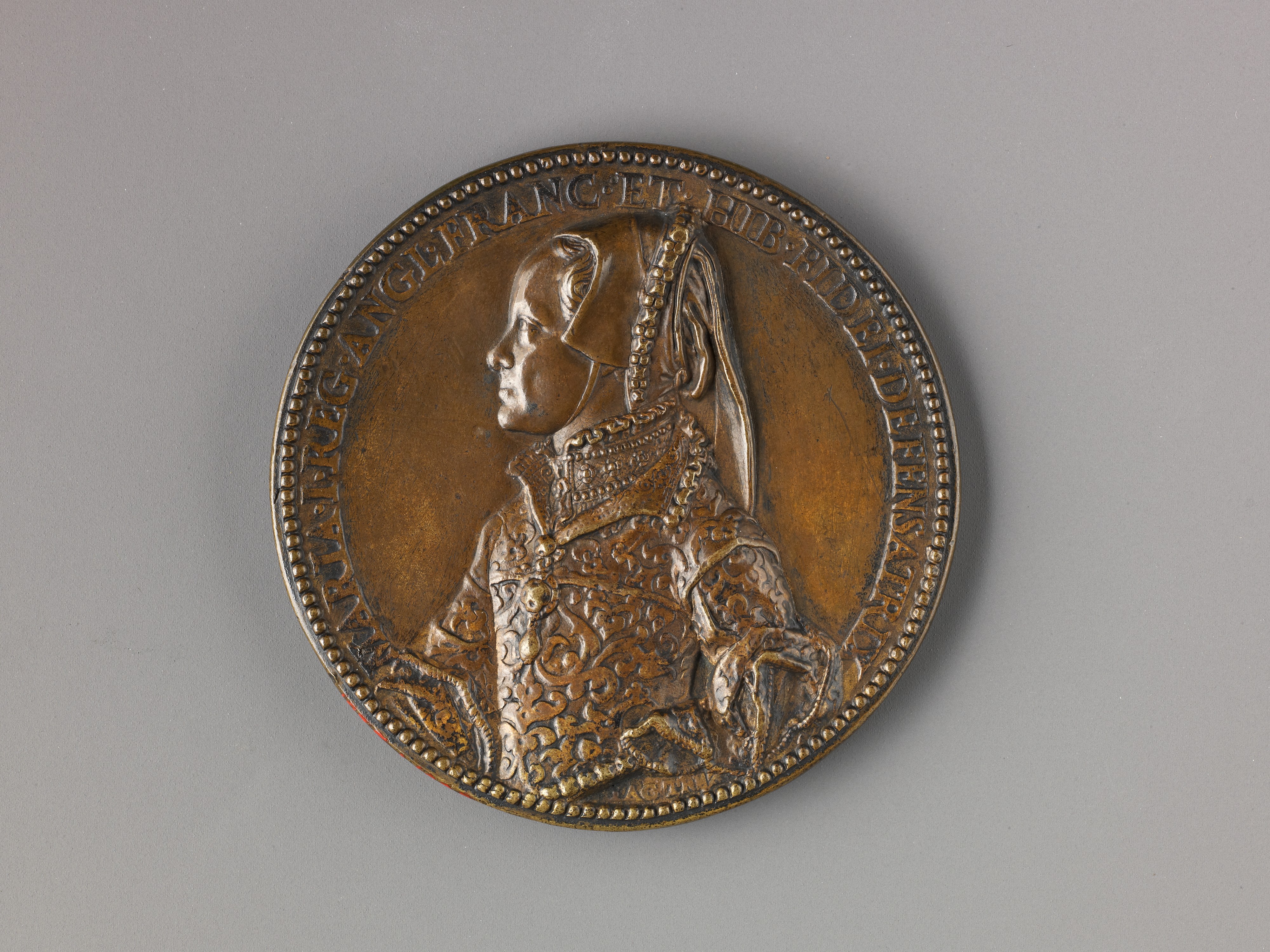
The portrait medal of Mary Tudor, Queen of England, cast in a copper alloy with a honey-colored patina, presents a unique archaeological artifact for the contemporary couturier. Unlike a painting or a sculpture, the medal exists within a compressed, tactile dimension. Its obverse, featuring the Queen’s profile, and its reverse, an allegorical tableau, create a complete narrative within a rigid, circular boundary. For the 2026 silhouette, this artifact dictates a fundamental shift from fluid, organic draping toward a medallic architecture. The honeyed bronze is not merely a color reference; it is a textural and structural manifesto. The patina, with its layered, uneven surface—a result of centuries of oxidation—informs a new approach to fabric finishing: not a flat, dyed color, but a stratified, living surface that captures light at varying intensities.
The classical elegance of the medal lies in its compressed monumentality. Mary Tudor’s profile is rendered with a precise, almost severe contour, a silhouette of unyielding authority. This translates directly into the 2026 silhouette as a hard-edged, sculpted shoulder line that does not drape but rather defines the space around the body. The reverse, with its allegorical figures, introduces a secondary layer of complexity: the narrative of reign and virtue is embedded within the same rigid frame. This duality informs a silhouette that is simultaneously armored and allegorical—a protective exterior that contains a story, a structure that is both defensive and decorative.
Materiality as Methodology: From Bronze Patina to Fabric Stratification
The honey-colored patina of this copper alloy is the single most critical material cue for the 2026 collection. In aesthetic archaeology, patina is not a surface defect but a record of time. It is a chemical biography. For the couture atelier, this demands a departure from conventional dyeing techniques. We must consider metallic thread integration not as a decorative afterthought but as a structural weft. The base fabric—a heavy silk gazar or a compacted wool crepe—should be treated with a micro-layered application of bronze-toned pigments, applied in successive washes to mimic the uneven, luminous depth of the medal’s surface. The result is a fabric that appears to have a history, a material that feels warm, dense, and slightly metallic to the touch.
This materiality dictates the silhouette’s surface tension. The 2026 silhouette cannot be soft or forgiving. It must be tense and taut, like the stretched metal of the medal itself. The honeyed bronze informs a color palette that is not golden but ochre-infused, earthy, and slightly acidic. It is the color of aged copper, of oxidized wealth. This is not a bright, gilded opulence; it is a muted, historical luxury. The silhouette, therefore, will favor structured, unyielding forms—a high, closed neckline that echoes the medal’s rim, a sleeve that is a rigid cylinder rather than a flowing tube, a skirt that falls in a single, uninterrupted column of fabric, like the edge of a coin.
Silhouette Engineering: The Profile, the Reverse, and the Rim
The 2026 haute couture silhouette, derived from this artifact, is a study in profile and counter-profile. The obverse, the Queen’s profile, dictates the frontal and lateral architecture. The garment must present a singular, definitive line when viewed from the side. This is achieved through internal boning and corsetry that forces the body into a specific, almost numismatic contour. The shoulder, the bust, the hip—all must align to create a clean, unbroken profile. The reverse, the allegorical scene, informs the back of the garment. Here, the structure loosens slightly to allow for narrative embroidery—not floral motifs, but geometric, emblematic patterns that reference the allegorical figures. The back becomes a canvas for the story, while the front remains a monument of power.
The rim of the medal is a crucial, often overlooked element. It is the boundary that contains the entire composition. In the 2026 silhouette, this translates into a defined edge at every terminus: the hem, the cuff, the neckline. These edges must be crisp, weighted, and slightly raised, as if the fabric has been cast rather than cut. This is achieved through heavy piping, corded seams, and metallic thread borders that create a physical and visual boundary. The silhouette is not a garment that blends into the body; it is a portable artifact that the body inhabits. The wearer becomes the obverse and reverse of the medal, a living, moving sculpture of historical resonance.
Construction Protocols for the Medallic Silhouette
To realize this silhouette, the atelier must adopt a sculptural construction methodology. The pattern pieces are not draped on a mannequin; they are engineered as flat, geometric components that are then assembled to create a three-dimensional volume. The honeyed bronze materiality demands a seamless finish—no visible stitching, no raw edges. Seams must be fused, bonded, or covered with a metallic foil to maintain the illusion of a cast object. The internal structure is paramount: a skeleton of horsehair canvas, steel boning, and rigid organza must support the outer shell of patina-treated fabric. The garment must hold its shape independently of the body, like a reliquary or a suit of armor.
The 2026 silhouette is not a revival of Tudor fashion. It is a translation of medallic principles into a contemporary, wearable form. The high, closed neckline is not a ruff but a metallic collar that sits away from the skin. The full, structured sleeve is not a puff but a geometric cylinder that frames the arm. The skirt is not a bell but a truncated cone that narrows toward the hem, creating a stable, grounded base. Every element is a reduction to essential geometry, a distillation of the medal’s compressed elegance. The honey-colored patina, the rigid contour, the narrative reverse—all converge to define a silhouette that is timeless, authoritative, and deeply luxurious, a direct descendant of classical numismatic art, reimagined for the 2026 couture landscape.