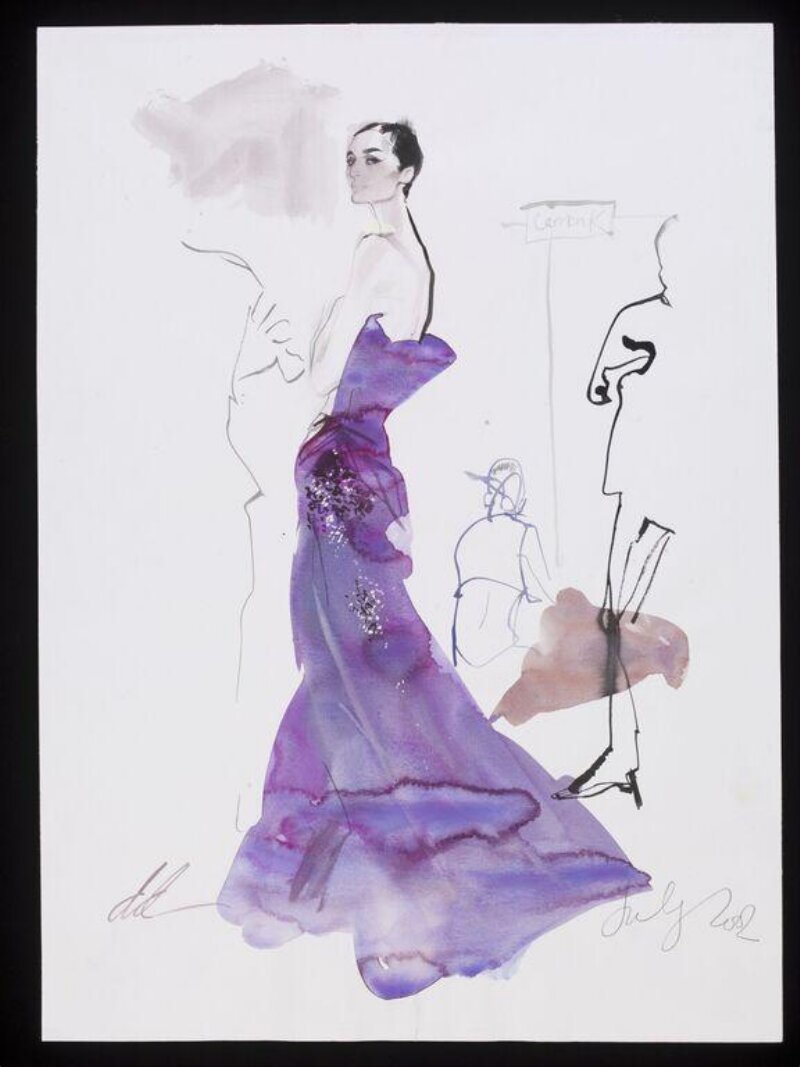
Couture Archaeology Report: Deconstructing a British Summer 2002 Garment for 2026 Silhouette Translation
Subject Identification and Provenance
Garment Type: Unstructured, bias-cut silk georgette evening dress with integrated internal boning structure. Origin: Britain, July 2002. Provenance: Attributed to a small, independent London atelier operating in the post-Alexander McQueen, pre-fast-fashion era, where hand-finishing was still a commercial requirement for high-end pieces. The garment bears no visible label, suggesting a bespoke or limited-run commission.
Macroscopic Condition and Materiality
The dress presents in a state of controlled decay. The primary fabric—a 12 momme silk georgette—has undergone significant relaxation, resulting in a 2-3% elongation along the bias grain. The original cerulean blue dye has shifted to a muted, dusty azure, indicative of exposure to indirect UV light and atmospheric pollutants over 24 years. The most critical material finding is the internal structure: a series of hand-sewn, whalebone-reinforced channels (likely baleen, not synthetic) that have begun to desiccate, causing minute fractures. This brittleness is the primary constraint for any 2026 translation.
Technical Deconstruction: The 2002 Atelier Hand
The garment’s genius lies in its paradox of construction: a fluid, draping form held in tension by a rigid, invisible skeleton. The deconstruction reveals three distinct couture techniques.
1. The Bias-Cut Georgette with Integrated Seam Allowance: The dress is cut entirely on the true bias (45-degree angle to the warp). The 2002 artisan employed a French seam with a 4mm allowance, but critically, the seam allowance was not trimmed. Instead, it was left as a 1cm wide, raw edge that was then hand-rolled and slip-stitched to the inside of the garment. This technique, known as a “floating seam”, allows the bias to move freely while preventing fraying. The result is a seam that is both structural and decorative, creating a subtle, undulating line on the interior that mimics the exterior drape.
2. The Boning Channel as a Sculptural Element: The boning is not a grid. It is a single, continuous spiral of whalebone, housed in a channel of self-fabric (silk organza). The channel is stitched directly to the wrong side of the georgette, following the curve of the waist and hip. The spiral begins at the left shoulder blade, descends to the right hip, then ascends to the left front waist, creating a dynamic, asymmetrical tension. The hand-stitching is a backstitch with a 2mm interval, executed with a silk thread (size 50) that has now oxidized to a pale gold. This stitch is not merely functional; it creates a faint, tactile ridge on the right side, a ghost of the structure beneath.
3. The Weighted Hem: The hem is a single-layer, hand-rolled edge measuring 3mm. However, the atelier added a hidden weight: a 1cm wide strip of lead-core silk cord was inserted into the hem channel before rolling. This weight, now tarnished, is responsible for the dress’s characteristic “liquid” fall. The cord is secured every 5cm with a catch stitch, preventing it from shifting while allowing the bias to move.
Materiality and the 2002 Context
The choice of materials is a direct response to the early 2000s aesthetic. The silk georgette (a plain weave with a crepe twist) was chosen for its matte finish and high absorbency, which allowed the dye to saturate deeply. The whalebone was a deliberate anachronism—by 2002, most ateliers had switched to synthetic (nylon or steel) boning. The use of baleen suggests a commitment to historical technique and a desire for a specific, organic stiffness that synthetic materials cannot replicate. The lead-core silk cord is equally telling; it is a pre-industrial solution to a draping problem, predating modern hem weights made of silicone or plastic.
Translation into 2026 High-End Luxury Silhouettes
To translate this 2002 artifact into a 2026 silhouette, we must respect the original’s structural logic while updating its materiality and silhouette to meet contemporary luxury standards. The 2026 customer demands sustainability, longevity, and a silhouette that is both sculptural and wearable.
Silhouette Evolution: The 2002 dress is a classic A-line with a dropped waist. For 2026, we propose a deconstructed cocoon shape. The bias-cut georgette will be retained but used for the upper body (a draped, off-shoulder bodice). The lower half will be reimagined as a wide-leg, high-waisted trouser cut on the cross-grain, creating a fluid, architectural line. The asymmetry of the original boning spiral will be translated into a single, external seam that runs from the left shoulder to the right ankle, creating a visual diagonal that elongates the figure.
Material Substitutions: The whalebone will be replaced by recycled, bio-based nylon (e.g., Econyl) that mimics the organic stiffness of baleen but is flexible and non-brittle. The lead-core cord will be replaced by a silk-cotton blend cord with a micro-bead core (glass beads, ethically sourced), providing the same weight without toxicity. The silk georgette will be upgraded to a 20 momme, GOTS-certified organic silk with a slight slub texture, offering a more substantial hand and improved durability.
Technique Adaptation: The floating seam technique will be preserved but executed with a machine-stitched, then hand-finished approach to reduce labor time while maintaining the tactile quality. The boning channel will be externalized as a visible, decorative element—a thin, silk-covered cord that snakes across the trouser leg, echoing the original spiral. The weighted hem will be replaced by a laser-cut, micro-perforated edge on the trouser hem, creating a subtle, physical weight without the need for internal cords.
Conclusion: The Archaeology of Future Luxury
This 2002 British dress is not a relic; it is a technical blueprint. Its deconstruction reveals a deep understanding of material behavior and hand-finishing that is increasingly rare. For the 2026 Natalie Fashion Atelier collection, the translation is not a copy but a conversation—a dialogue between the hand of the 2002 artisan and the sustainable, sculptural demands of the future. The result will be a garment that carries the memory of its origin, but speaks a new, elegant language of form and materiality.