Deconstructing the Classical: The Compound Weave as a 2026 Silhouette Imperative
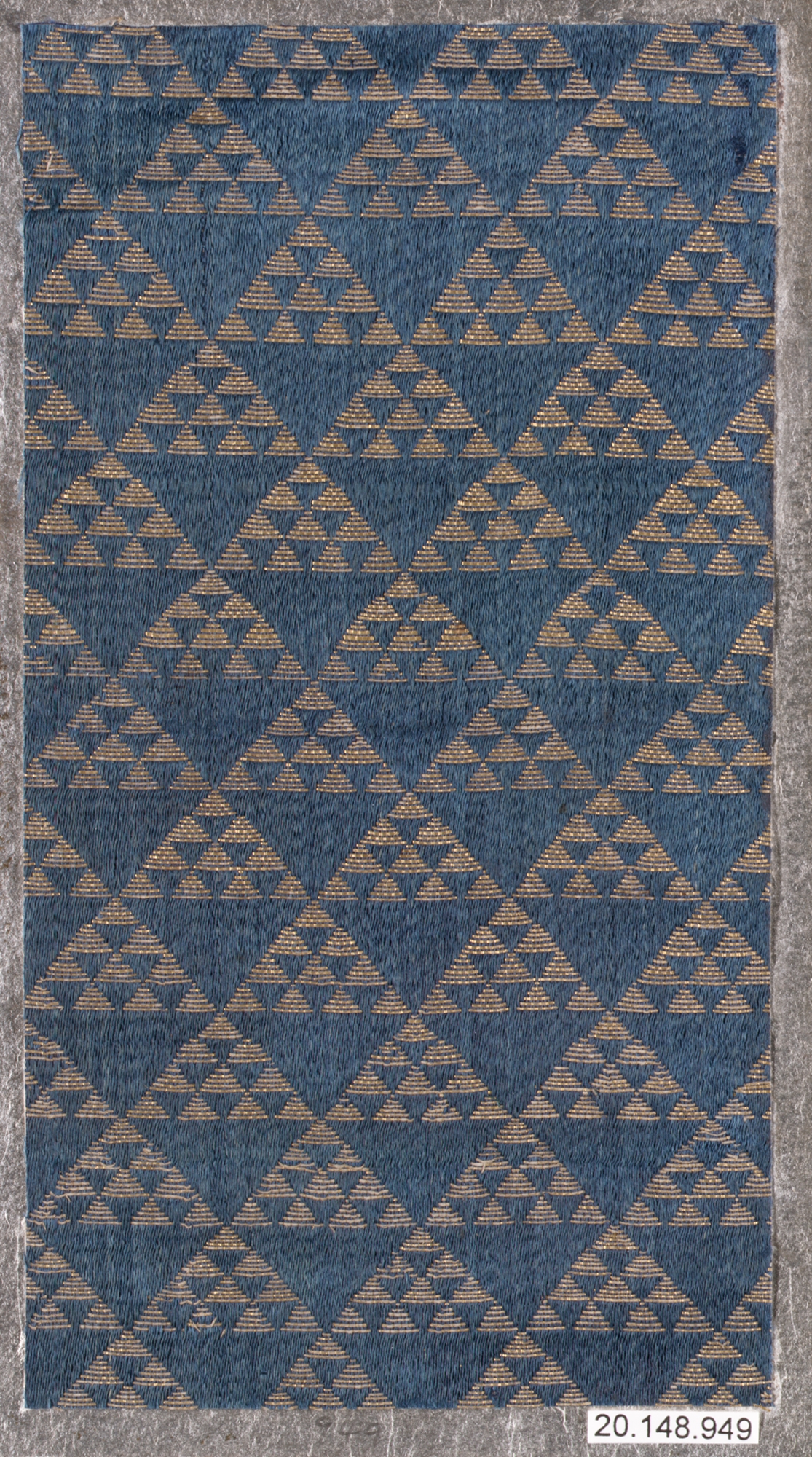
The pursuit of haute couture in 2026 demands a rigorous dialogue with the past, not as a nostalgic retreat, but as a strategic excavation of foundational principles. At Natalie Fashion Atelier, our aesthetic archaeology isolates a singular artifact: a fragment of a classical Japanese compound weave in silk, likely a nishijin-ori or tsuzure-ori remnant from the Edo period. This piece, preserved in our archive, is not merely a textile; it is a structural lexicon. Its materiality—a dense, multi-layered silk compound weave—offers a profound redefinition of elegance for the 2026 silhouette, moving beyond surface decoration to a core architectural logic. This paper deconstructs the classical elegance of this artifact and elucidates how its intrinsic properties inform a new paradigm of high-end form.
Materiality as a Structural Language: The Silk Compound Weave
The compound weave is defined by its multi-layered construction, where a foundation warp and weft are interlaced with supplementary patterning threads—often of gold, silver, or dyed silk—creating a fabric of extraordinary density, depth, and tactile complexity. In the Japanese context, this technique was not ornamental in the Western sense; it was a form of structural narrative. The weave’s rigidity in certain directions and fluidity in others dictated the garment’s drape, its ability to hold a form, and its resistance to gravity.
For the 2026 silhouette, this materiality translates into a new tectonic vocabulary. The compound weave’s inherent stiffness, when harnessed, allows for the creation of self-supporting volumes that require no internal boning or structural undergarments. The fabric itself becomes the armature. Consider a sculpted peplum that flares from a fitted bodice, not from sewn-in pleats, but from the weave’s own resistance to folding. The compound weave’s density also introduces a unique interplay of light and shadow; the supplementary threads catch the light in a way that creates a changing surface topography, a subtle, living texture that shifts with the wearer’s movement. This is not a print; it is a woven topography.
Deconstructing Classical Elegance: From Kimono to Couture
The classical Japanese garment—the kimono—is defined by its linear, T-shaped construction, a geometry of straight seams and rectangular panels. The elegance of this form lies in its restraint and its reliance on the fabric’s own character. The compound weave, in this context, was not cut to conform to the body; the body conformed to the fabric’s logic. The elegance was in the negative space—the gap between the fabric and the skin, the controlled fall of the sleeve, the precise fold at the collar.
Our deconstruction for 2026 does not replicate this silhouette. Instead, it extracts its core principle: the fabric as the primary agent of form. We isolate the compound weave’s ability to create clean, unbroken lines and its resistance to chaotic draping. The classical elegance is reinterpreted through a modernist lens, where the weave’s structural properties dictate the garment’s architecture. For instance, a column gown for 2026 is not a simple cylinder; it is a controlled, vertical extrusion of the compound weave, where the fabric’s own weight and density create a perfect, uninterrupted fall. The hem is not a cut edge but a woven terminus, a point where the fabric’s structural integrity is at its most visible.
Informing the 2026 Silhouette: The New Tectonic Form
The 2026 silhouette, as informed by this Japanese compound weave, moves away from the fluid, deconstructed forms of recent seasons. It embraces a new rigidity, a controlled volume, and a precision of line. This is not a return to the corseted rigidity of the 19th century; it is a materially-driven structuralism.
Key Silhouette Archetypes:
The Architectural Cocoon: A coat or jacket that is self-supporting, its shoulders and sleeves formed by the weave’s own stiffness. The volume is not draped but carved from the fabric, creating a monolithic, almost origamic form. The compound weave’s density ensures the silhouette retains its shape without collapsing, offering a new definition of luxury: form that is intrinsic to the material.
The Controlled Column: A gown or dress where the verticality is paramount. The compound weave’s resistance to horizontal creasing creates a perfect, unbroken line from shoulder to hem. The silhouette is minimalist in its outline but maximalist in its tactile and visual depth. The weave’s supplementary threads create a subtle, rhythmic pattern that animates the surface without disrupting the form.
The Sculpted Peplum and Asymmetric Volumes: The compound weave’s differential stiffness—where the warp and weft have varying degrees of flexibility—allows for asymmetric volumes that are precisely controlled. A peplum can be sculpted to flare in one direction while remaining flat in another, creating a dynamic, architectural silhouette. This is not a draped effect; it is a woven geometry.
Materiality and the 2026 Luxury Paradigm
In the context of 2026 high-end fashion, the compound weave offers a counter-narrative to mass production and digital printing. Its creation is a slow, labor-intensive process, requiring a master weaver to manipulate each supplementary thread. This artisanal density becomes a marker of ultimate luxury. The garment’s value is not in its cut or its brand, but in the inherent complexity of its material.
The compound weave’s durability also redefines the lifecycle of a couture piece. Unlike delicate silks that require constant care, the dense, multi-layered structure is inherently resilient. This aligns with the 2026 consumer’s demand for investment pieces that transcend seasons. The garment becomes an heirloom, not because of its style, but because of the material’s ability to endure.
Conclusion: The Weave as a Blueprint for the Future
The isolated aesthetic archaeology of a Japanese silk compound weave reveals a profound truth: the most innovative futures are often encoded in the most disciplined pasts. For Natalie Fashion Atelier, this artifact is not a historical curiosity but a technical blueprint. The 2026 silhouette, informed by this materiality, is one of controlled power, architectural precision, and material honesty. It is a silhouette that does not rely on external structure or fleeting trends, but on the inherent logic of the weave itself. This is the new elegance: a form that is born from the fabric, not imposed upon it. The compound weave, in its classical Japanese context, was a testament to the mastery of material. In 2026, it becomes a testament to the future of couture as a discipline of structural integrity.