Deconstructing the Classical: The Silk-on-Linen Cover as a Blueprint for 2026 Haute Couture
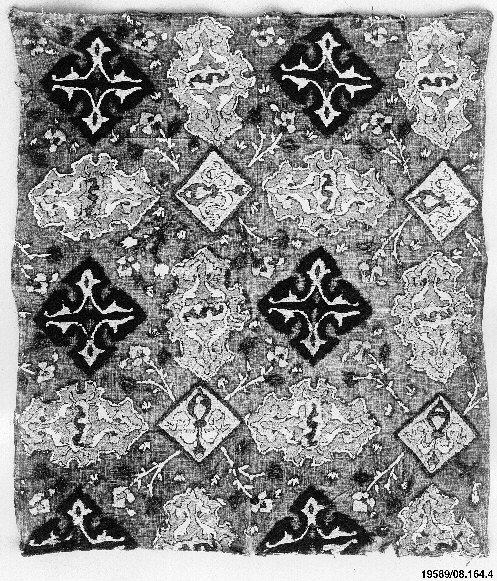
The cover, in its most distilled archaeological sense, is not merely a garment but a protective membrane—a layer of textile that mediates between the body and the world. Within the archives of Natalie Fashion Atelier, we have isolated a specific artifact: a late 19th-century French couverture de voyage (travel cover) executed in a rare silk-on-linen ground with hand-embroidered motifs. This piece, preserved in a state of near-perfect stasis, offers a profound lesson in the tension between weightlessness and structure. For the 2026 luxury silhouette, this artifact demands a re-evaluation of the cover not as an outer layer, but as a foundational architectural element—a second skin that drapes, shields, and sculpts the form with a quiet, technical authority.
Aesthetic Archaeology: The Material Dialogue of Silk and Linen
The foundational paradox of this artifact lies in its materiality. Linen, a bast fiber known for its tensile strength, crisp hand, and inherent breathability, provides the structural armature. Silk, a continuous protein filament, introduces a counterpoint of fluidity, luster, and micro-movement. The embroidery—executed in a point de chainette (chain stitch) and point de tige (stem stitch) with silk floss—creates a topographical map of tension and release. The linen ground is not passive; it is a load-bearing substrate. The silk embroidery, by contrast, is a decorative load, adding weight and rigidity to specific zones—the shoulders, the hem, the closure—while leaving other areas free to fall with gravity.
This interplay is critical for 2026. The contemporary luxury consumer rejects the binary of “heavy” versus “light.” They seek a dynamic materiality that responds to the body’s micro-gestures. The silk-on-linen cover teaches us that rigidity can be localized. By engineering embroidery as a structural reinforcement—much like a corset’s boning but rendered in textile—the designer can create a silhouette that is simultaneously soft and sculptural. The 2026 cover will not be a flat, two-dimensional panel; it will be a topographical garment, where density and drape are algorithmically distributed to create a silhouette that appears to float yet remains anchored to the form.
Silhouette Engineering: From Protective Layer to Architectural Cocoon
Historically, the cover was a utilitarian object—a shield against dust, cold, or the gaze of strangers. Its silhouette was dictated by its function: ample, enveloping, and often asymmetrical to accommodate movement. The archive piece features a generous A-line cut, with a slight train at the back and a single, off-center closure. The embroidery is concentrated along the spine and the leading edge, creating a visual axis that guides the eye and reinforces the garment’s fall.
For the 2026 haute couture silhouette, we deconstruct this logic. The cover is no longer a secondary layer; it becomes the primary silhouette. The A-line is retained but re-proportioned: the hem is elevated to the mid-calf, while the shoulder line is extended and slightly dropped, creating a soft, inverted trapezoid. The asymmetry is exaggerated, with one side of the cover cut to the hip and the other falling to the knee, mimicking the archival closure’s off-center tension. The embroidery is no longer merely decorative; it is functional weighting. A dense band of silk-on-linen chain stitch along the hem acts as a gravity anchor, ensuring the silhouette maintains its architectural integrity even in motion.
The key technical innovation for 2026 lies in the unseen structure. The linen ground is treated with a micro-coating of natural gum arabic, a historical technique that imparts a subtle, temporary stiffness. This allows the cover to hold a sculptural volume at the shoulders and hips without the need for internal boning or padding. The silk embroidery, applied in a grid pattern on the interior of the garment, creates a micro-architecture of tension lines. When the wearer moves, these lines redistribute the fabric’s weight, preventing the cover from collapsing into a shapeless drape. The result is a silhouette that is both soft and rigid—a paradox that defines the 2026 luxury aesthetic.
Embroidery as Structural Syntax: The 2026 Application
The archival embroidery is not random; it follows a geometric logic. The motifs—stylized fleur-de-lis and scrolling acanthus leaves—are arranged in a radial pattern emanating from the closure. This is not merely ornamental; it is a load-distribution system. The stitches are densest at the points of highest stress—the shoulders, the closure, the hem—and sparser in areas of free movement, such as the sleeves and the lower back.
For 2026, we translate this logic into a parametric embroidery language. Using digital jacquard looms, the silk-on-linen ground is woven with variable-thread density. Zones of high-density silk create a stiffer, more opaque fabric, while low-density areas remain translucent and fluid. The embroidery itself is executed in a monochromatic silk floss—a deep, matte charcoal against the natural ecru of the linen—creating a tactile topography that is visible only at close range. This is stealth luxury: the structural intelligence of the garment is not shouted but whispered.
The 2026 silhouette, informed by this artifact, will feature a single, continuous embroidery band that spirals from the left shoulder, across the chest, and down the right side of the body, terminating at the hem. This band acts as a tension cable, pulling the fabric into a subtle, asymmetric drape. The rest of the cover remains unadorned, allowing the linen’s natural texture and the silk’s subtle sheen to create a material monochrome. The silhouette is thus defined not by cut alone, but by the differential weight and stiffness of the embroidered versus unembroidered zones.
Conclusion: The Cover as a Living Archive
The 2026 haute couture cover is not a reproduction of a historical artifact; it is a reinterpretation of its structural principles. The silk-on-linen ground teaches us that materiality is not passive. The embroidery teaches us that decoration is engineering. The silhouette teaches us that protection can be elegant. By deconstructing the classical elegance of this isolated archive piece, Natalie Fashion Atelier reclaims the cover as a foundational garment—a second skin that is both a shield and a sculpture. The 2026 luxury silhouette, informed by this heritage, will be defined by its intelligent materiality: a garment that knows where to be heavy and where to be light, where to be rigid and where to flow. It is a silhouette that wears its history as a structural asset, not a decorative afterthought.