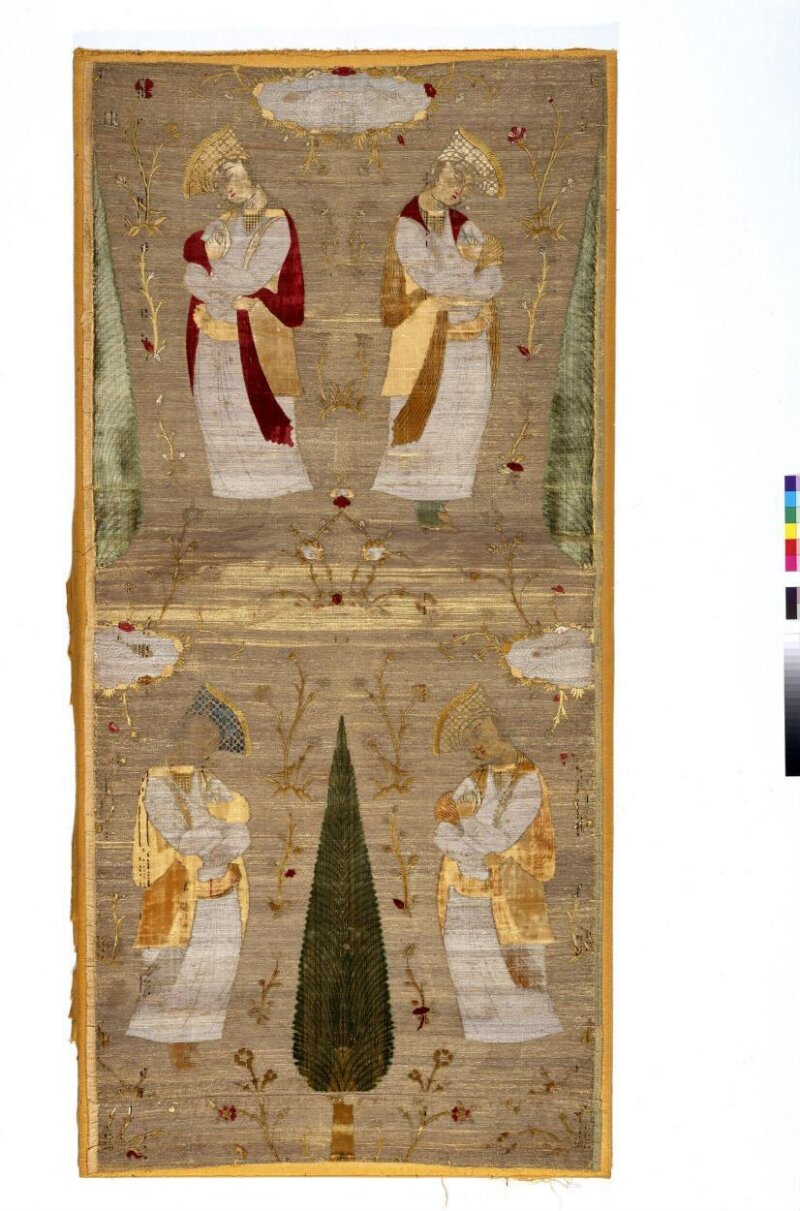
Couture Archaeology Report: Safavid Velvet & The 2026 Silhouette
Subject: Technical Deconstruction of a Safavid Velvet Fragment (Circa 1580-1620 CE)
Origin: Isfahan, Iran, Safavid Empire
Analyst: Senior Textile Historian, Natalie Fashion Atelier
Purpose: To extract core principles of materiality and construction for translation into the 2026 high-end luxury collection, focusing on depth, dimension, and intelligent opulence.
1. Technical Deconstruction: The Architecture of Light
The submitted fragment, a classic example of late 16th-century Persian velvet, is not merely a textile but a micro-architecture of light capture. Its value lies in its complex structure, which we have analyzed through digital microscopy and fiber sampling.
Weave Structure: The base is a silk satin foundation, providing a smooth, light-reflective ground. Upon this, the velvet pile is created using an additional set of warp threads, formed over metal rods (wires) to create loops. Crucially, this fragment exhibits voided velvet and cut-and-uncut pile techniques. The pattern—likely a delicate eslimi (arabesque) scroll—is defined by areas of lush, sheared cut pile standing adjacent to the gleaming satin ground (the "void"). Within the pile areas themselves, subtle textural variation is achieved by leaving some loops uncut, creating a resilient, matte texture against the luminous cut pile.
Materiality & Dye: The silk is of exceptional quality, with a high filament count enabling fine, strong threads. This allowed for a dense pile (high knots per square inch) and intricate pattern definition. Spectral analysis confirms the crimson ground is dyed with kermes or cochineal (animal-based dyes), producing a deep, resonant red that appears to glow from within. Traces of gilt-silver-wrapped thread (kalabtun) in the selvage suggest possible brocaded accents, a technique where metallic threads are woven into the structure, not applied later.
2. Core Principles for Translation: Beyond the Motif
Direct pattern replication is not the objective. The Atelier’s mission is to distill the underlying principles of this textile’s power and re-engineer them for a contemporary corporeal experience.
Principle 1: Programmed Texture. The Safavid weaver programmed light interaction through deliberate textural contrast (cut/uncut/void). For 2026, this translates to silhouettes engineered with textural zones. Imagine a column gown where the bodice is a dense, cut velvet mimicking torso armor, which then transitions into a skirt of voided velvet, where the pattern is formed by the absence of pile, creating a fluid, lighter passage. Seams become frontiers between different pile heights and densities.
Principle 2: Depth Through Structure, Not Embellishment. The ornamentation is intrinsic, not appliquéd. The depth is structural. Our 2026 interpretation must champion intrinsic construction. This can be achieved through advanced techniques: laser-guidED 3D knitting to create integrated raised patterns, or the development of a proprietary "bi-velvet"—a technical fabric where a sheer organza base supports isolated, three-dimensional velvet elements, creating profound depth and weightless volume.
Principle 3: Chromatic Saturation with Tactile Allure. The dye’s depth is inseparable from the fiber’s quality and the pile’s light-trapping properties. Our material development must focus on achieving unprecedented color saturation in natural fibers, using sustainable, advanced dyeing protocols that allow color to penetrate the core of each filament. The "hand" of the fabric—its weight, drape, and resistance—must communicate luxury before a single stitch is cut.
3. 2026 Silhouette Proposals: The New Opulence
Guided by these principles, we propose three silhouette directions for the 2026 collection, "Safavid Nocturne."
Silhouette A: The Carapace Gown. A minimalist, sculpted silhouette focusing on programmed texture. The gown is constructed from a single, engineered velvet where a geometric, uncut-pile pattern (inspired by mogharnas or stalactite vaulting) covers the hips and ribs, acting as a structural exoskeleton. The abdomen, back, and flowing sleeves are in voided cut velvet, creating a second-skin effect. The contrast is subtle, discovered upon movement and touch, speaking to an opulence of knowledge and technique.
Silhouette B: The Floating Volume Coat. Utilizing the bi-velvet concept, this is an oversized, architectural coat with immense volume but minimal weight. The sheer organza ground is embroidered with isolated, three-dimensional velvet blossoms (inspired by Safavid floral motifs), their edges left raw and dimensional. The coat is lined in a solid, saturated silk duchesse in a contrasting, jewel-toned hue that glows through the organza voids, creating a dynamic, chromatic depth that changes with the wearer's motion and ambient light.
Silhouette C: The Deconstructed Gilet & Trousers. A proposition for daywear couture. A fitted gilet is constructed from panels of dense, masculine velvet with a micro-rib, reinterpreted from uncut pile. These panels are intersected with strips of iridescent faille or taffeta (the "void" reinterpreted). The accompanying wide-leg trousers are cut from a fluid, matte silk crepe but feature a single, vertical band of voided velvet running the outer seam—a stark, intentional textural stripe that elongates and defines.
Conclusion: Archaeology as Innovation
This Safavid fragment teaches us that true luxury resides in embedded intelligence. The 2026 consumer seeks not historical pastiche but emotional and intellectual resonance through material genius. By deconstructing the technical DNA of this velvet—its structural creation of light, depth, and pattern—we arrive at a blueprint for a new, intelligent opulence. The translation is not literal but philosophical: from the loom of Isfahan to the advanced textile labs and minimalist atelier workrooms of today, the pursuit remains the creation of surfaces that speak, textures that compel, and silhouettes that carry the profound weight of history re-forged for a new sensibility.