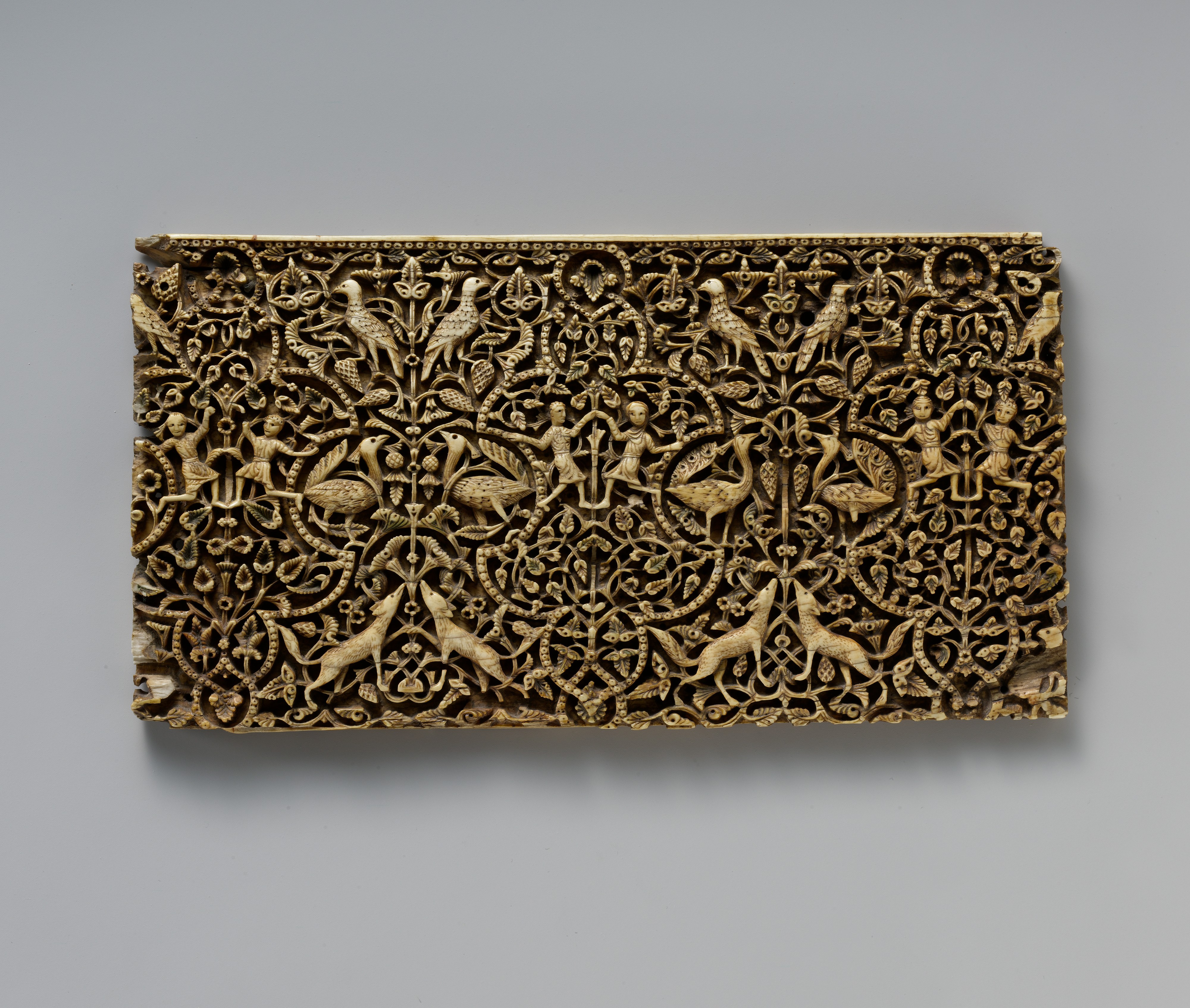
Archaeological Aesthetics: Deconstructing the Ivory Panel as a Proto-Couture Artifact
Within the isolated context of aesthetic archaeology, the Ivory Panel from a Rectangular Box stands as a profound testament to pre-industrial luxury. Disconnected from a specific cultural lineage for the purpose of this study, it is analyzed purely as an object of applied artistry, a silent manifesto of classical elegance defined through material intelligence and sculptural discipline. Its value lies not in provenance, but in its constitutive principles: the dialectic of resistance and delicacy in carved ivory, the chromatic punctuation of inlaid stone and fugitive pigment, and the narrative containment within a strict rectangular frame. This artifact, in its exquisite isolation, provides a foundational grammar for 2026 haute couture, moving beyond literal reference to inform a new paradigm of silhouette construction—one rooted in architectural purity, tactile contrast, and the eloquent restraint of monumental detail.
Material Dialectics: The Ivory Paradigm of Structural Delicacy
The primary materiality of ivory presents a core couture contradiction: it is a substance of immense density and organic warmth, yet it is carved into filigree-like precision. This inherent tension between structural integrity and apparent fragility is the first principle extracted for 2026. Silhouettes will embody this paradox through techniques of engineered lightness. Imagine gowns constructed from layered silk gazar, not draped softly, but precisely pleated and starched to form a rigid, architectural bell shape that nonetheless appears to float. Corsetry will evolve from foundational undergarments to external exoskeletons, carved from laser-cut acrylic or molded from bio-resins that mimic the creamy opacity and veining of ivory, then articulated with jointed seams to allow for a rigid yet graceful movement. The silhouette is no longer merely worn; it is constructed around the body as a living panel, possessing a monumental calm and a delicate, almost precarious, beauty.
The Grammar of Inlay: Stone as Chromatic and Textural Punctuation
The inlaid stone and traces of pigment on the panel are not mere decoration; they are strategic interventions that guide the eye and articulate form. This informs a 2026 approach to embellishment that is severe, intentional, and fundamentally architectural. The concept of "inlay" will be translated into the language of silhouette through three key techniques. First, negative space as ornament: precise laser-cut apertures in a structured wool bustier will reveal flashes of gemstone-toned silk beneath, creating a mapped, geometric play of color and shadow. Second, hardware as jewel: functional closures—such as a spine of rough-hewn amethyst or lapis lazuli buttons on a severe wool coat—will serve as isolated points of chromatic intensity, mirroring the stone inlay. Third, pigment as structure: the "traces" suggest a faded, non-verbal narrative. This translates to ombré dyeing techniques applied not fluidly, but in sharp, segmented panels across the body, as if the color itself is a structural component that has weathered with time, telling a story of erosion and permanence.
The Rectangular Frame: Containment and the New Proportions
The panel’s existence within a strict rectangular boundary is perhaps its most potent lesson for silhouette. It speaks to elegance through containment, and narrative through limitation. For 2026, this principle dismantles the fluid, body-conscious shapes of recent seasons, proposing instead a return to iconic, framed proportions. The key shapes will be reinterpreted through this lens of the "rectangular panel." The coat-dress becomes a literal box, with sharp shoulders and a straight drop from the collarbone to mid-calf, its only contour suggested by a single, severe inlaid seam. The balloon sleeve is reimagined not as a puff, but as a rectangular volume of air trapped between layers of organza, creating clean, right-angle corners at the shoulder and cuff. Even the neckline becomes a frame: the square décolleté is cut with absolute precision, acting as a window to a stark, ivory-toned collarbone, perhaps accentuated by a single, horizontal stroke of pigment-like contour. The body is not hidden, but rather presented as a curated form within a constructed space.
Conclusion: The 2026 Silhouette—A Monument to Applied Intelligence
The isolated Ivory Panel, therefore, does not inspire a trend; it codifies a philosophy for the next era of high luxury. The 2026 silhouette, as informed by this artifact, is a monument to applied intelligence. It is an architecture of contrasts: rigid yet light, severe yet warm, silent yet eloquent through meticulous detail. It rejects superfluous ornament in favor of integrated material narrative, where every seam, closure, and color application serves to define and enhance the purity of the form. For Natalie Fashion Atelier, this research posits a future where couture returns to its core as a practice of aesthetic archaeology—not digging for literal references, but unearthing fundamental principles of beauty, balance, and craftsmanship. The resulting client is not merely dressed; she is armored in a contemporary classicism, a walking testament to the timeless dialogue between the human form and the disciplined hand of the artisan.