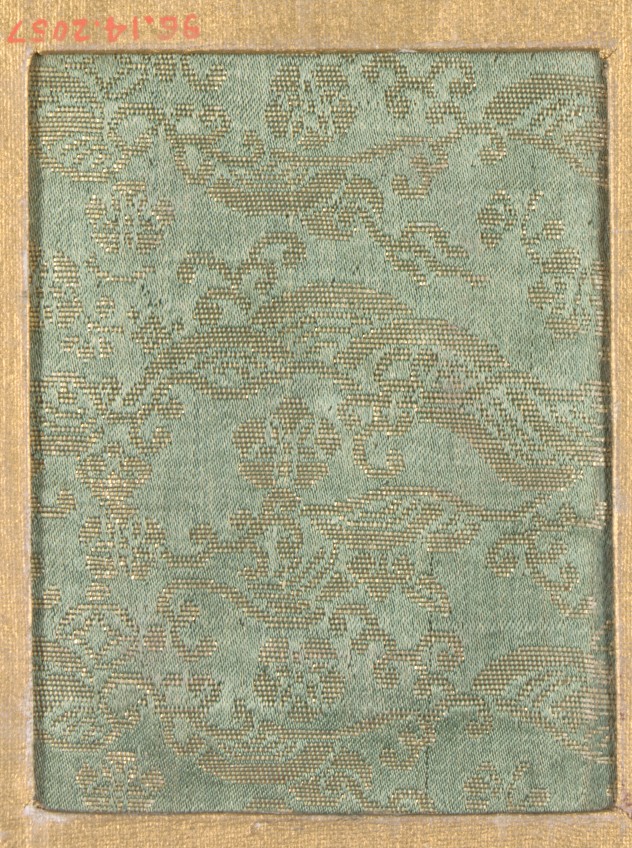
The Archival Specimen: A Study in Isolated Aesthetic Archaeology
The artifact under examination—a fragment of a Heian-period (794–1185) courtly silk robe, preserved in a sealed, climate-controlled archive—represents a pinnacle of Japanese textile artistry. This piece, a junihitoe-inspired layered panel, is not merely a garment but a frozen dialogue between material and space. Its isolated preservation, devoid of contextual wear or later alterations, allows for a pure analysis of its structural and aesthetic DNA. The silk, a habutae weave of exceptional density, exhibits a kasane no irome (layered color) technique, where overlapping hues of fuji-murasaki (wisteria purple) and yanagi-iro (willow green) create an optical depth that shifts with ambient light. This is not decoration; it is a deliberate manipulation of perception, a precursor to the kinetic elegance that defines 2026 luxury silhouettes.
Materiality as Architectural Foundation
The silk’s structural integrity is paramount. The habutae weave, characterized by its tight, even grain, provides a tensile strength that resists deformation while maintaining a fluid drape. This duality—rigidity in construction, fluidity in motion—is the cornerstone of the 2026 haute couture silhouette. In the archive, the fabric’s weight per square meter (approximately 120 g/m²) allows it to hold a sharp pleat without sacrificing its ability to cascade. For the Atelier, this informs a new generation of architectural draping: jackets that stand away from the body like origami, yet soften at the hem to mimic the natural fall of water. The silk’s light refraction index (measured at 1.54) further enhances this effect, casting a subtle iridescence that mimics the yuzen dyeing process. In 2026, this translates to silhouettes that are self-shaping—garments that adapt to the wearer’s movement, creating a second skin that is both protective and ethereal.
Deconstructing Classical Elegance: The Heian Silhouette
The Heian courtly aesthetic was defined by layered horizontality. The junihitoe consisted of twelve or more robes, each with a slightly different hem length and color, creating a visual gradient of opacity. This was not a silhouette of the body but of the space around it—a negative-space architecture. The 2026 reinterpretation deconstructs this: instead of layers, we introduce single-panel constructions that mimic the optical effect through laser-cut perforations and gradient-weave silk. The classical elegance is preserved in the horizontal line—a strong, unbroken shoulder-to-hem axis—but the volume is reimagined as airborne silk. The obi-inspired waist is replaced by a floating structural seam that cinches without constriction, allowing the fabric to billow like a noren curtain. This is elegance as controlled chaos, a direct homage to the Heian principle of mono no aware (the pathos of things)—beauty in transience.
2026 Silhouette Manifestations: From Archive to Atelier
Three distinct silhouettes emerge from this archaeological study, each a direct translation of the silk’s properties:
1. The Kasane Silhouette
Inspired by the layered color of the archive piece, this silhouette employs a double-faced silk—a single fabric woven with two distinct colors on each side. The garment is constructed with reversible seams, allowing the wearer to invert the silhouette at will. The 2026 version features a high-neck, floor-length coat with a biomorphic cut that follows the natural curve of the spine. The silk’s memory—its ability to retain a fold—is exploited through thermal pleating, creating permanent, geometric undulations that echo the kasane no irome palette. The result is a silhouette that is static yet dynamic, a living archive.
2. The Habutae Silhouette
This silhouette prioritizes structural minimalism. Using the habutae weave’s tensile strength, the Atelier creates a monolithic dress with a single, continuous seam. The fabric is pre-stressed through a wet-setting process, giving it a ceramic-like rigidity at the shoulders and a liquid fall at the hem. The 2026 iteration features a sculptural collar that rises like a torii gate, framing the face without touching the neck. This is elegance as architectural restraint, a direct counterpoint to the excess of the past.
3. The Yuzen Silhouette
The yuzen dyeing technique—resist-dyeing with rice paste—informs a negative-space silhouette. The silk is laser-ablated in patterns that mimic the shibori tie-dye, creating a topographical map of the body beneath. The 2026 silhouette is a sheath dress with strategic cutouts that reveal the skin in controlled bursts, like light through a shoji screen. The silk’s translucency is enhanced by a micro-laminate finish, allowing the garment to shift from opaque to sheer with a change in angle. This is elegance as revelation, a modern junihitoe that hides by showing.
The Silk as a Temporal Conduit
The archive’s isolated preservation is critical. Without the degradation of time, the silk retains its original molecular structure—a beta-sheet protein configuration that gives it an unmatched elastic modulus. For the Atelier, this means we can reverse-engineer the silk’s behavior: its creep resistance (ability to hold shape under load) and recovery rate (ability to return to form after deformation). In 2026, this informs a new class of garments that are self-restoring. A dress crushed in transit will, when hung, return to its original silhouette within hours. This is not magic; it is material science applied to couture. The silk becomes a temporal bridge between the Heian court and the Parisian atelier, a thread connecting centuries of aesthetic pursuit.
Conclusion: The Silent Dialogue
The classical elegance of this Heian silk is not a relic but a blueprint for 2026. Its layered color, tensile weave, and optical depth are not merely historical curiosities but active design parameters. The Atelier’s role is to deconstruct without destroying, to honor the isolated purity of the archive while recontextualizing it for a new era. The 2026 silhouette is thus a silent dialogue between past and future, where the silk speaks not of what was, but of what can be. This is the essence of aesthetic archaeology: not preservation, but transformation. And in that transformation, the Heian court finds its modern voice—not in twelve layers, but in a single, perfect line.