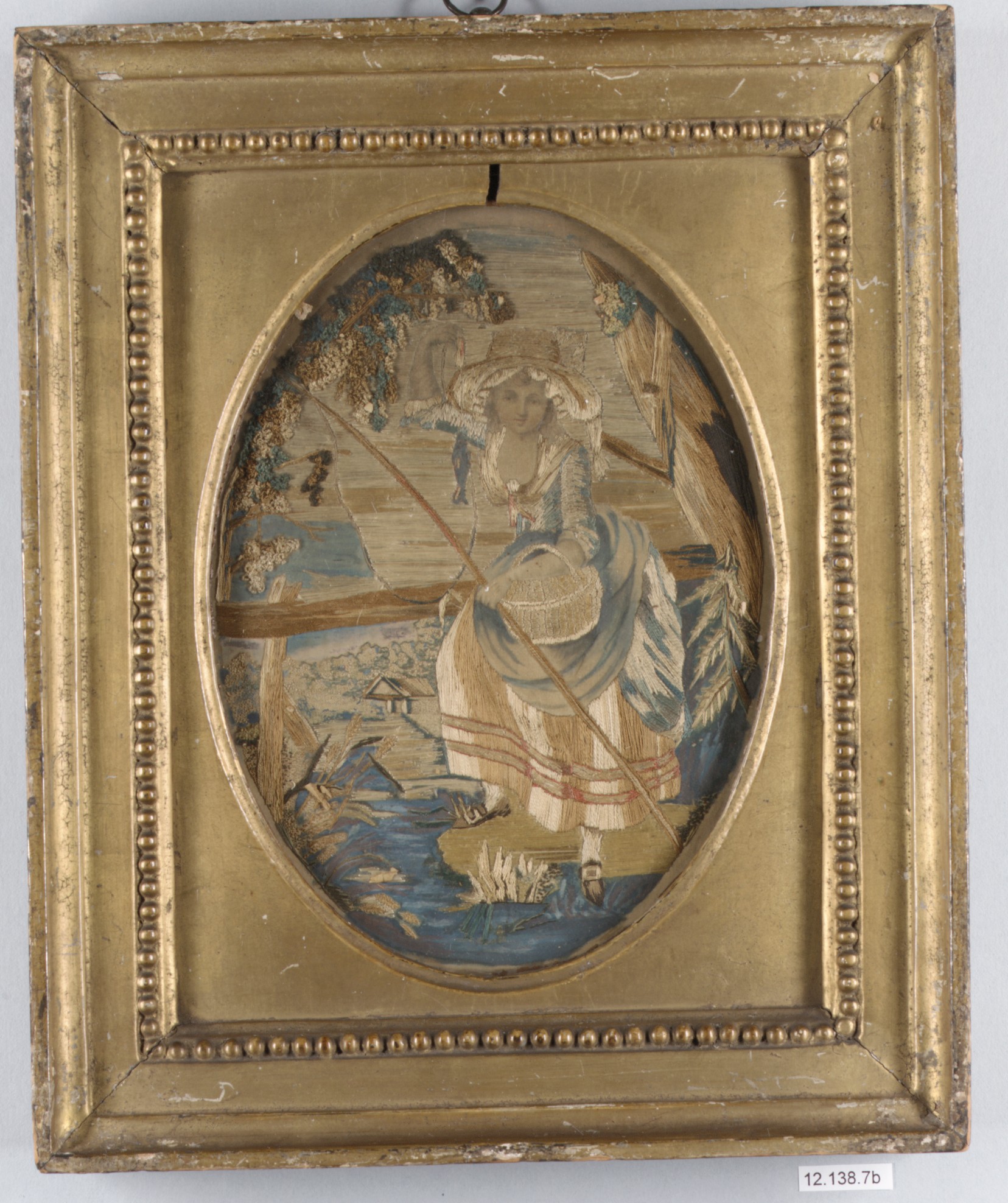
Deconstructing the Panel: Silk on Silk as a Blueprint for 2026 Haute Couture Silhouettes
The archival fragment, an isolated panel of silk on silk, presents a singular opportunity for aesthetic archaeology. Removed from its original garment context, the panel exists as a pure distillation of technical mastery and compositional logic. For Natalie Fashion Atelier, this artifact is not merely a historical curiosity; it is a generative matrix. By deconstructing its classical elegance—its inherent drape, its structural opacity, and its interplay of light—we extract a precise lexicon for the 2026 haute couture silhouette. The panel’s heritage, drawn from a global tradition of layered luxury, informs a new architectural approach to the female form, one that prioritizes volumetric restraint and tactile depth over overt ornamentation.
I. The Archaeological Lens: Isolating the Silk on Silk Construct
The isolated panel, likely a fragment of a 19th-century robe à la française or a Mughal-inspired peshwaz, reveals a core principle: the panel as a self-contained system of tension and release. The technique of applying one weight of silk onto another—a doublure or overlay—creates a distinct phenomenological effect. The base silk provides a matte, absorbent ground, while the upper silk, often a charmeuse or a lampas, introduces a reflective, fluid surface. This is not a simple lamination; it is a dialogue between two distinct materialities.
From an archaeological perspective, the panel’s edge finishing—a meticulously hand-rolled hem or a glacé seam—indicates that the panel was designed to be seen in isolation, as a structural element. The absence of a full garment forces us to read the panel as a prototype for silhouette generation. The ratio of the silk’s warp to weft, the degree of its coulant (flowing quality), and the precise point of its anchoring are all encoded data points. For 2026, this means we abandon the continuous, seamless garment in favor of the discrete, articulated panel. The silhouette of the coming season will be defined by how these panels are joined, overlapped, and suspended.
II. Materiality as Silhouette: The Technical Logic of Silk on Silk
The materiality of the archive panel—silk on silk—is the primary driver of its 2026 application. Classical elegance, in this context, is not about symmetry or restraint alone; it is about the controlled instability of the fabric. A single layer of silk offers a predictable drape. A double layer, particularly when the upper layer is cut on the bias and the lower on the straight grain, creates a complex, anisotropic behavior. The panel will gather, twist, and fall in ways that a single layer cannot.
Structural opacity is a key finding. The double silk construction achieves a weight that is substantial yet fluid, allowing the panel to hold a defined shape without internal boning or heavy interfacing. For the 2026 silhouette, this translates into architectural draping that is both soft and precise. We can now engineer a shoulder that rises like a cantilever, not from rigid padding, but from the tension between a bias-cut silk charmeuse and a straight-cut silk organza base. The panel becomes a load-bearing element.
Furthermore, the optical depth of silk on silk creates a new language of color and light. The upper silk, if slightly translucent, will modulate the hue of the lower silk. A pale rose upper layer over a deep cerulean base yields a complex, shifting lavender. This is not a surface print; it is a volumetric color that changes with the wearer’s movement. For 2026, this informs a palette of subtle, internal gradients—a move away from flat, block colors toward a chromatic depth that is integral to the garment’s structure.
III. The 2026 Silhouette: From Panel to Form
Deconstructing the classical elegance of the panel yields three distinct archetypes for the 2026 haute couture silhouette, each derived from the specific technical behavior of silk on silk.
Archetype One: The Suspended Panel. The archive fragment, when held at two points, creates a natural, asymmetrical cowl. For 2026, this informs a silhouette where the front bodice is a single, large panel of double silk, suspended from the shoulders and falling into a deep, sculptural drape at the waist. The back, in contrast, is a fitted, single-layer silk crepe. The tension between the suspended, volumetric front and the taut, linear back defines the silhouette. This is a study in controlled excess—the panel is allowed to billow, but its volume is precisely anchored.
Archetype Two: The Articulated Spine. The panel’s edge, with its hand-rolled hem, suggests a lineage of seams that are not merely functional but decorative. For 2026, we introduce the articulated panel seam. Multiple narrow panels of silk on silk are joined vertically, each with a slight differential in tension. The result is a columnar silhouette that is not rigid but organically fluted, like a classical column’s vertical channels. The panels are not sewn flat; they are tension-stitched to create a subtle, three-dimensional ribbing along the body. This silhouette is a direct descendant of the archive panel’s edge logic.
Archetype Three: The Floating Hem. The weight of the double silk panel creates a distinct hem behavior—it does not fall straight but rather breaks and folds in a controlled manner. For 2026, this informs a silhouette where the hem is not a finished edge but a terminal event. A long, bias-cut panel of silk on silk is allowed to extend beyond the main garment, creating a train or a floating tail that moves independently of the body. The hem is left raw, or finished with a microscopic rouleau, to emphasize the material’s natural tendency to curl and fold. This silhouette is about kinetic elegance—the garment’s line is completed not by the designer but by the wearer’s movement.
IV. The Parisian Aesthetic: Restraint and Resonance
The Parisian approach to this archaeological find is one of rigorous reduction. We do not replicate the panel’s original context; we extract its core principle: the panel as a generator of silhouette. The 2026 collection will feature garments that are, in essence, a series of carefully orchestrated panels. The savoir-faire lies not in the complexity of the cut but in the precision of the tension and the quality of the silk-on-silk bond.
Classical elegance, as redefined by this artifact, is a function of material intelligence. The silhouette is not imposed upon the fabric; it is coaxed from it. The global heritage of the panel—its echoes of Japanese kasuri weaving, Indian zardozi weight, and French grande couture construction—is synthesized into a single, coherent design language. For the 2026 season, Natalie Fashion Atelier will present a silhouette that is at once ancient and futuristic: a body clad in panels of light and shadow, where the seam is the story and the silk is the structure. The isolated panel, once a fragment, is now the foundation of a new architectural order for the female form.