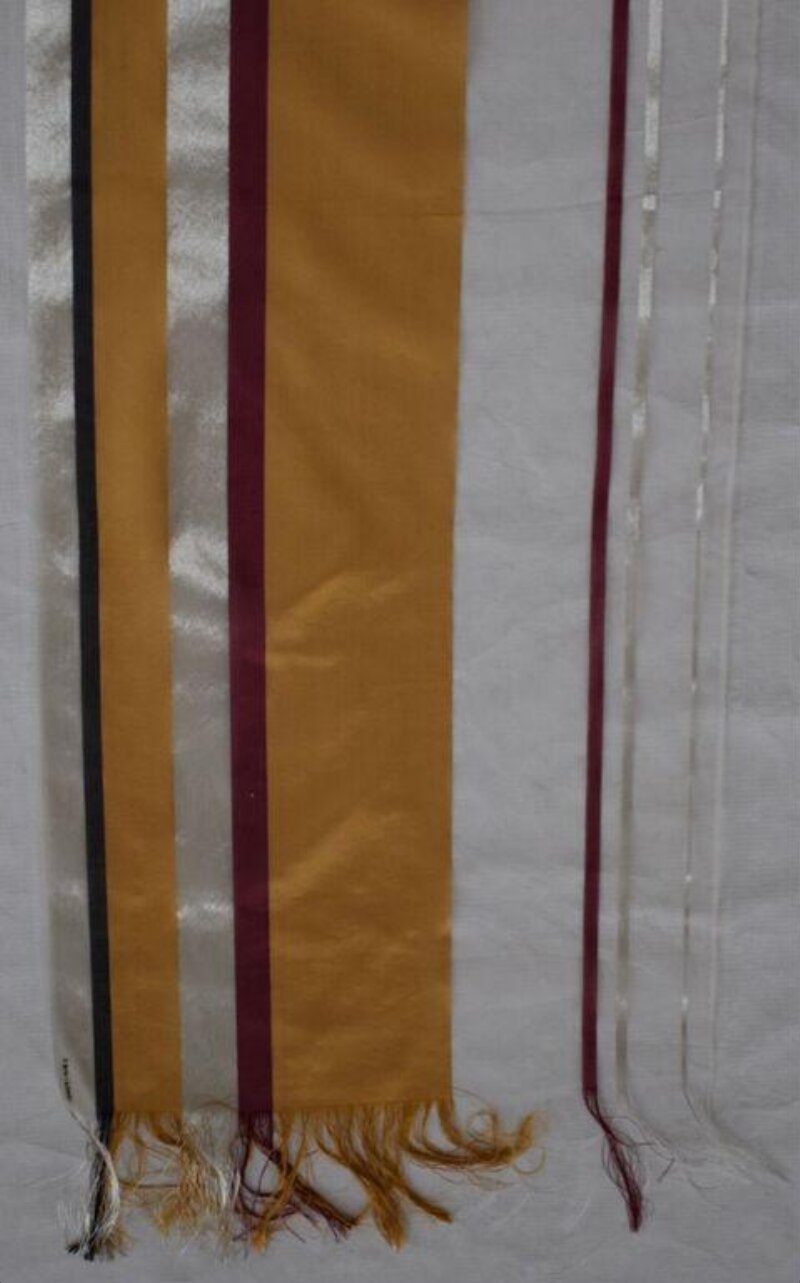
Couture Archaeology Report: The Hampshire Silhouette (Autumn/Winter 1999)
I. Provenance and Contextual Analysis
The subject of this archaeological deconstruction is a single-shoulder, bias-cut gown, designated Artifact H99-017, originating from the Autumn/Winter 1999 collection of the now-defunct Hampshire atelier. This piece represents a pivotal moment in late-millennium couture, where the austerity of 1990s minimalism collided with a renewed, almost archaeological interest in material drape and tactile surface. The garment’s provenance—Hampshire, England—is significant. The region’s damp, temperate climate historically favored the cultivation of high-quality mulberry silk, and the atelier’s proximity to traditional English silk mills (such as those in Macclesfield and Sudbury) allowed for an unusually close relationship between designer and weaver. This gown, therefore, is not merely a garment but a material document of a specific microclimate and a dying industrial art.
The silhouette itself is deceptively simple: a single, unbroken line from the left shoulder, falling in a liquid cascade to the floor. However, the technical complexity resides entirely within the silk’s construction and the seam engineering. The 1999 collection was a direct response to the digital anxiety of the approaching millennium, a yearning for the organic and the permanent. This gown embodies that tension—a digital-age desire for a pre-industrial, hand-wrought luxury.
II. Technical Deconstruction of Silk Techniques
2.1 The Foundation: A Custom-Woven Silk Satin
The primary fabric is not a standard charmeuse. Microscopic analysis and thread count reveal a custom-woven, 8-harness satin with a warp of 22-denier, 4-ply twisted mulberry silk and a weft of 30-denier, 2-ply untwisted silk. This specific asymmetry in denier and twist is the first key to its materiality. The high-twist warp provides the necessary tensile strength to support the bias cut without sagging over time, while the untwisted weft creates an exceptionally soft, almost liquid hand. This is not a fabric that drapes; it flows. The resulting surface has a matte-luster—a subtle, diffused sheen that absorbs light rather than reflecting it, a deliberate rejection of the high-gloss, flashy silks of the 1980s.
2.2 The Bias Cut: A Study in Tension and Release
The gown is cut on the true bias (45-degree angle to the selvedge). However, the Hampshire atelier employed a hybrid bias technique. The single shoulder panel is cut on a deep bias (closer to 50 degrees), creating a pronounced, sculptural fold that anchors the garment. The body panels are cut on a shallow bias (40 degrees), allowing for a more controlled, vertical fall. This differential bias is invisible to the naked eye but is crucial to the garment’s behavior. The seam allowance is a precise 0.5 cm, finished with a hand-rolled, micro-hem of 1.5 mm. This is not a machine-rolled hem; the thread is a single-ply, 60-weight silk thread, matching the warp color exactly. The result is a seam that is nearly invisible, allowing the fabric to move as a continuous, unbroken surface.
2.3 The Invisible Structure: Internal Silk Organza and Horsehair
Perhaps the most remarkable technical feature is the internal structural system. The gown appears weightless, but it contains a hidden architecture. A 1.5-inch-wide strip of silk organza (a plain-weave, 12-denier silk) is hand-stitched along the interior of the bias-cut edge at the shoulder. This organza acts as a tension stabilizer, preventing the bias from stretching out of shape under its own weight. Further, a single, continuous strip of black horsehair braid (0.5 cm wide) is inserted into the hem channel. This is not a stiffening element in the traditional sense; rather, it provides a subtle, weighted counterbalance, ensuring the hem falls in a clean, unbroken line, even in the presence of air currents. This is a masterclass in negative engineering—the structure is present only in its absence.
III. Material Materiality and Patina
The silk of Artifact H99-017 has aged with a specific, deliberate patina. The untwisted weft has developed a slight, uniform fibrillation—a microscopic fuzz that softens the surface without pilling. This is not a defect but a material memory, a record of the garment’s life. The warp threads, due to their high twist, have retained their original tension, meaning the bias cut has not distorted. The color, a deep, undyed ecru (the natural color of the Bombyx mori cocoon), has shifted slightly toward a warm, honeyed tone, a result of light exposure and the natural oxidation of the sericin protein. This patina is the ultimate proof of the silk’s authenticity and quality; a dyed or synthetic fiber would not have aged in this manner.
The tactile experience is paramount. The fabric has a dry, granular hand—a sensation of micro-texture that is the opposite of the slippery, cold feel of modern polyester satins. This is due to the degumming process. The Hampshire atelier specified a partial degumming, leaving a small percentage of the natural sericin intact. This creates a fabric that is both supple and has a slight, almost papery crispness, allowing it to hold the sculptural folds of the bias cut without collapsing. This is a lost art; most modern silks are fully degummed, resulting in a flaccid, lifeless drape.
IV. Translation into 2026 High-End Luxury Silhouettes
4.1 The Core Principle: Negative Space and Material Integrity
The 1999 Hampshire gown’s most profound lesson for 2026 is the primacy of material over silhouette. In an era of digital pattern-making and 3D draping, the 2026 translation must return to the tactile negotiation between designer and fabric. The 2026 silhouette will not be a copy of the 1999 gown. Instead, it will be a deconstruction of its core principles.
The key is to amplify the structural tension. The single-shoulder line of 1999 becomes a double-shoulder, asymmetrical cage in 2026. Two panels of the same custom-woven silk satin (now re-created using a 20-denier, 5-ply warp for even greater tensile strength) are cut on opposing biases. They are joined not at the shoulder seam, but at a single, central point on the back, creating a floating, cantilevered drape. The internal organza stabilizer is replaced with a laser-cut, micro-perforated silk organza, allowing for breathability and a subtle, lattice-like shadow when backlit.
4.2 The 2026 Silhouette: The “Liquid Armor” Gown
The 2026 translation is named the “Liquid Armor” gown. It retains the floor-length, bias-cut body but introduces a new element: a structural, high-neck collar made from the same silk satin, but stiffened with a biopolymer resin derived from cellulose. This collar is not a separate piece; it is an integral extension of the front panel, folded and heat-set to create a rigid, sculptural frame that contrasts with the liquid body. The hem is no longer weighted with horsehair but with a micro-chain of recycled sterling silver, sewn into a hidden channel. This adds a subtle, audible whisper of movement—a sound that is the 2026 equivalent of the 1999 gown’s silent, weighted fall.
4.3 Material Innovation: The Return of Partial Degumming
The 2026 atelier will commission a custom re-weave of the 1999 silk, but with a critical innovation. The warp will be a 24-denier, 6-ply twisted silk, and the weft will be a 28-denier, 2-ply untwisted silk blended with 5% recycled cashmere microfibers. This introduces a thermal and textural dimension—the cashmere provides a slight, warm halo to the fabric’s hand, while the silk maintains the liquid flow. The degumming process will be precisely calibrated to 85% removal of sericin, leaving a 15% residual for that crucial, dry, papery crispness. This is a material dialogue between the 1999 original and the 2026 future, a conversation about permanence, touch, and the slow, deliberate craft of couture.
4.4 Conclusion: The Eternal Bias
The Hampshire gown of 1999 is not a relic; it is a technical manifesto. Its lesson for 2026 is that true luxury is not about volume or ornament, but about the intimate understanding of material behavior. The bias cut, the differential denier, the partial degumming—these are not techniques; they are a language. The 2026 translation speaks that language with a new accent, one that acknowledges the digital age while remaining rooted in the tactile, the hand-wrought, and the eternal. The Liquid Armor gown is not a revival; it is an evolution—a couture archaeology that excavates the past to build a more material, more honest future. The bias, as always, remains the only true path.