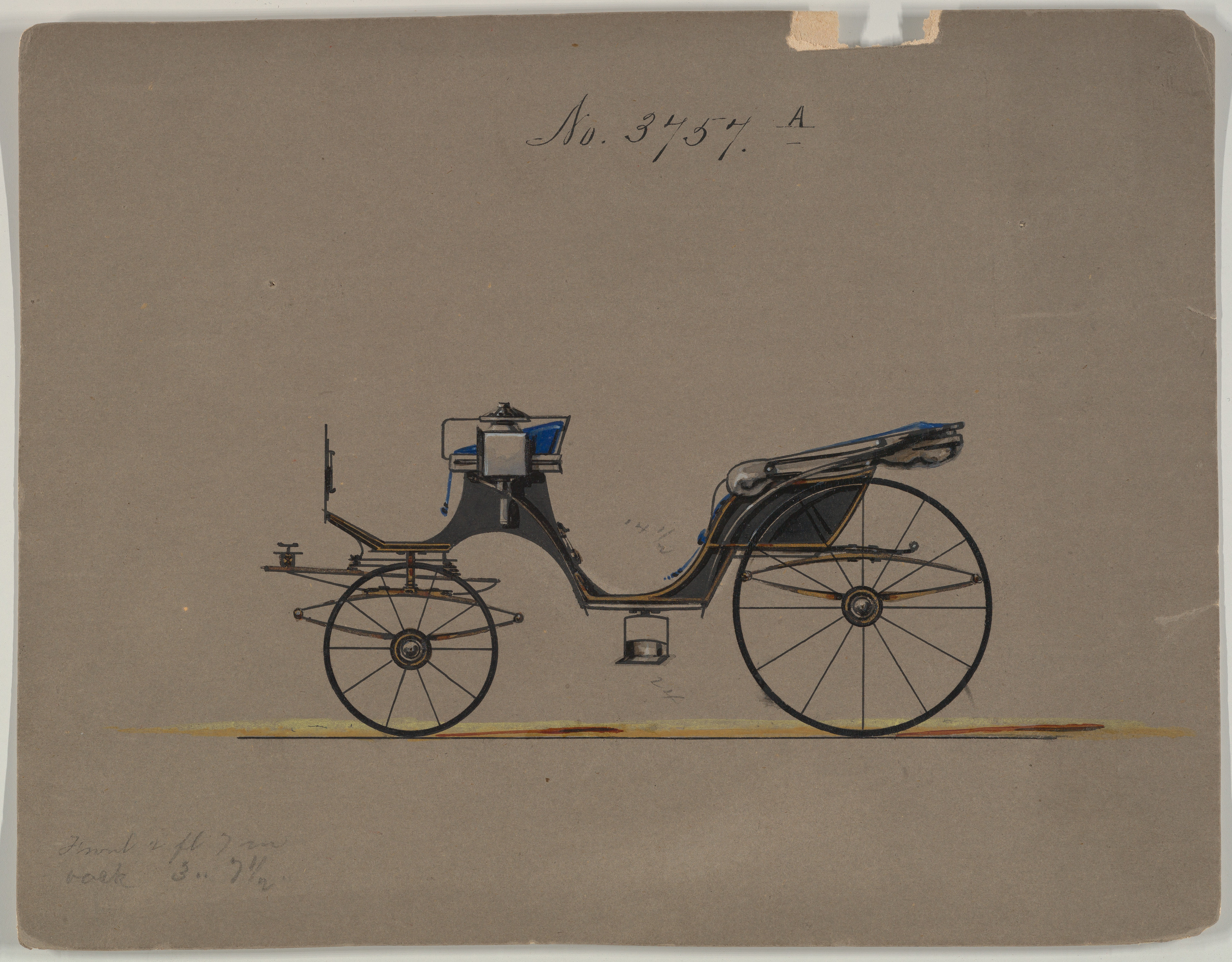
Cabriolet #3757a: Aesthetic Archaeology and the 2026 Silhouette
Within the hallowed archives of Natalie Fashion Atelier, the artifact designated Cabriolet #3757a stands as a singular testament to the dialogue between ephemeral gesture and enduring structure. This piece, executed in pen and black ink, watercolor, metallic ink, gum Arabic, and gouache, is not merely a preparatory study; it is a complete, isolated aesthetic artifact. Its heritage is global, drawing from the carriage craftsmanship of 18th-century Paris, the geometric rigor of Viennese Secessionist ornament, and the fluid calligraphy of East Asian ink painting. For the 2026 couture season, this artifact provides a critical blueprint for a silhouette that reconciles the weight of history with the lightness of future possibility.
Materiality as Narrative: The Technical Lexicon of #3757a
The material composition of Cabriolet #3757a is its primary source of intellectual and aesthetic data. The pen and black ink establishes the foundational architecture—a series of precise, unyielding lines that define the structural armature of the proposed garment. This is the skeleton, the couture of the piece, demanding a rigor that informs the underlying construction of a 2026 jacket or bodice. The watercolor introduces the variable of atmosphere. It washes over the ink, creating gradients of opacity that suggest movement, fabric drape, and the interplay of light on a curved surface. This technique directly translates to the use of liquid silks and double-faced crepes in our forthcoming collection, where color is not a flat application but a volumetric field.
The inclusion of metallic ink and gum Arabic elevates the artifact from a study to a luxury object. The metallic ink, applied in fine, broken strokes, mimics the glint of a polished brass fitting on a historical cabriolet or the subtle sheen of a lamé thread. For 2026, this informs a specific technique of micro-embroidery where gold and silver threads are not woven into the fabric but applied as surface calligraphy, catching light in a manner that is both architectural and ephemeral. The gum Arabic, a binder that creates a glossy, enamel-like finish when mixed with pigment, is used in the artifact to create isolated highlights—a shoulder, the curve of a collar. This translates to a new method of lacquer-finish appliqué on matte wool or cashmere, creating a tactile and visual tension that defines the high-end silhouette.
Deconstructing Classical Elegance: The Silhouette of the Cabriolet
The classical elegance of Cabriolet #3757a is not found in symmetry or restraint, but in a dynamic equilibrium of opposing forces. The artifact depicts a silhouette that is simultaneously enveloping and exposed. The upper structure, reminiscent of a carriage hood, is voluminous and protective, rendered in dense watercolor and gouache. This translates to a 2026 silhouette with a pronounced, sculpted shoulder and a high, structured collar—a modern caraco that shields the wearer while asserting a powerful presence.
Beneath this protective shell, the ink lines reveal a second silhouette: one of extreme elongation and linearity. The body of the carriage, and by extension the garment, is a study in verticality. The black ink creates a continuous, unbroken line from the collarbone to the hem, a technique that informs our use of seamless, bias-cut panels in 2026. This is not the soft draping of the 1930s, but a controlled, architectural fall of fabric that mimics the precision of the ink stroke. The classical elegance, therefore, is a paradox: a rigid structure that facilitates fluid movement.
Informing the 2026 High-End Silhouette: A Technical Translation
From the isolated aesthetic archaeology of Cabriolet #3757a, we derive three specific directives for the 2026 couture silhouette.
1. The Structural-Drape Hybrid. The artifact’s combination of hard ink lines and soft watercolor washes mandates a garment that is both constructed and fluid. The 2026 silhouette will feature a tailored, almost corseted, bodice (the ink) that is then overlaid with a free-floating, watercolor-like panel of silk organza or chiffon (the watercolor). This is not a simple overlay; the outer layer is cut to follow the exact mathematical curve of the inner structure, creating a moiré effect of shadow and light. The metallic ink informs the use of a single, continuous metallic thread that traces the seam between the two layers, acting as a visual and structural anchor.
2. The Asymmetric Volume. The cabriolet’s design is inherently asymmetrical—one side is the protective hood, the other is the open carriage. The 2026 silhouette will adopt this principle. A single, exaggerated sleeve—the “cabriolet sleeve”—will be constructed from multiple layers of tulle and stiffened organza, forming a bell-like volume that is both protective and theatrical. The opposite side of the garment will be completely bare, with a single, thin strap or a high-cut armhole, echoing the exposed side of the carriage. This asymmetry is not decorative; it is a structural dialogue between concealment and revelation, a direct translation of the artifact’s spatial logic.
3. The Lacquered Highlight. The gum Arabic and gouache highlights in the artifact are not random; they are placed at points of structural tension—the apex of a curve, the fulcrum of a hinge. For 2026, this informs a technique of strategic, high-gloss paneling. Using a proprietary blend of resin and metallic powder, we will create small, isolated panels on a garment—perhaps on the shoulder blade, the hip bone, or the back of the wrist. These panels will be lacquered to a mirror finish, creating a point of intense visual focus that breaks the matte surface of the surrounding fabric. This is the direct descendant of the gum Arabic highlight: a moment of pure, reflective luxury that defines the silhouette’s most critical points.
Conclusion: The Artifact as Living Codex
Cabriolet #3757a is not a historical relic to be copied; it is a living codex of techniques and principles. Its pen and black ink teach us the value of a single, confident line. Its watercolor teaches us the beauty of controlled diffusion. Its metallic ink and gum Arabic teach us that luxury is a matter of precise, strategic intervention. For the 2026 season, the silhouette of Natalie Fashion Atelier will be a direct, archaeological extraction from this artifact: a silhouette that is at once protective and exposed, linear and volumetric, matte and reflective. It is a silhouette that carries the weight of global heritage while moving with the lightness of a single, perfect stroke of ink. This is the future of haute couture: a continuous, rigorous excavation of the past to find the shape of tomorrow.