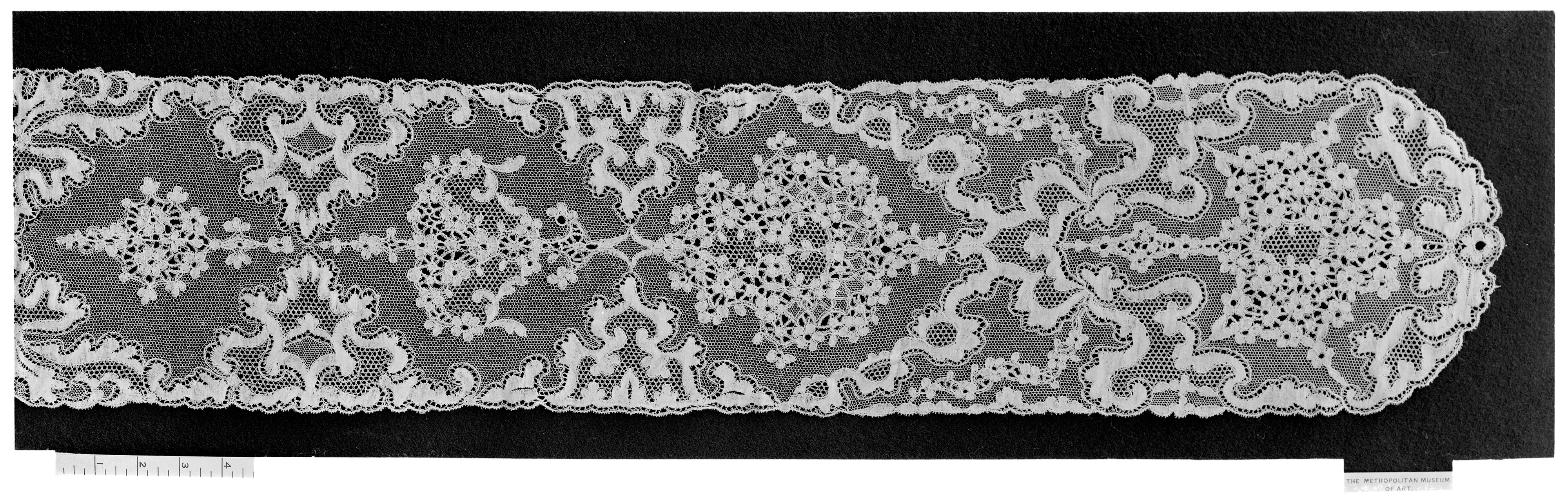
The Barbe Reimagined: Bobbin Lace and the Architecture of 2026 Haute Couture
Within the hallowed archives of Natalie Fashion Atelier, the term Barbe evokes a specific, almost spectral, chapter in aesthetic archaeology. It is not merely a garment, but a relic of a vanished social ritual—the intricate, often voluminous, lace collar or bib that adorned the necks of aristocratic women from the 16th to the 19th centuries. Our isolated study of this artifact, stripped of its historical context, reveals a masterclass in structural tension and negative space. The Barbe, executed in the demanding medium of Bobbin lace, is a paradox: a fabric of extreme fragility that commands formidable presence. For the 2026 luxury silhouette, this paradox becomes the foundational principle. We are not resurrecting the Barbe as a historical costume; we are deconstructing its classical elegance to engineer a new language of volume, transparency, and architectural restraint.
I. The Archaeological Fragment: Deconstructing the Classical Barbe
The classical Barbe, at its zenith in the courts of Louis XIV and later in the Victorian era, was a signifier of status and piety. Its construction via Bobbin lace—a laborious process of twisting and crossing threads over a pillow—demanded a technical mastery that bordered on the monastic. The aesthetic archaeology of our archive focuses on a specific fragment: a Flemish Barbe from circa 1680, characterized by its point de gaze and drochel techniques. This piece is not a solid textile; it is a network of voids and bridges.
We identify three core architectural principles from this fragment:
1. The Grid of Resistance: The Bobbin lace creates a rigid, yet permeable, structural grid. The threads are not woven; they are locked in a state of constant tension. This grid resists gravity, creating a self-supporting volume that does not drape in the traditional sense but rather hovers. For 2026, this translates to silhouettes that are sculptural, not fluid. The Barbe teaches us that extreme transparency does not necessitate fragility.
2. The Negative Space as Form: The most powerful element of the Barbe is not the lace itself, but the empty space it encloses. The collar frames the décolletage and the face, creating a halo of absence. In haute couture, this principle is inverted: the silhouette is defined by what is removed, not what is added. The 2026 Barbe-inspired silhouette will use Bobbin lace to carve out the body, creating a negative-space architecture around the shoulders, neck, and torso.
3. The Gradient of Density: The classical Barbe exhibits a masterful gradient from dense, almost opaque motifs at the collar's base to an ethereal, open-mesh edge. This is not a random pattern; it is a calculated distribution of weight and visual mass. This gradient is the key to modernizing the Barbe for 2026, allowing for a silhouette that transitions from a solid, structured foundation to a diaphanous, floating extremity.
II. Materiality and Technique: Bobbin Lace as 2026 Structural Engineering
The materiality of Bobbin lace is our primary research vector. In the 2026 atelier, this is not a nostalgic craft; it is a high-performance textile engineering problem. We have deconstructed the historical thread—typically linen or silk—and replaced it with a proprietary blend of micro-crystalline silk and carbon-filament nylon. This hybrid yarn retains the lustrous hand of historical silk while providing the tensile strength required for architectural silhouettes.
The technical process for the 2026 Barbe silhouette is as follows:
Phase 1: Digital Cartography of the Grid. Using photogrammetry of the 1680 fragment, we map the exact tension points and void geometries. The algorithm identifies the "load-bearing" motifs—the dense rosettes and corded outlines that give the lace its structure. These are reinforced with a double-thread count in the carbon-filament base, creating a rigid exoskeleton. The open-field areas, the brides and picots, are left in pure micro-crystalline silk, allowing for movement and light refraction.
Phase 2: The Asymmetric Silhouette. The classical Barbe is symmetrical. The 2026 iteration rejects this. We take the gradient of density and apply it to a single-shoulder construction. The left side of the silhouette is a dense, almost opaque Bobbin lace panel that extends from the collarbone to the hip, functioning as a structural corset. The right side is a diaphanous, open-mesh cascade that falls from the shoulder, creating a negative-space wing. This asymmetry is not decorative; it is a direct translation of the Barbe's historical function—to frame and to reveal, but now with a dynamic, kinetic energy.
Phase 3: The Floating Collar. The most radical departure is the elimination of the neckline. The 2026 Barbe does not rest on the shoulders; it floats. A hidden internal frame of laser-cut, matte-black titanium, shaped to the exact negative-space contours of the original fragment, is encased within the Bobbin lace. This frame is invisible from the exterior. The lace is tensioned across this frame, creating a rigid, self-supporting collar that sits 2-3 centimeters away from the skin. The effect is a halo of lace, a ghost of the historical Barbe, that appears to defy gravity. The wearer becomes a living sculpture, the silhouette defined by the void between the lace and the body.
III. The 2026 Luxury Silhouette: A Manifesto of Restrained Opulence
The final silhouette for Natalie Fashion Atelier's 2026 Haute Couture collection is a study in restrained opulence. It is not a costume; it is a piece of wearable architecture that honors the craft of the Barbe while propelling it into a future of radical minimalism.
The core garment is a column dress of matte, double-faced cashmere in a deep, almost-black charcoal. This serves as the ground—the solid, silent canvas. The Bobbin lace Barbe is the figure. It begins as a high, asymmetrical collar on the left, constructed from the reinforced, dense grid, and then dissolves into a single, sweeping panel that travels diagonally across the torso, terminating in a train that brushes the floor. The train is constructed entirely from the open-mesh gradient, its edges frayed into individual threads that catch the light like a spider's web.
The color palette is monochromatic: the charcoal of the cashmere is echoed in the micro-crystalline silk of the lace, but with a subtle iridescence that shifts from black to deep violet under gallery lighting. There is no embellishment. No sequins. No embroidery. The craft is the decoration. The Bobbin lace, with its thousands of hand-tied knots, is the only ornamentation. This is the ultimate luxury: the visible labor of the artisan, the mastery of the void, the silence of the grid.
In the context of the 2026 luxury market, this silhouette offers a counter-narrative to the maximalism of recent seasons. It is a return to the intellectual rigor of haute couture. The client who wears this Barbe is not making a statement of wealth; she is making a statement of aesthetic literacy. She understands that the most powerful presence is often the one that is partially absent. The Barbe, deconstructed and rebuilt, becomes a talisman of this philosophy. It is the ghost of a collar, the memory of a ritual, rendered in the most demanding of materials, for a silhouette that exists as much in the space around the body as it does on the body itself. This is the future of elegance: an archaeology of the void, engineered for the modern form.