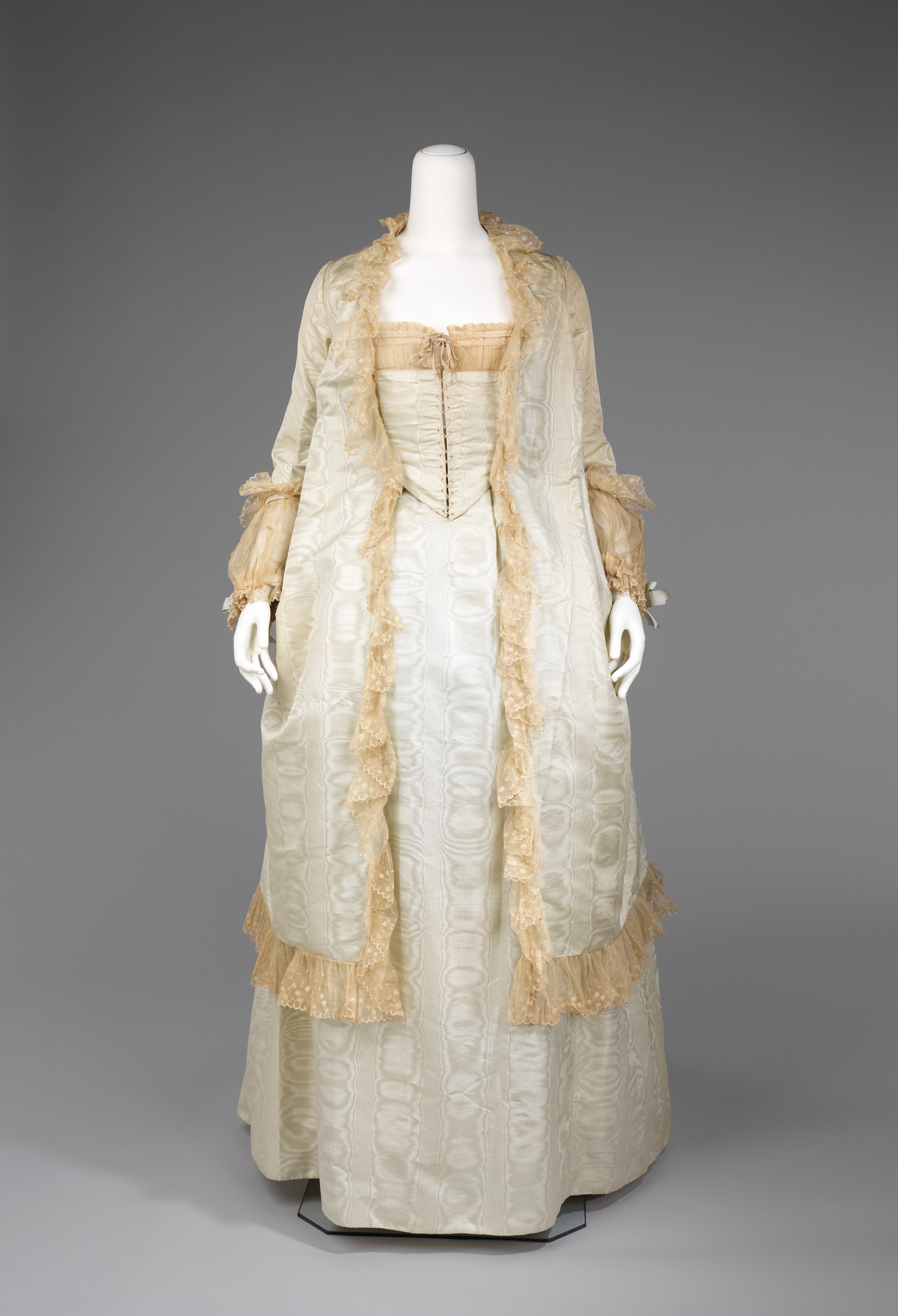
Archive Acquisition: The American Tea Gown as a Site of Aesthetic Archaeology
Within the hushed, climate-controlled vaults of the Natalie Fashion Atelier archive, a singular artifact commands our attention. It is a late 19th-century tea gown, likely of American manufacture, a piece that has been isolated from its historical continuum to serve as a pure object of study. This is not merely a garment; it is a palimpsest of social codes, material science, and a radical, quiet rebellion against the corseted rigidity of its era. Our curatorial analysis, conducted through the lens of aesthetic archaeology, seeks to excavate the foundational principles of this gown’s construction and translate its material logic into a blueprint for the 2026 luxury silhouette.
The American tea gown, a garment of profound domestic intimacy, represents a unique intersection of public presentation and private comfort. Unlike its European counterparts, which often retained a more formal, structured lineage, the American interpretation embraced a softer, more fluid architectural logic. This artifact, composed of a whisper-thin silk ground and a structural cotton underlayer, embodies this dichotomy. It is a masterclass in the manipulation of volume and weight, a study in how two disparate materialities can coalesce to create a singular, elegant form. For the 2026 season, we will not replicate this gown; we will deconstruct its classical elegance to inform a new lexicon of high-end silhouettes predicated on engineered ease and tactile sophistication.
Materiality as Blueprint: The Dialogue Between Silk and Cotton
Deconstructing the Silk Ground: A Study in Fluid Architecture
The silk component of this tea gown is not a mere decorative surface; it is the primary agent of movement and drape. The specific weave—a fine, plain-weave silk taffeta with a subtle, irregular slub—creates a fabric that possesses both a liquid fall and a crisp, almost papery body. This is a paradox of materiality: the silk is simultaneously fragile and resilient, its surface capable of capturing light in a manner that creates a volumetric illusion. In our 2026 haute couture proposition, we will reinterpret this through the use of a double-faced silk gazar, a fabric that offers the same contradictory properties of a structured drape. The 2026 silhouette will not rely on heavy boning or rigid interlinings; instead, the architecture of the garment will be generated by the fabric itself. The silk gazar will be engineered to hold a sculptural, almost architectural fold at the shoulder, cascading into a liquid, bias-cut skirt that mimics the tea gown’s original, gravity-defying fall. This is a direct translation of the original’s material logic: the silk does not resist the body; it collaborates with it, creating a silhouette that is both voluminous and weightless.
Excavating the Cotton Underlayer: The Unseen Structural Skeleton
Beneath the luminous silk lies the true genius of the artifact: a meticulously constructed cotton underlayer. This is not a simple lining. The cotton, a densely woven, unbleached muslin, has been cut and seamed to create a subtle, internal corsetry system that is entirely soft. It provides the necessary support for the silk’s drape without the rigidity of whalebone. The seams are felled with an almost obsessive precision, creating a network of tension and release that dictates the gown’s final form. For the 2026 collection, we will elevate this hidden structural element to a visible, integral component of the design. The cotton underlayer will be reimagined as a separate, architectural vest, worn beneath the silk outer shell. This vest, crafted from a high-density, organic cotton twill, will feature exposed, artisanal seam lines and a series of internal, invisible drawstrings that allow the wearer to adjust the silhouette’s volume. This is a direct homage to the original’s functional elegance: the cotton is no longer hidden but celebrated as the structural skeleton that enables the silk’s poetic flow. The 2026 silhouette, therefore, becomes a layered dialogue between the visible and the invisible, the soft and the structured.
Silhouette Translation: From Classical Elegance to 2026 High-End Form
The Engineered Sway: Reinterpreting the Gown’s Kinetic Core
The most profound lesson from the tea gown is its relationship with the body in motion. The original garment was designed for the specific, unhurried movements of the late 19th-century domestic sphere—a gentle sway, a graceful turn. The silk’s bias cut and the cotton’s internal weighting system created a kinetic signature that was both deliberate and effortless. For 2026, we will translate this into a high-end silhouette defined by engineered sway. The new form will feature a asymmetrical, spiral-cut skirt that is anchored by a weighted, cotton-hemmed panel at the back. This panel, a direct descendant of the original’s internal weighting, will create a subtle, gravity-driven pendulum effect as the wearer walks. The upper body will be encased in a sculpted, silk gazar bodice that is cut on the true bias, allowing for a fluid, second-skin fit that moves with the torso, not against it. The result is a silhouette that is not static but alive, a garment that performs a choreography of its own making. This is the 2026 luxury proposition: a garment that offers not just a form, but an experience of movement.
The Aesthetic of the Unfinished: Exposed Seams and Tactile Contrast
Our aesthetic archaeology reveals a crucial detail: the original tea gown’s seams were not entirely hidden. The felled seams on the cotton underlayer, while functional, were also a testament to the maker’s hand. In the 2026 collection, we will amplify this principle through a deliberate aesthetic of the unfinished. The silk outer shell will be joined to the cotton vest using a series of exposed, raw-edge French seams, creating a visible line of tension and contrast. The tactile interplay between the silk’s smooth, lustrous surface and the cotton’s matte, textured weave will be a primary design driver. The 2026 silhouette will feature strategically placed, open-seam details at the shoulder and hip, revealing the internal cotton structure and creating a sense of architectural depth. This is not a sign of incompleteness but a celebration of the garment’s construction, a nod to the haute couture tradition of revealing the artisanal process. The silhouette becomes a narrative of its own making, a dialogue between the finished and the unfinished, the polished and the raw.
Conclusion: The 2026 Silhouette as a Living Archive
The American tea gown, isolated in our archive, is not a relic. It is a living document of material intelligence and ergonomic elegance. By deconstructing its classical form and excavating the specific, symbiotic relationship between its silk and cotton components, we have generated a blueprint for the 2026 high-end silhouette. The new form is not a costume; it is a translation of principles. It is a silhouette that prioritizes engineered ease over rigid structure, tactile complexity over surface decoration, and kinetic grace over static form. The 2026 collection from Natalie Fashion Atelier will present a silhouette that is both a homage and an evolution—a garment that carries the whisper of a 19th-century tea gown while speaking the fluent, architectural language of the future. This is the ultimate expression of our curatorial mission: to transform historical mastery into the new standard of luxury.