The Disk Brooch as a Structural Archetype: From Frankish Craft to 2026 Silhouette
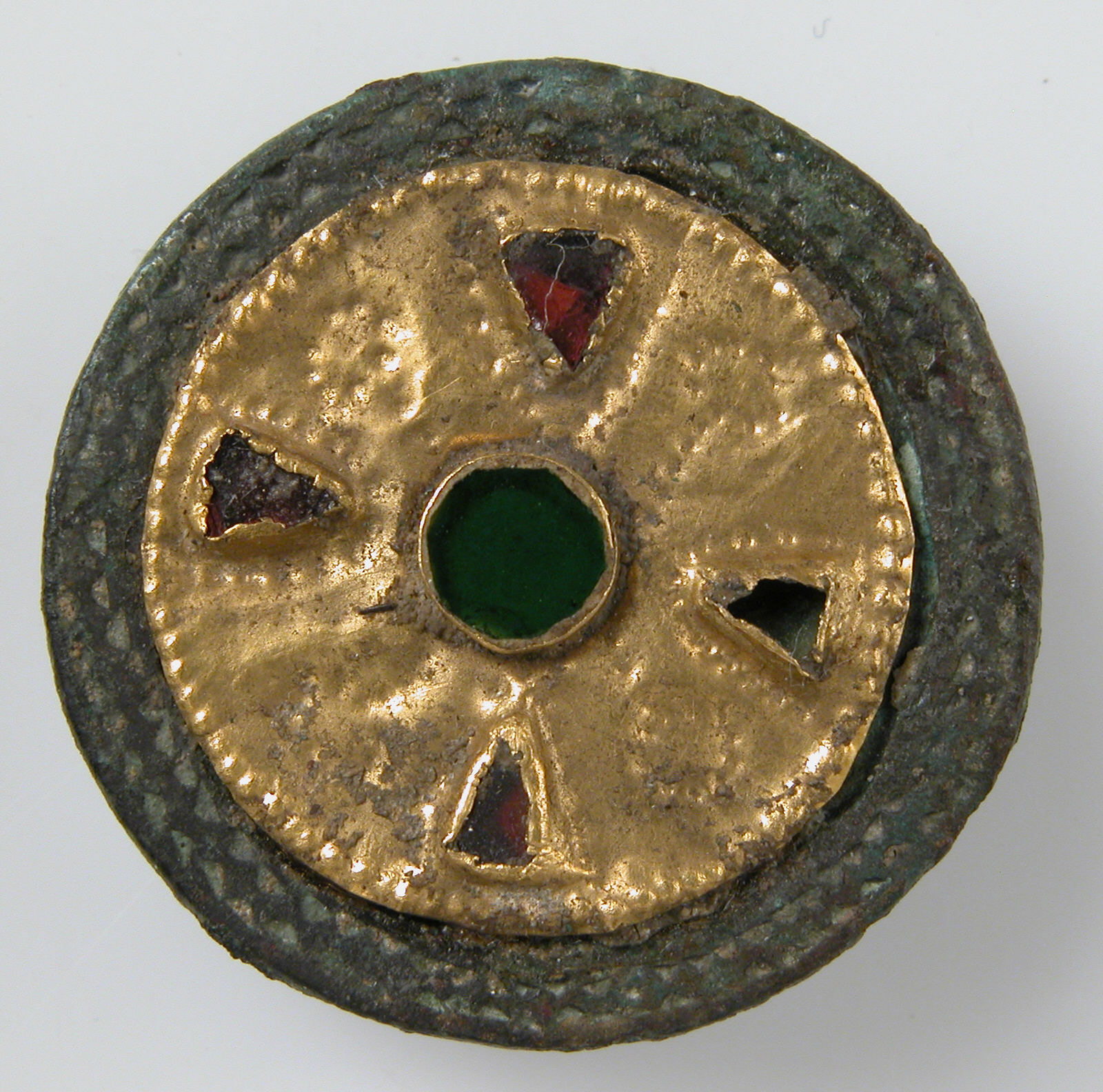
The Frankish disk brooch, rendered in gold on copper alloy with glass paste inlays, represents far more than a decorative accessory from the Early Middle Ages. Within the archive of aesthetic archaeology, it stands as a condensed treatise on material hierarchy, planar composition, and the tension between rigid geometry and luminous interruption. For Natalie Fashion Atelier, this artifact is not merely a source of ornamental motifs; it is a structural grammar that can be translated into the foundational logic of haute couture silhouettes for 2026. By deconstructing the brooch’s classical elegance—its radial symmetry, its layered materiality, its play of opacity and translucency—we can derive a new lexicon for the female form, one that privileges architectural precision over soft drapery, and deliberate weight over ephemeral lightness.
Materiality and the Logic of the Composite
The Frankish disk brooch is defined by its composite nature: a base of copper alloy, gilded with a thin layer of gold, and punctuated by insets of glass paste. This is not a simple monolith. The copper alloy provides structural integrity and a dark, grounding undertone; the gold overlay introduces a surface of reflective prestige; the glass paste, often in deep blues, greens, or reds, creates points of arrested light. This tripartite material system—base, skin, and jewel—offers a direct analogue for the 2026 silhouette. The copper alloy corresponds to the armature of a garment: the internal boning, the structured corsetry, the rigid seams that hold the silhouette in place. The gold overlay translates to the surface treatment: a metallic foil, a liquid lamé, or a densely embroidered metallic thread that both conceals and elevates the base. The glass paste becomes the strategic insertion of color and transparency—a panel of sheer organza, a cutout framed by metal, a lens of colored resin that interrupts the opacity of the textile.
In the 2026 collection, this composite logic manifests in a silhouette where the body is not draped but encased within a system of distinct material zones. A gown, for example, might feature a copper-toned structural underlayer (a rigid cuirass of gilded leather or metal mesh), overlaid with a sheer, gold-embroidered tulle that mimics the gilding. At the shoulder or the hip, a single, large panel of deep sapphire glass paste—recreated as a resin or a lacquered silk organza—creates a focal point of color, echoing the brooch’s inlay. The silhouette does not flow; it articulates, with each material zone clearly demarcated, much like the concentric rings of the brooch itself.
Radial Symmetry and the Reimagined Silhouette
The classical elegance of the disk brooch lies in its radial symmetry—a central point from which concentric bands of decoration radiate outward. This is not a passive ornament; it is a spatial organizer. For the 2026 silhouette, this radial logic can be applied to the garment’s overall structure. Instead of a linear, vertical axis (the traditional spine-to-hem line), the body becomes the central boss from which the garment expands. Consider a day dress where the waist is the central point. From this waist, concentric seams or pleats radiate outward, creating a circular, disk-like volume at the hip and a corresponding, inverted disk at the bust. The silhouette is no longer a column or an hourglass, but a series of stacked, flattened disks—a visual echo of the brooch’s planar form.
This approach demands a rethinking of construction. The radial seam becomes the primary structural device. Each seam is not a simple join but a line of tension that pulls the fabric into a predetermined curve. The glass paste inlays, reimagined as lens-like cutouts, are placed at the intersections of these radial seams, creating points where the body is revealed or where a contrasting color is introduced. The result is a silhouette that is both rigid and dynamic, static in its geometry but alive in its play of light and color. The wearer is not moving through the garment; the garment is a fixed, architectural frame that the body inhabits.
The Glass Paste Lens: Transparency as a Structural Element
In the Frankish disk brooch, the glass paste is not merely decorative; it is a luminous interruption of the metal surface. It creates a window into a different depth, a moment of translucency within an otherwise opaque field. For the 2026 silhouette, this principle is translated into the strategic use of transparency. The glass paste becomes a panel of sheer fabric—a fine silk organza, a micro-mesh, or a laser-cut metallic lace—that is inserted into the garment’s structure. These panels are not placed arbitrarily; they are positioned at specific anatomical points that correspond to the brooch’s inlay locations: the center of the chest, the hollow of the throat, the curve of the shoulder, the pivot of the hip.
The technical challenge lies in integrating these transparent panels without compromising the silhouette’s architectural integrity. The solution is a dual-layer construction. The opaque, structural layer (the copper alloy analogue) is cut away at the precise location of the inlay, and the sheer panel is set within a rigid, embroidered or metallic frame. This frame, often finished with a gold-toned cord or a metal grommet, mimics the brooch’s bezel setting. The effect is a silhouette that is punctuated by windows—moments of skin or of a contrasting underlayer that add depth and complexity to the overall form. The transparency is not soft or romantic; it is precise, geometric, and deliberate, echoing the glass paste’s role as a hard, brilliant surface.
Weight and Presence: The Silhouette as Artifact
One of the most profound lessons from the Frankish disk brooch is its sense of weight. These objects were not light; they were substantial, meant to be felt on the body, to anchor a garment. This material presence is a direct challenge to the contemporary obsession with lightness and fluidity. For 2026, the silhouette must reclaim this gravitas. The garments will not float; they will settle. The use of gilded metals, dense embroideries, and layered, rigid textiles creates a silhouette that has a palpable mass. A coat, for example, might be constructed from a copper-toned wool felt, with a gold-lame lining that is visible only at the edges. The silhouette is broad at the shoulder, narrowing to a defined waist, and then flaring into a heavy, disk-like hem. The weight of the fabric ensures that the garment holds its shape, much like the brooch holds its disk form.
This archaeological weight also influences the silhouette’s relationship to the body. The garment is not a second skin; it is a carapace, a protective, ornamental shell. The body becomes the core around which the artifact is constructed. The silhouette is therefore sculptural in its intent, designed to be viewed from multiple angles, with each profile revealing a different aspect of the radial geometry and material interplay. The glass paste inlays, now transparent panels, become the only points where the interior (the body or an underlayer) is visible, creating a tension between the solid and the void.
Conclusion: A New Lexicon for 2026
The Frankish disk brooch, in its isolated aesthetic archaeology, provides a complete system for the 2026 haute couture silhouette. Its material hierarchy (copper alloy, gold, glass paste) translates into a tripartite construction of armature, surface, and lens. Its radial symmetry informs a new silhouette of stacked, concentric volumes. Its luminous inlays become strategic panels of transparency. And its inherent weight demands a return to sculptural, artifact-like garments. For Natalie Fashion Atelier, this is not a historical revival but a structural re-reading—a process of extracting the fundamental principles of a masterpiece and applying them to the creation of a new, technically rigorous, and deeply elegant form of dress. The 2026 silhouette is not a dress; it is a worn artifact, a disk of gold and glass that encircles the body with the same precision and presence as its Frankish predecessor.