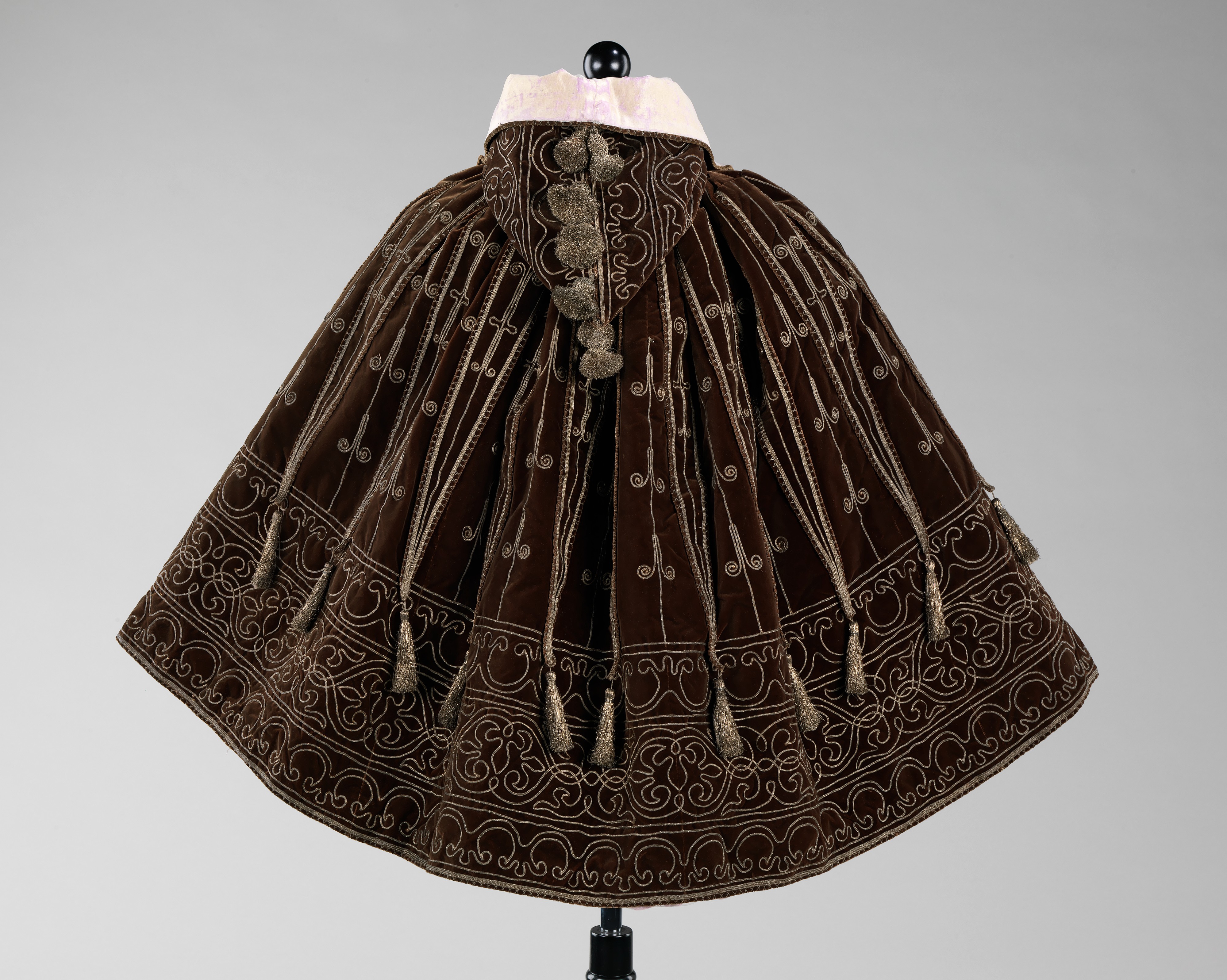
Deconstructing the Evening Cape: An Aesthetic Archaeology of Silk and Metal
Within the isolated context of aesthetic archaeology, the French evening cape emerges not merely as a garment, but as a complex architectural proposition. It is a study in controlled drama, a silhouette defined by absence—the absence of sleeves, the deliberate negation of the fitted bodice. This research artifact for Natalie Fashion Atelier dissects the classical elegance of this heritage piece, focusing on the dialectical relationship between its primary materialities: fluid, organic silk and rigid, structural metal. By deconstructing this duality, we unearth a foundational blueprint for the 2026 luxury silhouette, one predicated on intelligent contrast, kinetic form, and a profound renegotiation of opulence.
Archival Deconstruction: The Dialectic of Softness and Structure
The classical French evening cape, particularly from the Belle Époque through the interwar period, mastered a silent language of power and grace. Its elegance is inherently technical. The silks—duchesse satin, ottoman, faille—provided a canvas of luminous fluidity, catching and releasing light with every subtle movement. This softness, however, was never permitted utter collapse. Elegance was engineered through hidden armatures: boning channels sewn into lining seams, weighted chains concealed in hems, and, most critically, the strategic application of metal. Gilt embroidery, jet beading, and Art Deco-inspired metallic lace acted as points of structural tension, mapping light and shadow onto the body's periphery. The metal did not merely adorn; it dictated drape, anchored volume, and created a kinetic relationship between the wearer and the garment. This heritage is not one of mere embellishment, but of material intelligence, where fabric and hardware conspire to create a dynamic, living form.
Material Intelligence for 2026: The New Opulence Code
Informing the 2026 silhouette requires transcending pastiche to engage with this material dialectic at a molecular level. The future of luxury lies in the hyper-evolution of these core components and their interactive logic. Silk is no longer just a fiber; it is a technological substrate. We advance into engineered silk hybrids: silk-infused with liquid metal coatings for a mutable, mercurial finish, or silk woven with conductive metallic micro-threads capable of responsive thermochromic shifts. The metal itself evolves from ornament to exoskeleton. Lightweight, anodized aluminum alloys and memory-shaped titanium mesh can be integrated as sub-dermal structures, creating silhouettes that transform from a fluid cascade to a sculpted carapace with the gesture of the wearer.
This informed materiality directly dictates the 2026 silhouette. We foresee the rise of the "Kinetic Cocoon" and the "Asymmetric Monolith". The former uses the memory of the cape's enveloping volume but instills it with intelligent articulation. A cape of metal-coated silk may appear as a soft sphere at rest, yet, with motion, its embedded alloy filaments contract, revealing arm slits and reshaping the silhouette into a dramatic, wing-like train. The latter silhouette deconstructs the cape's traditional symmetry. Panels of rigid, laser-etched metal mesh anchor one shoulder, flowing into a single, sweeping pane of liquid silk that dissolves across the body. This creates a silhouette of deliberate imbalance, a modern tension that speaks to a more assertive, architectonic elegance.
Silhouette as Narrative: The Parisian Proposition for 2026
The resulting 2026 form is a direct descendant of the archive, purified through a Parisian lens of intellectual chic. The new evening cape, or its conceptual progeny, becomes a vehicle for personal narrative and environmental interaction. Its elegance is technical, rooted in the flawless execution of its complex material marriage. The silhouette embraces amplified minimalism—where a single, profound material contrast (a matte silk against a brushed, non-reflective metal) replaces superficial decoration. The drama is inherent in the cut and the engineered behavior of the cloth itself.
Furthermore, this approach redefines couture ceremony. The act of fastening—once a simple hook-and-eye—becomes a central design moment. Magnetic closures using rare-earth magnets, or interlocking geometric clasps inspired by architectural fittings, transform closure into a performative, tactile ritual. The silhouette may be designed to evolve over the course of an evening: a cape that, upon the release of a magnetic seam, converts into a draped gown or a structured bolero. This injects a narrative of transformation, a deeply modern luxury that values experience and adaptability as much as static beauty.
Conclusion: The Archaeologically-Informed Future
For Natalie Fashion Atelier, the isolated study of the silk-and-metal evening cape yields not a relic, but a radical toolkit. The 2026 luxury silhouette it informs is one of conscious contradiction: hard versus soft, static versus kinetic, historical weight versus futuristic lightness. It moves beyond the literal recreation of heritage, instead extracting the core principles of its elegance—the structural use of ornament, the engineering of drape, the dialogue between material opposites. By applying these principles through the lens of contemporary material science and a Parisian commitment to refined avant-garde thought, we craft a new sartorial language. This language speaks of an opulence that is intelligent, responsive, and deeply connected to the architectural legacy of French couture, yet decisively oriented towards the dynamic, sculptural forms of tomorrow.