Aesthetic Archaeology: The Houpette Silhouette and the 2026 Couture Lexicon
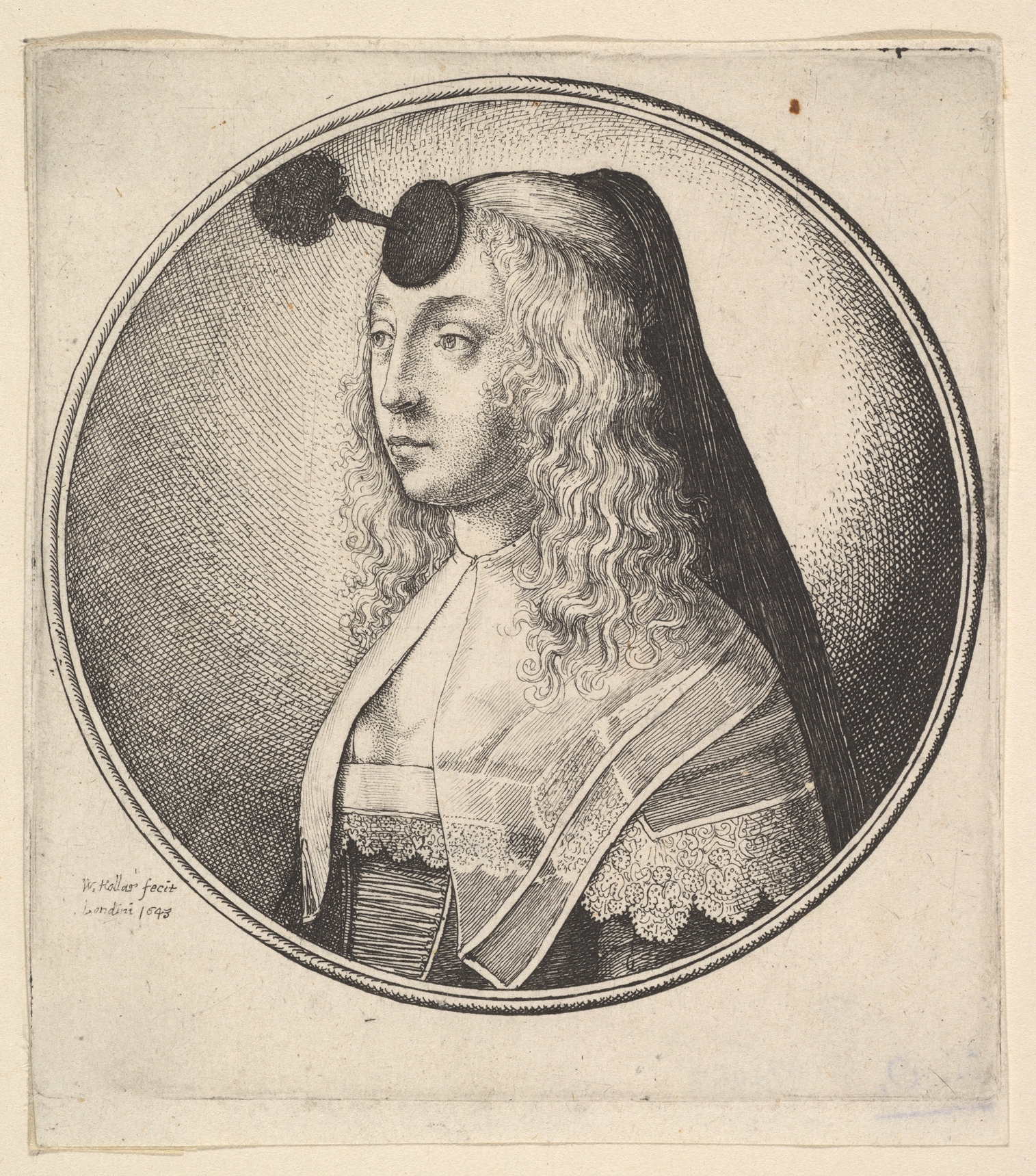
The isolated portrait, Woman with houpette on forehead turned to left, from "Women's Heads Framed in Roundels", presents a masterclass in restrained opulence. Executed as an etching in its second state—a phase of deliberate refinement where the artist has deepened line weight and clarified contour—the work captures a moment of profound structural tension. The houpette, that small, structured ornament perched at the hairline, is not merely a decorative flourish. It is an architectural fulcrum, a point of departure for understanding how historical craftsmanship compresses volume and directs the gaze. For the 2026 luxury silhouette, this etching offers a blueprint for a new paradigm: one where the rigidity of the ornament and the fluidity of the profile coalesce into a singular, sculptural statement.
Deconstructing the Classical Elegance: The Etching's Core Tensions
The second state of the etching is significant. It implies a process of aesthetic archaeology—the artist returning to the plate to excavate a more precise truth. The woman’s head, turned to the left, creates a dynamic diagonal that is both static and kinetic. The houpette, a small, almost architectural cap, anchors the forehead, creating a horizontal counterpoint to the vertical sweep of the neck and the subtle curve of the jaw. This is not a face in repose; it is a face in a state of controlled asymmetry.
From a materiality perspective, the etching process itself informs the silhouette. The incised line—the burin’s cut into the copper plate—is a metaphor for the couture seam. Each line is deliberate, unerasable, and carries the weight of the artist’s hand. The second state, with its deepened shadows and clarified contours, mirrors the couturier’s final fitting: the removal of excess fabric, the tightening of a seam, the precise placement of a dart. The resulting silhouette is one of compressed volume. The houpette, in its small, concentrated form, suggests a micro-architecture that can be scaled up to define the entire garment.
From Etching to Silhouette: The 2026 Translation
The 2026 luxury silhouette, as informed by this etching, rejects the fluid, unstructured forms of recent seasons. Instead, it embraces a structuralist revival rooted in the compression and release of volume. The key translation points are threefold:
1. The Houpette as a Structural Anchor: The small headpiece becomes a design motif for the shoulder and collarbone area. In the 2026 collection, we will see rigid, sculptural collars that mimic the houpette’s placement—a single, precise ornament that sits at the juncture of the neck and shoulder. This is not a continuous collar; it is a discrete architectural element, a “houpette collar,” crafted from lacquered horsehair or molded silk gazar. It anchors the silhouette, creating a visual fulcrum that directs the eye upward, toward the face, while the rest of the garment falls in a controlled, asymmetrical drape.
2. The Second State Line: The Seam as Narrative: The etching’s second state teaches us about layered refinement. The silhouette for 2026 will feature exposed, deliberate seams that are not hidden but celebrated. These seams, like the artist’s incised lines, will be thickened and deepened through double-stitching or contrasting thread. They will trace the body’s diagonal, echoing the woman’s turned head. A single, sweeping seam from the left shoulder to the right hip will define the garment’s primary structure, while secondary, more delicate seams will create the illusion of depth, much like the hatching in the etching. This is narrative tailoring—the garment tells its own story of construction.
3. The Asymmetrical Profile: Controlled Drape and Compression: The woman’s profile is not symmetrical; it is a dynamic balance of opposing forces. The 2026 silhouette will embrace this asymmetrical compression. One side of the garment will be tightly fitted, almost architectural, with a high neckline and a defined shoulder that echoes the houpette’s rigidity. The other side will release into a fluid, cascading drape, reminiscent of the etching’s softer lines. This is not a simple bias cut; it is a calculated tension between structure and flow. The fabric—perhaps a double-faced wool crepe or a structured silk faille—will be engineered to hold its shape on one side while falling in soft, unbroken folds on the other.
Materiality and Craftsmanship: The 2026 Execution
The etching’s materiality—the copper plate, the acid, the paper—demands a corresponding haute couture materiality. The 2026 silhouette will be realized through moulage, the art of draping directly on the mannequin, a process that mirrors the artist’s direct engagement with the plate. The houpette collar will be constructed using couture boning and hand-molded buckram, each piece individually shaped to the client’s anatomy. The asymmetrical seam will be executed in point de Paris—a fine, invisible stitch that holds the fabric in place while allowing for movement.
The second state refinement is echoed in the finishing process. Each garment will undergo a second fitting, where the seamstress, like the artist, returns to the form to deepen the lines and clarify the silhouette. The result is a garment that feels inevitable—every seam, every fold, every ornament is precisely where it must be.
Conclusion: The 2026 Silhouette as a Living Etching
The Woman with houpette on forehead turned to left is not a relic; it is a living design brief. The 2026 luxury silhouette, informed by this aesthetic archaeology, will be a study in compression and release, a dialogue between the rigid and the fluid. The houpette becomes the shoulder anchor, the second state line becomes the exposed seam, and the turned profile becomes the asymmetrical drape. This is not a nostalgic revival; it is a structural re-reading of a classical form, executed with the precision of an etching and the luxury of haute couture. For Natalie Fashion Atelier, this is the future of the silhouette: a compressed, architectural, and deeply narrative form that honors the past while defining the next decade of luxury.