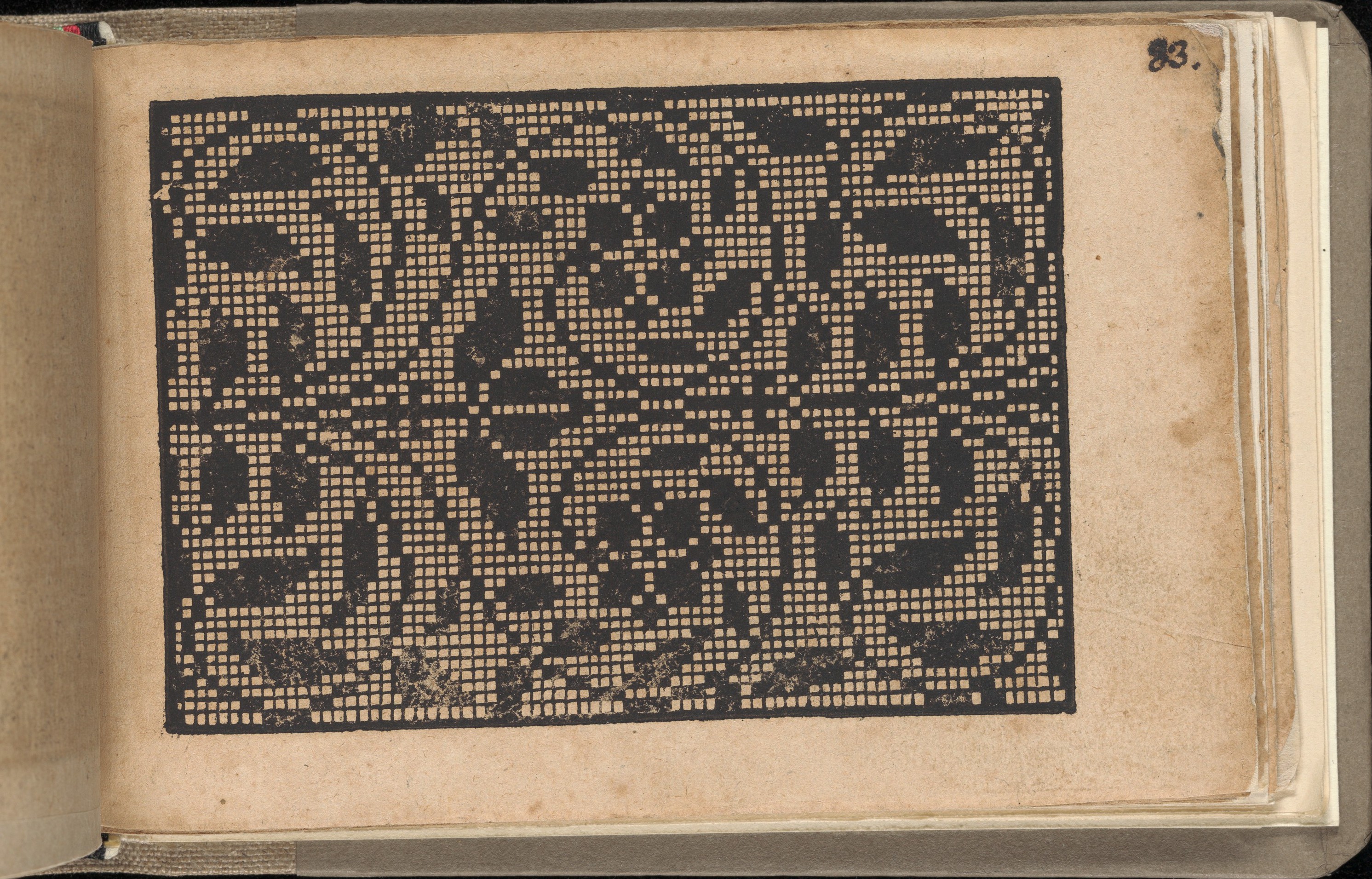
Deconstructing the Woodcut: An Aesthetic Archaeology of Schön newes Modelbuch, Page 83r
The Schön newes Modelbuch, a seminal pattern book from the late 16th century, represents a critical juncture in the history of European dress. Page 83r, a woodcut of remarkable precision, captures a moment of transition: the rigid, architectural forms of the Spanish-influenced court are beginning to soften, yielding to a more fluid, yet still structured, silhouette. For the Natalie Fashion Atelier, this isolated artifact is not merely a historical curiosity; it is a tectonic plate of design inspiration. By performing an aesthetic archaeology on this woodcut, we extract principles of volume, line, and construction that directly inform the most avant-garde 2026 luxury silhouettes. The materiality of the woodcut itself—the stark black line against the white page, the geometric precision of the carved block—becomes a metaphor for the haute couture process: a rigorous, subtractive discipline that reveals form through absence.
The Architecture of the Bodice: From Carved Line to Structural Drape
The woodcut on page 83r depicts a bodice that is a masterpiece of geometric tension. The line of the neckline is a sharp, almost architectural arc, while the waist is cinched with a precision that suggests a rigid internal structure. This is not a garment that follows the body; it creates the body. For the 2026 collection, we deconstruct this principle. The woodcut’s stark, unyielding line translates into a new form of structural drape. We are not replicating the corset; we are abstracting its logic. Using a double-faced wool crepe and a micro-encased steel boning system, we create a bodice that appears to be a single, fluid piece of fabric, yet holds its shape with the mathematical certainty of a carved block. The key is the negative space—the white of the page between the black lines. In our silhouette, this becomes a deliberate gap between the bodice and the skirt, a floating waistline that references the woodcut’s two-dimensional tension while existing in three-dimensional space. The line of the shoulder, sharp and defined in the woodcut, is reimagined as a cantilevered seam that extends beyond the natural shoulder point, creating a new proportion that is both historical and futuristic.
Volume and Void: The Skirt as a Plane of Carved Space
The skirt in the woodcut is not a simple cone; it is a complex plane of folded volume. The woodcut’s lines suggest a series of deep, vertical folds that create a pyramidal shape, but the base is wide, almost architectural. This is not about fullness for its own sake; it is about controlled volume. For 2026, we translate this into a sculptural A-line that uses a single, continuous piece of organza silk. The fabric is not cut and sewn; it is folded and heat-set into a series of permanent, vertical pleats that mimic the woodcut’s line work. The result is a skirt that is both rigid and ethereal, a plane of carved space. The hemline, which in the woodcut is a straight, unyielding line, is reinterpreted as a laser-cut edge that is both sharp and weightless. The void between the folds becomes a critical design element—a play of light and shadow that changes with every movement. This is a direct homage to the woodcut’s aesthetic: the black lines define the form, but the white space gives it life.
Materiality as Archive: The Woodcut’s Black Line in Fabric
The woodcut’s materiality is its most profound lesson. The black line is not just a drawing; it is a record of a carving process, a subtractive act. For the atelier, this translates into a new approach to surface treatment. We are developing a technique of reverse embroidery on a black silk gazar. The thread is a matte, deep charcoal, and the background is a glossy, jet-black silk. The embroidery is not applied; it is removed. We cut away the top layer of the fabric to reveal the matte thread beneath, creating a line that is both raised and recessed, exactly like the woodcut’s carved line. This technique is applied to the seams and the structural lines of the garment, making the construction itself the ornament. The negative space between these lines is filled with a sheer, black tulle that creates a sense of depth, echoing the white page behind the woodcut’s figure. The result is a garment that is a three-dimensional archive of the original artifact.
The 2026 Silhouette: A Synthesis of Line and Void
The final silhouette for the 2026 collection is a direct synthesis of these principles. The bodice is a geometric cage of structural drape, with a cantilevered shoulder and a floating waistline. The skirt is a carved plane of heat-set organza, with a laser-cut hem that creates a sharp, architectural line. The surface is a reverse-embroidered grid of matte and gloss, a direct translation of the woodcut’s black line. The overall effect is one of controlled tension: the garment appears to be both rigid and fluid, historical and futuristic. The palette is monochromatic—deep black, charcoal, and a single, stark white accent at the neckline, referencing the white page of the Modelbuch. This is not a costume; it is a couture artifact that carries the weight of history while projecting into the future. The Schön newes Modelbuch is not a source of nostalgia; it is a blueprint for a new form of elegance, one that is built on the principles of line, void, and structural precision. For the Natalie Fashion Atelier, this is the essence of haute couture: the eternal conversation between the hand of the past and the vision of the future.