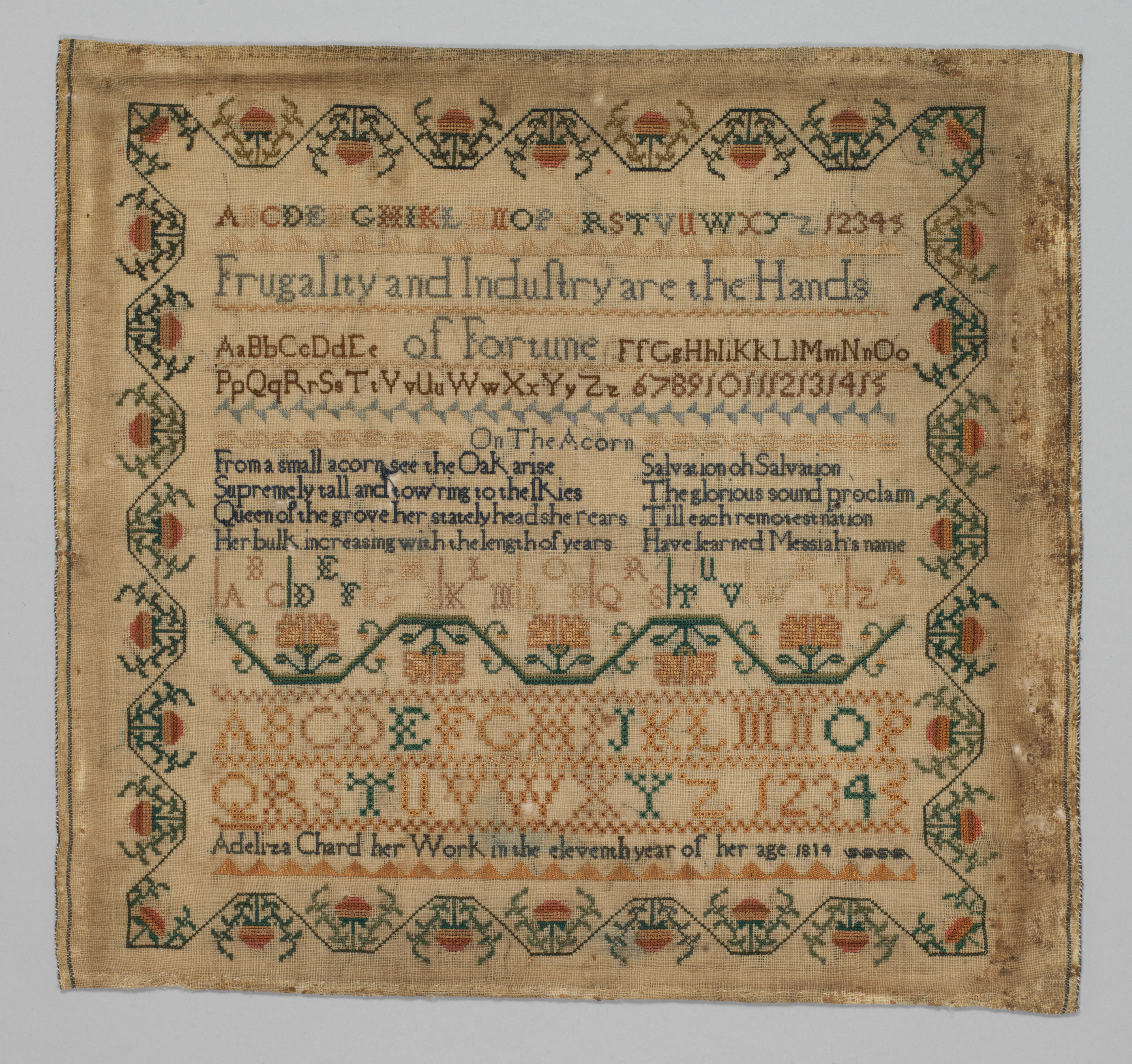
The Sampler as Architectural Blueprint: Silk on Wool Canvas and the 2026 Silhouette
The sampler, often dismissed as a mere pedagogical exercise or a domestic artifact, represents a profound lexicon of aesthetic archaeology. Within the archives of Natalie Fashion Atelier, the isolated study of a global heritage sampler—executed in silk upon a wool canvas—reveals a sophisticated dialogue between restraint and ornamentation. This is not a relic of provincial practice; it is a masterclass in structural tension, textural counterpoint, and the deliberate placement of visual weight. For the 2026 season, this artifact is not a reference to be copied, but a blueprint to be deconstructed, its classical elegance informing a new paradigm of high-end silhouettes that prioritize architectural clarity over transient trends.
I. The Structural Grammar of the Sampler: Tension and Release
The foundational characteristic of the sampler is its inherent tension. The wool canvas, a robust and slightly irregular ground, provides a resilient yet yielding substrate. Upon this, the silk thread—lustrous, fluid, and inherently precious—is applied with meticulous precision. This juxtaposition is not merely decorative; it is a structural principle. The silk, when stitched, creates a raised, almost bas-relief quality against the matte wool. This interplay of high and low, of gloss and absorbency, generates a visual and tactile rhythm that is the core of the sampler’s classical elegance.
For the 2026 silhouette, this principle translates directly into the layered construction of the garment’s architecture. The wool canvas serves as the foundational shell, the primary structure that defines the silhouette’s volume and drape. The silk, however, is not applied as a superficial embroidery. Instead, it is engineered as a series of strategic tension points. Consider a tailored coat: the wool canvas forms the clean, powerful lines of the shoulders and the sweeping arc of the skirt. The silk is then used to create a lattice of raised seams along the spine, or a geometric pattern that subtly tightens the fabric across the ribcage. This is not decoration; it is a form of functional couture, where the silk’s tension modifies the garment’s fit and movement, creating a silhouette that is both fluid and controlled.
II. Materiality as a Dialectic: The Wool Canvas and the Silk Thread
The materiality of the sampler is a dialectic between the humble and the precious. The wool canvas, often undyed or in a natural ecru, represents a ground of unadorned authenticity. Its texture is one of subtle irregularity, a testament to hand-looming and natural fibers. The silk, conversely, is a material of immense cultural and economic value, its sheen a marker of luxury and refinement. The sampler’s elegance arises from the careful negotiation between these two poles.
In the 2026 high-end silhouette, this dialectic is reimagined through material juxtaposition that challenges conventional notions of luxury. We propose a silhouette where the primary fabric—a double-faced wool crepe or a heavy cashmere blend—acts as the wool canvas, providing a matte, substantial foundation. The silk is then introduced not as a lining or a trim, but as a structural insert. Imagine a floor-length gown where the bodice is constructed from a single piece of wool canvas, but a panel of silk, cut on the bias, is inserted at the waist, creating a liquid, luminous band that cinches and releases the silhouette. The silk is not an add-on; it is an integral component of the garment’s engineering, its material properties—drape, weight, reflectivity—directly informing the silhouette’s form.
III. The Aesthetic Archaeology of the Motif: From Sampler to Silhouette
The sampler’s motifs—geometric alphabets, stylized flora, cross-stitched borders—are not arbitrary. They represent a codified language of visual order and repetition. The isolated study of these motifs reveals a deep understanding of proportion, symmetry, and the power of negative space. The classical elegance of the sampler lies in its ability to create a complex visual narrative within a strict, often rectangular, boundary.
For 2026, we extract this principle of codified ornamentation and apply it to the silhouette’s surface. The motifs are not reproduced literally; they are abstracted into architectural lines. A repeating cross-stitch pattern becomes a series of vertical pintucks along the sleeve of a jacket, creating a subtle, rhythmic texture that elongates the arm. A stylized flower motif is deconstructed into a series of overlapping, asymmetric panels on a skirt, the seams themselves becoming the decorative element. The negative space of the sampler—the unstitched wool canvas—is reinterpreted as the clean, unadorned expanse of the garment’s primary fabric, allowing the structural interventions to read as deliberate, precious accents.
IV. The 2026 Silhouette: A Synthesis of Ground and Figure
The ultimate contribution of the silk-on-wool-canvas sampler to the 2026 silhouette is a synthesis of ground and figure. In traditional couture, the garment’s fabric is often the ground, and the embellishment is the figure. The sampler inverts this relationship. The wool canvas is the figure—the structural, defining element—and the silk is the ground—the luminous, unifying field that binds the composition.
This inversion yields a silhouette that is both grounded and ethereal. Consider a tailored suit for the 2026 season: the jacket is constructed from a dense, matte wool. The silk is used as a continuous, flowing lining that emerges at the cuffs and the collar, creating a soft, luminous halo around the rigid structure. The trousers are cut with a wide, fluid leg, but a silk panel is inserted at the inner seam, creating a subtle flare that catches the light with each step. The silhouette is defined by the tension between the wool’s structure and the silk’s fluidity, the garment becoming a living artifact of the sampler’s core principles.
V. Conclusion: The Sampler as a Manifesto for Restrained Opulence
The isolated aesthetic archaeology of the silk-on-wool-canvas sampler offers a powerful manifesto for 2026. It is a call for restrained opulence, where luxury is not measured by the quantity of embellishment, but by the intelligence of its application. The classical elegance of the sampler is not in its complexity, but in its clarity of purpose. Every stitch, every thread, every choice of material serves the overall composition.
For Natalie Fashion Atelier, this artifact informs a new generation of silhouettes that are architectural, textural, and deeply considered. The 2026 high-end silhouette will not be a mere garment; it will be a constructed landscape of ground and figure, of tension and release, of the matte and the luminous. It is a silhouette that honors the heritage of the sampler while propelling it into a future where craftsmanship and structure are the ultimate expressions of luxury. The sampler is not a relic; it is a blueprint for a new era of couture, written in silk and wool.