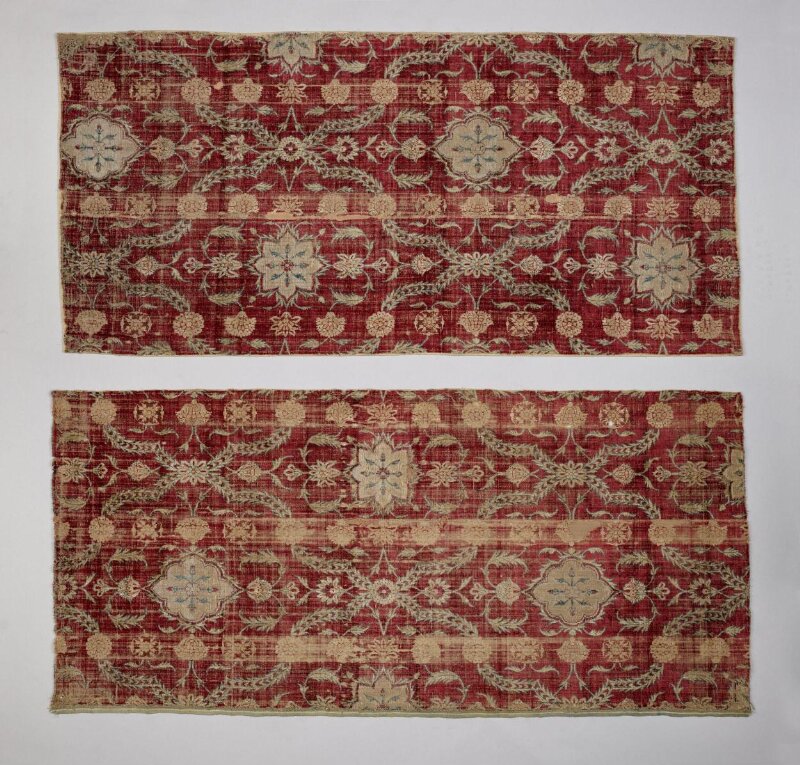
Couture Archaeology Report: The Velvet Treasury of the Mughal Ateliers
Subject: Technical Deconstruction of 17th-Century Mughal Velvet
Origin: Imperial Workshops (Karkhanas), Mughal Empire, circa 1650-1700
Analyst: Senior Textile Historian, Natalie Fashion Atelier
Date: [Current Date]
This report serves as a technical excavation into the material intelligence of Mughal velvet, a textile that epitomized imperial power, spiritual symbolism, and unparalleled craftsmanship. Our analysis moves beyond surface aesthetics to deconstruct its tangible materiality, revealing a complex substrate of technical choices that defined its haptic and visual language. The objective is a precise translation of these historic codes into a lexicon for 2026 high-end luxury silhouettes, focusing on structural integrity, sensory engagement, and narrative depth.
I. Technical Deconstruction: The Tripartite Foundation
Mughal velvet was not a mere fabric but a constructed, three-dimensional terrain. Its supremacy lay in the symbiotic relationship between material, structure, and ornament.
A. Materiality & Substrate: The foundation was a hand-spun silk warp and weft of exceptional tensile strength, creating a stable ground. The pile, however, was where hierarchy manifested. The most prized velvets utilized kashmir (pashmina) goat hair or zari: flat wire-wound silk threads. The pashmina pile offered a sublime, luminous softness with a distinctive bloom, while metallic zari created a rigid, sculptural pile that reflected light dynamically. This material choice was the first determinant of drape, weight, and interaction with light.
B. Structural Weave Architecture: Mughal artisans mastered voided velvet and ciselé techniques. Voided velvet involved weaving the pile only in specific pattern areas, leaving the ground silk exposed—a negative space technique that required precise loom programming. Ciselé velvet employed piles of varying heights, often sheared to create a shimmering, embossed effect akin to low relief sculpture. The pile density was exceptionally high, often exceeding 200,000 knots per square meter, resulting in a dense, plush topography that was remarkably resilient to crushing.
C. Ornamentation as Integrated System: Pattern was not applied but woven integrally. The famed buta (paisley), floral sprays (often derived from the Tale of the Rose manuscript illustrations), and intricate vine scrolls (islimi) were engineered into the loom. This produced a design that was bi-tone from the silk ground and pile, yet through the play of light on the pile’s direction (created by the way loops were cut), it gained a polychromatic illusion. Embellishments like gota (metallic ribbon) or kundan (gemstone) work were added post-weave, but always subordinate to the primary woven narrative.
II. Haptic & Visual Semiotics: The Language of Luxury
The materiality communicated specific codes. The weighty, structured drape of a zari velvet jama (court robe) conveyed immovable authority, its stiff folds acting as architectural volume on the body. Conversely, a pashmina velvet peshwaz (gown) moved with a fluid, whispering grace, its softness denoting intimacy and refined sensibility. The visual depth—the way light pooled in the valleys of the ciselé and gleamed on the peaks—created a living surface that changed with the wearer’s movement, a direct expression of the Mughal fascination with farr (divine light and glory).
Translation Protocol: 2026 Luxury Silhouettes
The translation for 2026 is not replication but conceptual and technical extrapolation. We move from historic artifact to future-forward sentiment, focusing on three core principles: Structural Poise, Sensory Narrative, and Light Architecture.
I. Silhouette & Construction
2026 silhouettes will embrace contrasted rigidity and fluidity. We propose:
• The Architectural Drape: Tailored jackets and coats using a modern, weighty silk-zari blend velvet, engineered with a technical backing for shape retention. Inspired by the jama, seams will be minimized to allow the fabric’s own architecture to create volume. Sharp, origami-like folds will be set into the garment, mirroring the intentional, permanent pleats of court dress.
• The Liquid Column: Evening gowns utilizing a re-engineered pashmina-blend velvet with a micro-crushed finish for enhanced fluidity. Cut on the bias, the gown will exploit the velvet’s inherent heavy fall, creating a silhouette that is both columnar and softly yielding—a direct dialogue with the flowing peshwaz.
II. Material Innovation & Surface Intelligence
We will develop proprietary fabrications in collaboration with technical mills:
• Nano-Printed Voiding: Using laser and ultrasonic bonding technology, we will create the visual effect of voided velvet without the structural limitations. This allows for intricate, micro-scale patterns and gradient pile effects impossible on a 17th-century loom, applied to lightweight technical silk grounds for contemporary wearability.
• Programmable Ciselé: Through advanced laser-shearing and heat-setting, we can create precise, variable-pile-height textures. Imagine a gown where the pile forms a dense, floral buta pattern that gradually dissipates into a sheer silk ground, creating a mist-like ombré effect.
• Bio-Illuminated Zari: Replacing traditional metal-wound thread, we will develop a sustainable polymer thread coated with a bioluminescent or light-refracting mineral layer. This "zari" will react to specific light wavelengths (UV, ambient), making the pattern dynamic and environmentally responsive—a 2026 interpretation of farr.
III. Narrative Integration & Craft
The story is paramount. Each piece will incorporate a "woven memory":
• Digital Looming: Integrate microscopic, abstracted data patterns (e.g., from astronomical charts of the Mughal era, or poetry fragments) into the jacquard weave of the velvet ground, visible only upon extreme closeness.
• Strategic Embellishment: Applying the Mughal principle of subordinate adornment, we will use sparse, hyper-precise placements of lab-grown gemstones or reformed metallic elements only at key structural intersections (a single shoulder, the apex of a fold), acting as punctuation marks on the textile’s sentence.
Conclusion: The New Imperial Code
The Mughal velvet was a testament to control—over nature (silk, metal), technology (the loom), and symbolism. For 2026, Natalie Fashion Atelier’s translation seeks control over a new triad: advanced material science, parametric design, and immersive narrative. The resulting collection will not reference history literally but will embody its core values: textiles of profound intelligence, silhouettes of deliberate poise, and a luxury defined by deep, sensorial engagement. The velvet, once a symbol of terrestrial empire, becomes a medium for a future-facing, personal sovereignty.