Deconstructing Madame X: An Aesthetic Archaeology for 2026 Haute Couture
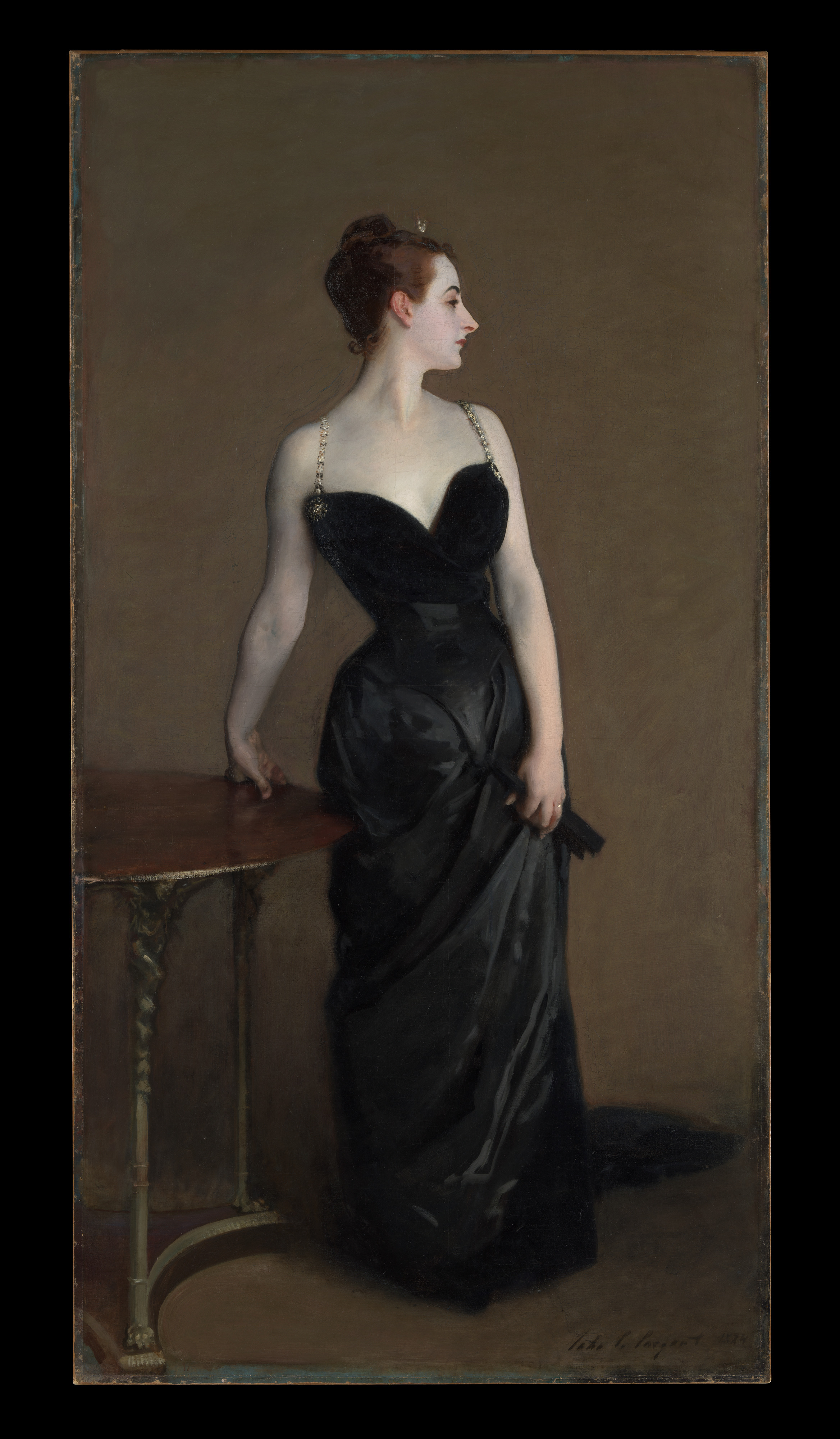
The portrait of Virginie Amélie Avegno Gautreau, known to the world as Madame X, is not merely a painting; it is a forensic document of high society’s most guarded codes. Painted by John Singer Sargent in 1884, the oil-on-canvas work was initially a scandal, later a masterpiece of restrained provocation. For the 2026 silhouette, we must strip away the scandal and examine the pure, structural architecture of the garment and the posture it demands. This is not about costume reproduction. It is about extracting the tension, the restraint, and the volumetric paradox that defines a new era of luxury.
Materiality as a Structural Blueprint
The oil medium itself offers a critical lesson in textural weight. Sargent’s brushwork on the black satin gown is not a flat application; it is a series of thick, directional strokes that create a living, breathing surface. For 2026, this translates into a materiality that is dense but fluid, opaque yet reflective. We are not draping a model; we are constructing a silhouette from the inside out. The fabric must possess a molecular memory, a capacity to hold a crease or a fall as if painted into existence. The 2026 atelier will employ a new generation of double-faced satin and liquid-backed crepe, bonded with micro-silicone membranes to mimic the oil’s viscous, high-grip surface. The garment’s skin is not sewn; it is lacquered onto the form.
The Architecture of Restraint: The Corset as a Silhouette Engine
The most profound element of Madame X is the absence of overt ornament. The power lies in the negative space between the fabric and the body. The gown’s famous décolletage and the severe, unadorned line of the bodice are a study in controlled tension. For the 2026 haute couture silhouette, this translates into a re-engineering of the corset. We move beyond boning and lacing. The new structural under-layer is a 3D-printed, bio-ceramic lattice that is seamless, breathable, and invisible. This architectural chassis dictates the fall of the outer shell. The silhouette is not soft; it is precise, almost surgical. The waist is not cinched; it is defined by a rigid, negative curve that creates a dramatic hourglass of light and shadow. The 2026 silhouette borrows the portrait’s vertical elongation—a single, uninterrupted line from shoulder to hem, broken only by the sharp, almost violent turn of the head and the fall of the arm.
The Palette of Power: From Oil to Optical Fiber
While the original palette is famously monochromatic—black, white, and the sallow, shocking tone of the skin—the 2026 interpretation explores chromatic absence as a form of power. The black of the gown is not a color; it is a light-absorbing void. We will achieve this through a new nano-pigment application on silk organza, creating a surface that swallows ambient light. Conversely, the skin tone of Madame X, described as “milk and arsenic,” informs a new aesthetic of luminous opacity. The 2026 silhouette will feature integrated optical fibers woven into the fabric of the under-layer, emitting a low, ambient glow that mimics the portrait’s dramatic chiaroscuro. This is not illumination for visibility; it is illumination for sculptural definition. The light traces the architecture of the corset, the line of the clavicle, the curve of the hip, exactly as Sargent’s brush defined the form of his subject.
Posture as a Luxury Asset
Madame X’s posture is the most critical element for the 2026 silhouette. She does not slouch; she leans into the space. Her head is turned at a precise 90-degree angle, her arm is a rigid, vertical line. This is not a natural pose; it is a cultivated, architectural stance. For the modern atelier, this means designing garments that demand a specific posture. The 2026 silhouette will feature asymmetric weighting—a single, heavily draped sleeve on one side, a bare, structured shoulder on the other—to force the wearer into a dynamic, off-balance elegance. The hemline will be asymmetrically cut, longer on one side, to create a continuous, spiraling line that requires the wearer to hold a controlled, almost dance-like tension in the torso. The garment is not worn; it is inhabited through a specific physical discipline.
The Archeology of the Detail: The Absence as Ornament
In Madame X, the only ornament is the diamond crescent on the bodice. This is not a decoration; it is a structural anchor. For 2026, ornamentation will be functional and architectural. A single, hand-carved obsidian clasp at the nape of the neck. A continuous, invisible zipper that runs the entire length of the spine, creating a seam that is both closure and design line. The absence of embellishment becomes the ultimate luxury. The 2026 silhouette will be defined by its unbroken surfaces, its seamless joins, and its perfect, mathematical proportions. The diamond crescent is reinterpreted as a micro-architectural element—a small, geometric, metal-framed cutout at the sternum, revealing a sliver of the bio-ceramic corset beneath. It is a window into the structure, a nod to the original’s provocative reveal.
Conclusion: The Silhouette as a Statement of Intent
The 2026 haute couture silhouette, informed by the aesthetic archaeology of Madame X, is not a nostalgic gesture. It is a declaration of rigor. It rejects the soft, the draped, the forgiving. It embraces the hard, the precise, the demanding. The oil-on-canvas teaches us that true elegance is a matter of structural integrity, controlled tension, and the audacity of restraint. The Natalie Fashion Atelier 2026 collection will present a silhouette that is armored in its own perfection, a living sculpture that demands a specific posture, a specific discipline, and a specific understanding of power. It is the portrait of a woman who does not ask for attention; she commands the space around her through the sheer, unyielding architecture of her form.