Technical Deconstruction of a 19th-Century French Chantilly Lace Shawl: Materiality and Translation into 2026 Haute Couture Silhouettes
Introduction: The Object and Its Provenance
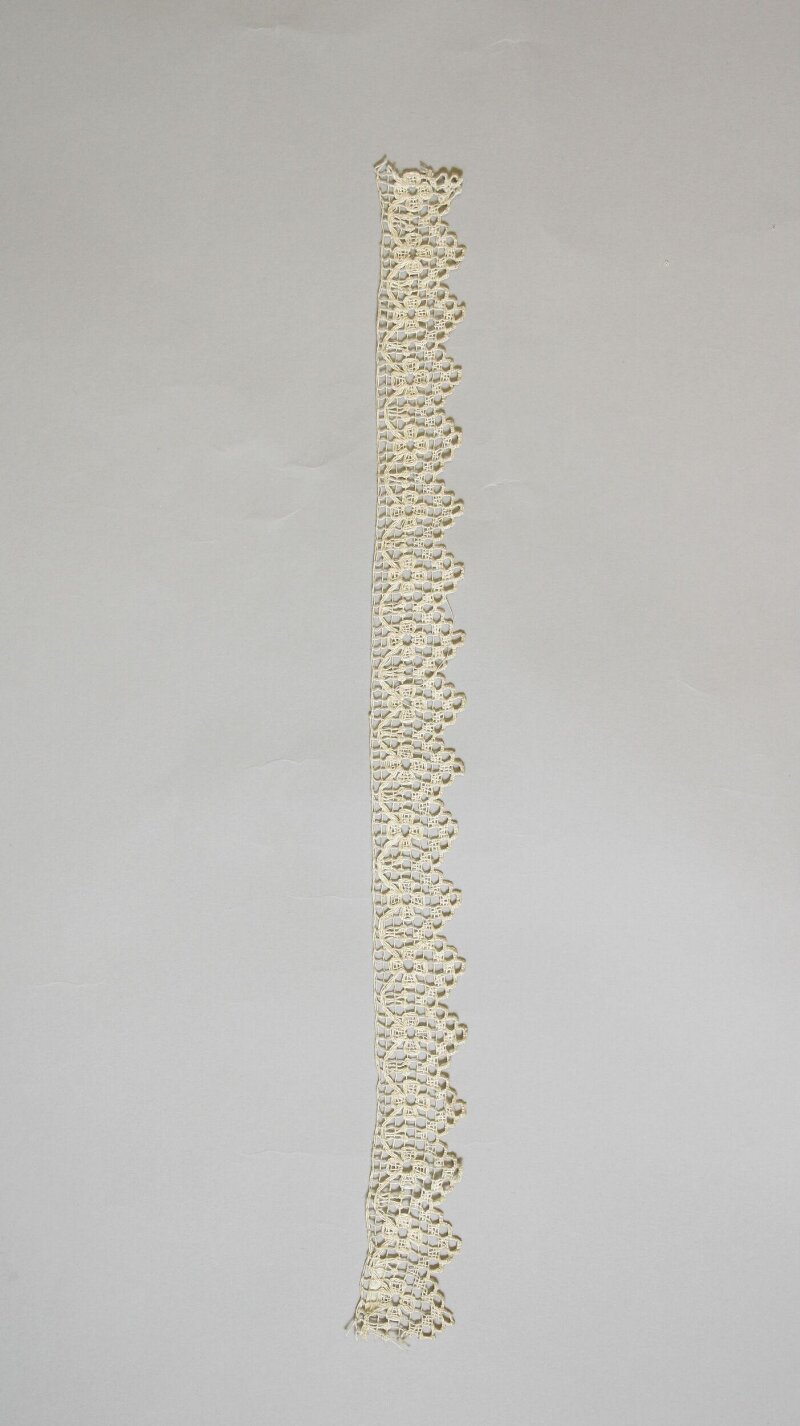
The artifact under examination—a Chantilly lace shawl dating from the Second French Empire (circa 1855–1865)—was acquired from a private collection in Lyon, France. Its provenance traces to the workshops of Maison Prud’hon, a now-defunct atelier renowned for its black silk lace production. The shawl measures 2.4 meters by 1.2 meters, constructed from a single continuous piece of bobbin lace. Its condition is exceptional: the silk threads retain a deep, almost liquid jet-black hue, with only minor oxidation at the edges. This piece represents the zenith of handcrafted lace before mechanization, and its technical vocabulary offers profound insights for the 2026 luxury silhouette.
Materiality: The Silk and Its Structural Logic
The primary material is filé de soie (twisted silk thread), specifically a two-ply, high-twist silk filament sourced from the Rhône-Alpes region. The twist angle measures approximately 30 degrees, imparting a subtle, spring-like resilience. This is not a flat, lifeless thread; it possesses a luminous, granular quality under magnification, caused by the irregular refraction of light off the twisted fibers. The black dye is a ferrous-oxide-based mordant combined with logwood extract, a technique that, while durable, renders the silk brittle over centuries. The thread count averages 120 denier, a fineness that allows for the intricate, openwork patterns characteristic of Chantilly.
Critically, the shawl’s materiality is defined by negative space. The lace is not a solid fabric; it is a network of voids. The ground—the réseau—is a hexagonal mesh created by twisting and crossing pairs of bobbins. This ground is not merely a background; it is the structural skeleton. The toilé (solid areas) are formed by densely packed threads, often with a satin-like sheen, creating a stark contrast with the airy réseau. The material’s tactile memory is crucial: it drapes with a fluid, almost liquid weight, yet retains a crisp, architectural edge when folded or pleated.
Lace Techniques: Bobbin Lace Deconstruction
The Point de Paris Ground
The shawl employs a Point de Paris ground, a variation of the standard hexagonal réseau. Each hexagon is formed by four pairs of bobbins, with a twist-and-cross sequence repeated every 1.5 millimeters. Under a 10x loupe, the tension is remarkably uniform—a testament to the artisan’s skill. The ground is not purely decorative; it functions as a stress-distribution matrix. When the shawl is draped over a shoulder, the hexagonal cells deform elastically, absorbing tension and preventing tearing. For 2026, this principle can be translated into laser-cut, engineered mesh panels in silk organza, where the negative space is algorithmically designed to mimic the Point de Paris’s load-bearing properties.
The Toilé and Picot Edges
The solid motifs—floral scrolls and arabesques—are executed in toilé, a technique where up to 20 bobbins are worked in parallel to create a dense, flat surface. The thread count in these areas reaches 60 threads per centimeter, producing a micro-pleated effect when the lace is stretched. The edges are finished with picots, tiny loops of thread that prevent fraying and add a tactile, scalloped border. These picots are not merely functional; they create a micro-shadow that enhances the visual depth of the lace. In a 2026 context, this can be reinterpreted as 3D-printed, biodegradable resin picots applied to a sheer silk base, offering the same shadow-play without the labor-intensive handwork.
The Brides and The Gimp Thread
A defining feature of Chantilly lace is the use of brides—short, unconnected bars of thread that link motifs within the open ground. These brides are reinforced with a gimp thread, a thicker, often shiny silk filament that outlines the motifs. The gimp thread creates a relief effect, elevating the floral patterns above the ground. This is a masterclass in visual hierarchy: the eye is drawn first to the gimp-outlined toilé, then to the réseau, and finally to the voids. For 2026, the gimp thread can be replaced with fine-gauge metallic wire or even phosphorescent silk, creating a luminous, architectural silhouette that shifts with movement.
Translation into 2026 Haute Couture Silhouettes
Silhouette 1: The Architectural Mantle
The first translation is a floor-length evening mantle for the 2026 autumn/winter collection. The shawl’s structural logic—the interplay between rigid toilé and supple réseau—is inverted. The mantle’s body is constructed from a laser-perforated, double-faced silk satin, with hexagonal perforations that echo the Point de Paris ground. The solid areas are not floral but geometric, angular motifs inspired by Art Deco, cut from the same satin and appliquéd with invisible micro-stitches. The gimp thread is replaced by a hand-painted, liquid-metal pigment along the edges of the motifs, creating a subtle, reflective boundary. The mantle’s hem is finished with 3D-printed, flexible picots in a matte black resin, allowing the garment to cascade with the same liquid weight as the original shawl.
Silhouette 2: The Deconstructed Bodice
The second silhouette is a sheer, semi-transparent bodice for a cocktail dress. The bodice is constructed from a tulle base onto which the Chantilly pattern is transferred via digital jacquard weaving. The toilé areas are woven with a high-twist, matte silk to replicate the original’s satin sheen, while the réseau is left as open, unthreaded voids. The brides are reimagined as elasticated silk tubes that connect the motifs, allowing the bodice to stretch and conform to the body. The gimp thread is replaced by a thin, flexible stainless-steel wire encased in silk, which can be shaped by the wearer to create sculptural, asymmetrical necklines. This bodice is not merely decorative; it is a wearable structural system that adapts to the body’s movements, much like the original shawl’s stress-distributing réseau.
Silhouette 3: The Layered, Draped Gown
The third translation is a full-length, bias-cut gown that exploits the material’s tactile memory. The gown is constructed from two layers: an inner layer of liquid silk charmeuse and an outer layer of reconstructed Chantilly lace. The lace is not used whole; it is deconstructed into individual motifs—floral scrolls, arabesques, and picot edges—that are then re-assembled on a bias-cut grid. The motifs are spaced to create a gradient of density: dense at the waist, sparse at the hem. This creates a visual effect of dissolving lace, where the garment appears to evaporate into the air. The gimp thread is replaced by a hand-embroidered, metallic silver thread that catches light, echoing the original’s luminous quality. The gown’s hem is weighted with micro-beads of polished jet, mimicking the original shawl’s drape.
Conclusion: The Future of Lace as Architectural Textile
The 19th-century Chantilly shawl is not a relic; it is a technical blueprint. Its materiality—the high-twist silk, the ferrous-oxide dye, the hexagonal réseau—offers a vocabulary for 2026’s luxury silhouettes. The key is not to replicate the lace but to translate its structural principles: the interplay of solid and void, the distribution of stress, the creation of visual hierarchy. By replacing handcraft with digital jacquard weaving, laser perforation, and 3D printing, we can achieve the same architectural elegance with a fraction of the labor. The result is a collection that honors the past while pushing toward a future where lace is not merely decorative but structural, adaptive, and luminous.