The Archaeology of Exposure: Deconstructing the Strip in Haute Couture
The concept of the strip, in its most refined haute couture application, is not a mere reduction of fabric. It is a deliberate act of architectural subtraction—a negative space that defines the positive silhouette. At Natalie Fashion Atelier, our aesthetic archaeology of the strip draws from a global heritage of adornment, from the geometric cut-outs of Pre-Columbian Andean textiles to the strategic lacing of 18th-century French stays. For the 2026 season, we have isolated this element through the lens of embroidered net, transforming the strip from a gesture of absence into a complex, textural statement of presence. This research artifact deconstructs the classical elegance of the strip and elucidates how its reinterpretation through embroidered net informs the luxury silhouettes of the coming year.
Heritage as Blueprint: The Strip in Global Adornment
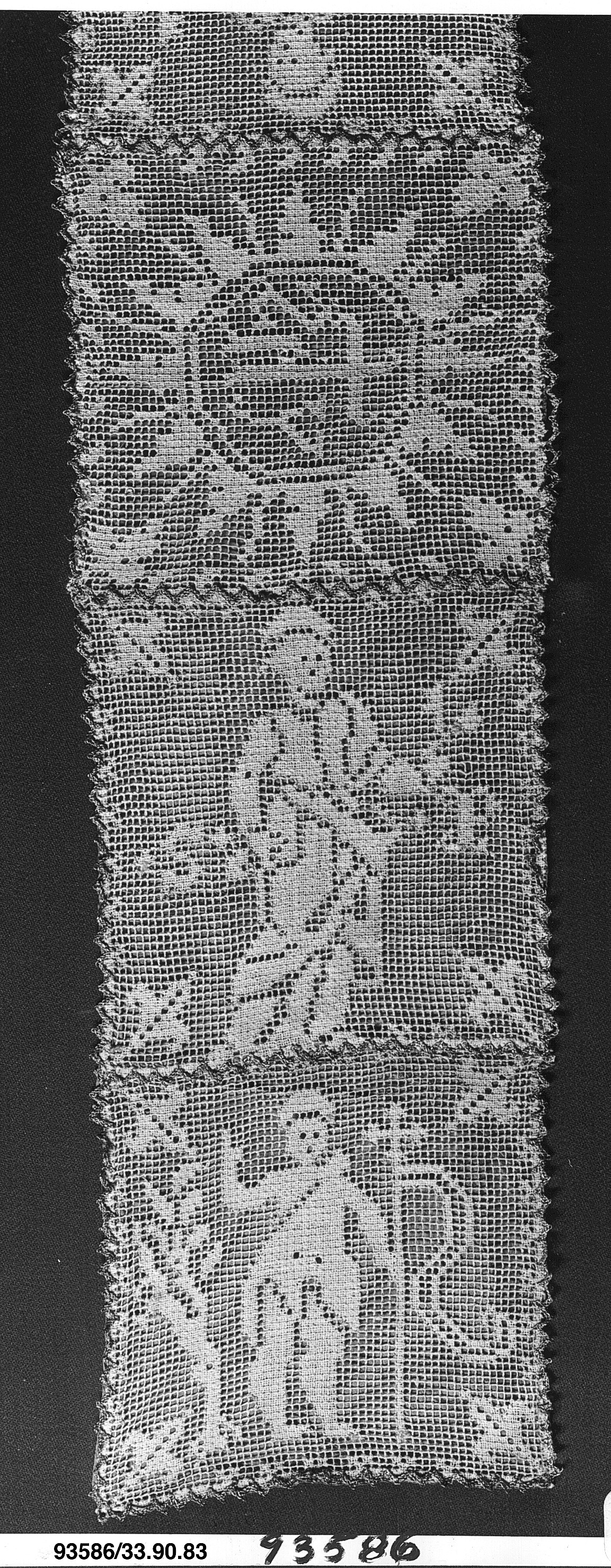
The strip is a primordial form. In the global heritage of dress, it appears as the woven bands of the Andean chakira (beaded collars), the leather thongs of Sub-Saharan African body ornaments, and the silk ribbons of Japanese obi-age. These historical precedents share a common principle: the strip is not a void but a boundary. It frames, it delineates, and it creates a rhythm of positive and negative space. Our archive context for this study is an isolated aesthetic archaeology of the embroidered net as it appears in these traditions—specifically, the way netting itself is a structure of strips. A net is, by definition, a grid of open and closed spaces, a series of interlocking strips of thread or yarn.
In the 18th-century French point de Venise and the 19th-century guipure, the ground fabric disappears, leaving only the embroidered strip of pattern. This is the classical elegance we deconstruct: the strip as a structural element that can be simultaneously opaque and transparent, solid and ethereal. For 2026, we are not merely cutting away fabric. We are building with the strip as a primary material, using embroidered net to create a new lexicon of silhouette.
Materiality: The Embroidered Net as a Strip System
The materiality of the embroidered net is the critical innovation. Traditional netting—tulle, filet, point d’esprit—is a passive ground. Embroidered net, however, is an active surface. The embroidery itself becomes a secondary strip, a layer of pattern that can be applied, removed, or left to float. Our atelier has developed a proprietary technique where the embroidery is executed on a soluble base, allowing the net to be selectively dissolved or reinforced. This creates a fabric where the strip is not a cut but a controlled dissolution.
Technical Parameters for 2026 Silhouettes
The 2026 high-end silhouette, informed by this materiality, moves away from the volumetric excess of the early 2020s and toward a sculptural linearity. The embroidered net strip serves three distinct architectural functions:
1. The Structural Strip: This is the strip as a boning-like element. By densely embroidering a narrow band of net (1-3 cm wide) with metallic threads or silk floss, we create a flexible yet rigid strip that can be used to shape the torso. For example, a series of vertical embroidered strips on a bodice of sheer net creates a corset effect without the weight or inflexibility of traditional stays. The negative space between the strips becomes the fabric itself, allowing for breathability and a radical lightness. This directly references the lacing strips of 18th-century stays, but here the lacing is the structure.
2. The Ornamental Strip: This strip functions as a mobile frame. In a 2026 evening gown, a single, wide embroidered strip (10-15 cm) of net can be applied diagonally across the body, from shoulder to opposite hip. The embroidery—perhaps a floral motif derived from a 17th-century French broderie pattern—is concentrated on the strip, while the surrounding net remains bare. The strip becomes a decorative scar, a deliberate interruption of the body’s line. This is a direct evolution of the classical elegance of the sash, but rendered in a transparent, weightless material. The ornament is not applied to the garment; the garment is the ornament.
3. The Transitional Strip: This is the most advanced application. The embroidered net strip is used as a gradient device. By varying the density of embroidery along the length of the strip—from dense, opaque embroidery at one end to sparse, open net at the other—we create a smooth transition from coverage to exposure. This allows for a silhouette that dissolves into the body. For instance, a floor-length column gown might feature a series of these transitional strips running vertically from the waist to the hem. At the waist, the strips are fully embroidered, creating a solid, opaque belt. As they descend, the embroidery thins, and the strips become increasingly transparent, until at the hem, they are nearly invisible. The result is a silhouette that is architecturally defined at the top and ethereally open at the bottom.
Deconstructing Classical Elegance: The Strip as a Luxe Signifier
The classical elegance of the strip has historically been tied to restraint and economy. A single strip of fabric, used as a belt or a trim, was a mark of refined simplicity. In our 2026 application, we invert this. The embroidered net strip is a signifier of extreme luxury precisely because of its apparent fragility. The labor required to embroider a single, narrow strip of net—often thousands of stitches per centimeter—is immense. The negative space around the strip is not a cost-saving measure but a deliberate, expensive void.
This is the deconstruction of classical elegance: the strip is no longer an accent but the primary structural and aesthetic element. It is the garment’s skeleton and its skin. In a 2026 cocktail dress, the entire silhouette may be composed of a series of overlapping, angled embroidered net strips, creating a geometric lattice that both reveals and conceals the body. The classical robe à la française’s sack back is reinterpreted as a cascade of these strips, each one embroidered with a different density, creating a three-dimensional, kinetic surface that moves with the wearer.
Conclusion: The 2026 Silhouette as a Strip of Light
The 2026 luxury silhouette, as defined by this research, is not a shape but a system of strips. The embroidered net allows us to treat the strip as a light-capturing device. The dense embroidery catches and reflects light, while the bare net allows it to pass through. The result is a silhouette that shimmers and dissolves, a play of opacity and transparency that is both technically rigorous and deeply poetic. At Natalie Fashion Atelier, we do not merely remove fabric to create a strip. We build with the strip as a primary material, using heritage techniques of embroidery and netting to forge a new language of exposure—one where the absence of fabric is as crafted and meaningful as its presence. This is the future of haute couture: a strip of light, woven with history.