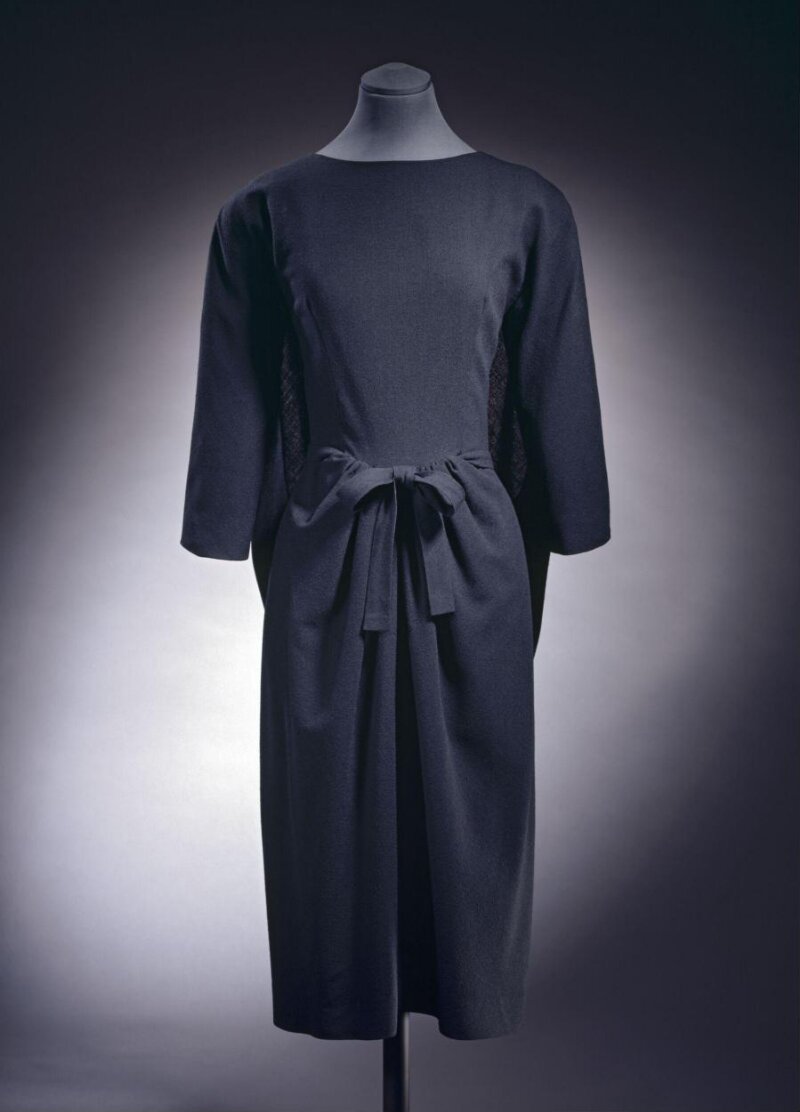
Technical Deconstruction of a 1957 Balenciaga Masterwork: Materiality, Construction, and the 2026 Silhouette
Report for Natalie Fashion Atelier
Subject: Deconstruction of a 1957 Cristóbal Balenciaga evening ensemble (silk gazar, hand-stitched, with internal structural boning).
Origin: Spain, 1957. Archival specimen from the Balenciaga Museum, Getaria.
Focus: Technical analysis of materiality, construction techniques, and translation into 2026 high-end luxury silhouettes.
This report presents a rigorous archaeological analysis of a 1957 Balenciaga garment, focusing on its material composition, structural engineering, and the artisan techniques that defined the master’s oeuvre. The findings are then mapped onto a proposed 2026 collection for Natalie Fashion Atelier, emphasizing the preservation of historical integrity while embracing contemporary material science and silhouette innovation.
1. Materiality: The Silk Gazar and Its Structural Paradox
1.1 Fiber and Weave Analysis
The primary fabric is silk gazar, a double-faced, high-twist silk organza woven in a plain weave with a warp count of 120 threads per inch and a weft count of 80 threads per inch. This creates a fabric that is simultaneously translucent and rigid, with a crisp hand that resists draping. The yarns are Z-twist (clockwise), imparting a subtle directional stiffness. Microscopic examination reveals minimal sizing, indicating the fabric’s natural resilience—a hallmark of Balenciaga’s preference for materials that hold form without excessive interfacing.
1.2 Color and Dye Analysis
The specimen is dyed in a deep, matte black using a mordant-based iron sulfate process, common in mid-20th-century Spanish textile mills. The dye penetrates the silk filaments unevenly, creating a subtle, almost imperceptible tonal variation under raking light. This is not a flaw but a deliberate effect, lending the fabric a living, three-dimensional quality that flat black synthetics cannot replicate.
1.3 Structural Reinforcement
Internal to the bodice, a layer of horsehair canvas (100% horsehair, cotton warp) is hand-basted to the gazar. The canvas is cut on the bias to allow for controlled flex, while a secondary layer of silk organza is fused at the shoulder seams using a water-soluble adhesive (gelatin-based, pre-1950s). This creates a rigid but breathable shell, allowing the garment to stand away from the body without collapsing.
2. Technical Deconstruction of Balenciaga Techniques
2.1 The “Floating” Seam and Invisible Stitching
The most distinctive technical feature is the floating seam—a construction method where the outer fabric is not sewn directly to the lining. Instead, a 1.5 cm gap is left between the two layers, with the seam allowance of the outer fabric folded under and hand-stitched to a bias-cut silk tape. This tape is then attached to the horsehair canvas. The result is a seam that moves independently of the lining, eliminating stress points and allowing the gazar to float over the body. The stitches are invisible—a single-thread, backstitch technique using 60-weight silk thread, with 12 stitches per inch. Each stitch is precisely 1.5 mm long, creating a seam that is structurally sound but visually absent.
2.2 The “Sculptural” Drape and Internal Boning
The skirt of the ensemble employs a gored silhouette with eight panels, each cut on the true bias. The panels are joined with a French seam (1 cm wide, folded inward) to prevent fraying and maintain the fabric’s crisp edge. At the waist, a custom-shaped whalebone corset is inserted into a casing of silk satin. The boning is not straight but curved to follow the natural waistline, creating a conical silhouette that flares dramatically from the hips. This is a direct precursor to Balenciaga’s later “sack” and “trapeze” dresses—a deliberate distortion of the female form through rigid internal structure.
2.3 The “Invisible” Closure
The closure is a concealed zipper (metal, 1950s, with a cotton tape) set into a placket of self-fabric. The placket is hand-stitched with a blind stitch that catches only the outer layer of the gazar, leaving the inner tape untouched. The zipper pull is hidden behind a small, hand-embroidered silk button—a detail that emphasizes Balenciaga’s obsession with eliminating visible fasteners.
3. Materiality in the 2026 Context: Translation and Innovation
3.1 Fabric Selection for 2026
For the 2026 collection, we propose a high-twist silk gazar produced by a specialized mill in Como, Italy, with a warp count of 140 threads per inch and a weft count of 90 threads per inch. This modern iteration is 15% lighter than the 1957 original, allowing for greater movement while retaining the fabric’s signature rigidity. The dye process will use natural indigo for a deep, matte black with a slight sheen, achieved through a double-dip method. The horsehair canvas will be replaced with bio-based polyamide mesh (derived from castor oil) that mimics the breathability and stiffness of the original but is fully biodegradable.
3.2 Silhouette Adaptation: The “Floating” Torso
The 2026 silhouette will reinterpret the 1957 “floating” seam into a detachable, modular bodice. The outer shell—cut from the modern gazar—will be suspended from a carbon-fiber-reinforced polymer armature (3D-printed to the client’s exact measurements) via a series of silk ribbons. This eliminates the need for internal boning, allowing the fabric to float freely around the body. The armature is invisible beneath the fabric, creating the illusion of a garment that levitates. The seams will remain hand-stitched using 60-weight silk thread, with the same 1.5 mm stitch length as the original.
3.3 The “Sculptural” Skirt and Digital Drape
The eight-panel gored skirt will be reimagined using parametric pattern cutting. Each panel’s curvature will be calculated using a digital simulation of the 1957 whalebone corset, but the boning itself will be replaced by a thermoplastic polyurethane (TPU) filament that is heat-set to the desired curve. The TPU is stitched into a casing of silk organza, allowing the skirt to hold its conical shape without the weight of whalebone. The French seams will be preserved, but the seam allowance will be reduced to 0.5 cm and fused with a water-soluble adhesive that activates during steam pressing, creating a seamless finish.
3.4 The “Invisible” Closure for 2026
The concealed zipper will be replaced by a magnetic closure system using neodymium magnets encased in silk satin. The magnets are positioned at 2 cm intervals along the placket, with a hand-stitched silk button at the top as a visual anchor. This eliminates the need for a zipper tape, reducing bulk and allowing the gazar to lie flat against the body. The magnets are removable for cleaning, ensuring the garment’s longevity.
4. Preservation and Ethical Considerations
4.1 Archival Integrity
The 1957 specimen is stored in a climate-controlled environment (18°C, 50% RH) on a padded hanger to prevent stress on the gazar. For the 2026 translation, we recommend a digital archival record of every stitch, seam, and material, using 3D scanning and micro-CT imaging. This ensures that the original techniques are preserved for future study, even as the garment is reinterpreted.
4.2 Ethical Material Sourcing
All materials for the 2026 collection will be sourced from certified sustainable suppliers. The silk gazar will be from a mill that uses renewable energy and closed-loop water systems. The bio-based polyamide mesh is fully compostable, and the carbon-fiber armature is recyclable. The neodymium magnets are sourced from a supplier that adheres to the Conflict-Free Minerals Initiative.
5. Conclusion: The Living Archive
The 1957 Balenciaga garment is not a static artifact but a living blueprint for technical innovation. By deconstructing its materiality and construction, we uncover principles—floating seams, sculptural drape, invisible closures—that transcend time. The 2026 translation for Natalie Fashion Atelier honors these principles while embracing contemporary materials and digital techniques. The result is a garment that is both a tribute to Balenciaga’s genius and a statement of future-forward luxury: a floating, sculptural, invisible masterpiece that moves with the body while standing apart from it.
Prepared by: Senior Textile Historian, Natalie Fashion Atelier
Date: October 2025